
Opening Kickoff
Say “professional football” in the United States and most people’s brains go directly to one place.
- The NFL.
Fair enough.
It is enormous. It has the biggest stars, the biggest television audience, the Super Bowl, fantasy football, RedZone, and enough weekly analysis to make third-and-seven feel like a matter of national security.
But professional football does not stop at the border.
Head north, and Canada did not simply copy and paste the American game.
It built its own version.
- A wider field.
- More players.
- Fewer downs.
- Receivers getting a running start.
- A kicking game with its own weird little one-point wrinkle.
And generations of players who found something important there:
another place to play professional football.
That is how I want to approach the CFL today.
Not as an NFL competitor.
Not as “the little league up north.”
Not as a consolation prize for players who did not make an NFL roster.
The Canadian Football League is its own professional football culture, with nine teams, more than a century of history behind its championship, and rules that make the game immediately familiar while still feeling distinctly Canadian. The modern CFL was formed in 1958, while teams have competed for the Grey Cup since 1909.
For some players, the CFL becomes a bridge.
For others, it becomes home.
Either way?
The field is still 100 percent real.
The Surface Version

The easy description is:
“The CFL is basically the minor leagues for the NFL.”
And sure, you can understand why somebody might think that.
The NFL has more money. More teams. More American media coverage. Higher salaries.
And yes, players have absolutely used success in Canada to create or reopen opportunities in the NFL. But calling the CFL a minor league misses what makes it interesting.
Minor leagues generally exist underneath a major league. The CFL does not.
- It has its own rules.
- Its own roster system.
- Its own draft structure.
- Its own traditions.
- Its own stars.
- Its own championship.
And players are not simply sitting around waiting for an NFL team to rescue them.
The league’s own 2026 roster snapshot showed 479 players across CFL clubs, including 237 Americans, 225 Canadian Nationals, and 17 Global players.
That matters.
Because the CFL is not merely a Canadian destination for Canadian football players.
It is another professional football market. Another route. Another opportunity. Another version of the game.
Turn on a CFL game and, at first, your brain will settle in pretty quickly.
- Quarterback.
- Running back.
- Receivers.
- Offensive line.
- Defensive backs.
- Touchdowns.
- Field goals.
- Punts.
- Guys hitting each other extremely hard while wearing shoulder pads.
Got it. Football.
Then something feels slightly off.
Wait.
- Why are there twelve guys out there?
- Why is the field so wide?
- Why is that receiver already sprinting toward the line before the quarterback gets the ball?
- Why did they punt already?
- They only get THREE downs?!
And eventually, if you watch long enough:
Hold on. Did they just score ONE point?
Welcome to Canadian football.
Same family.
Different branch of the evolutionary tree.
The Main Drive
Three Downs: Hurry Up
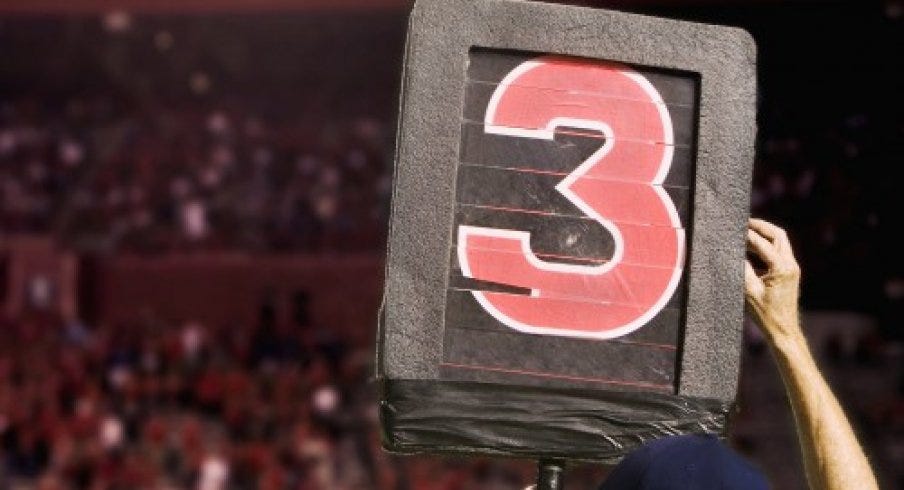
This is the difference that changes almost everything else.
In the NFL, an offense gets four downs to gain ten yards.
In the CFL?
Three.
The 2026 CFL rulebook gives teams three downs to gain ten yards before possession changes.
That means first down matters immediately.
An NFL team can run for two yards on first down and still have plenty of options.
Do that in Canada and suddenly you are staring at second-and-eight with only one more offensive snap before you may have to punt.
There is less room for wasted plays. Less room for patience. Less room for: “Eh, we’ll get it on third down.”
Third down is the decision down. That naturally helps give Canadian football a different offensive rhythm.
You have to move.
Twelve Players: One More Piece on the Board
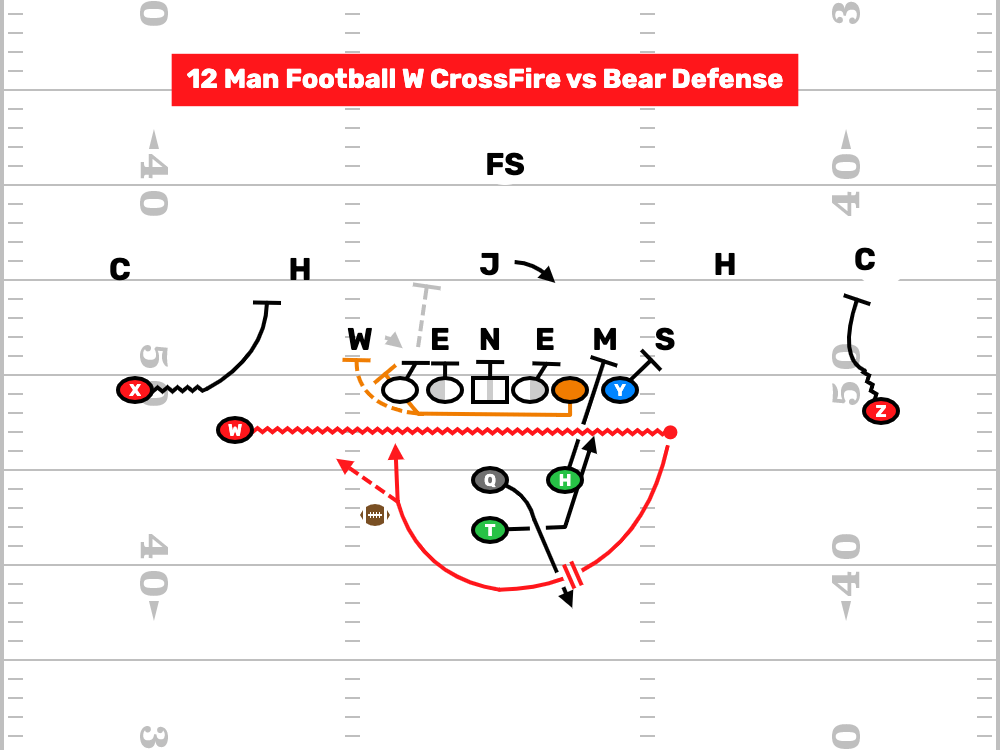
The CFL plays with 12 players per side, rather than the NFL’s 11.
One extra player does not sound like much.
Until you put 24 people on a field and start designing formations around them.
That extra body creates another receiver, another defender, another blocking assignment, another coverage responsibility, another moving piece.
And speaking of space…
That Field Is HUGE
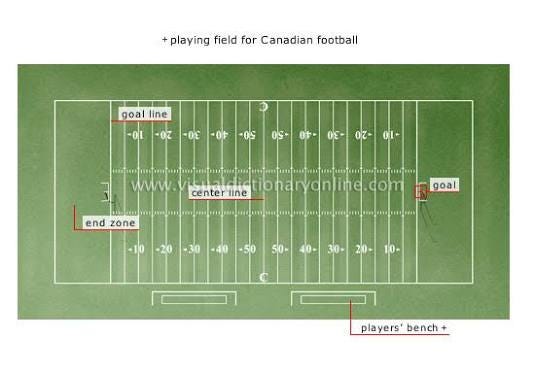
For the 2026 season, a CFL field is 110 yards long and 65 yards wide, with 20-yard end zones.
The width is the part American viewers notice quickly.
An NFL field is 53⅓ yards wide.
The CFL gives everybody more room.
That changes angles. Route combinations. Coverage. Returns. Open-field tackling.
Speed becomes very visible when defenders have that much grass to protect.
Interestingly, the league is already changing part of that formula. Beginning in 2027, the CFL plans to shorten the field from 110 yards to 100 and the end zones from 20 yards to 15, while keeping the distinctly wide 65-yard playing surface.
Which is another reminder that Canadian football is not some museum piece.
The league is still tinkering. Still evolving.
Still asking what makes its version of football fun.
The Waggle: Wait, He Can Do That?
This might be my favorite difference to show an NFL fan.
In American football, receivers have fairly strict limitations on movement toward the line before the snap.
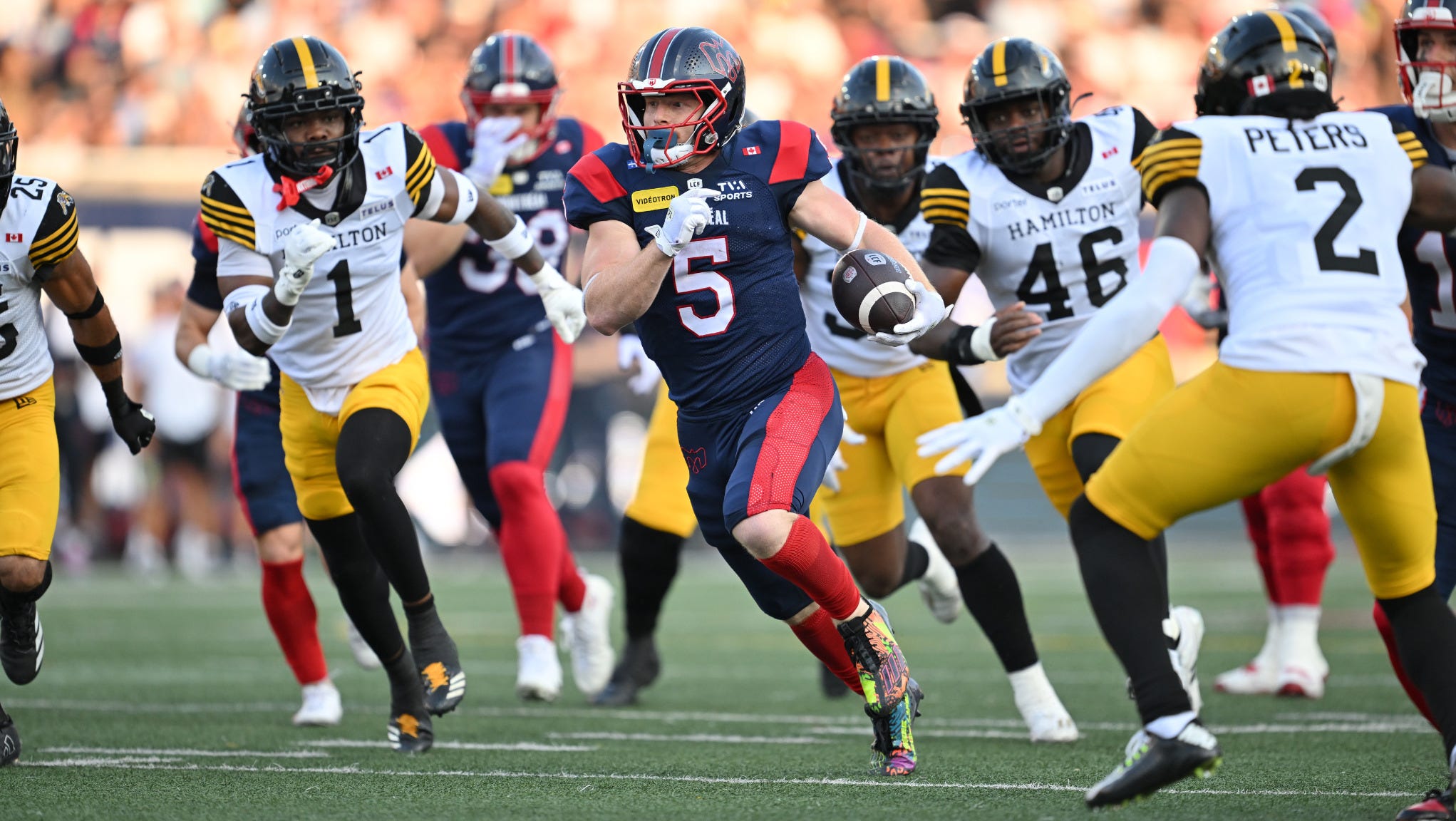
Canadian football allows eligible receivers in the backfield to move toward the line as the play begins.
The result is the famous waggle.
A receiver can build momentum before the snap and attack the defense already moving at speed.
The first time you watch it, it looks illegal.
Like somebody accidentally started the play early and nobody bothered to throw a flag.
But that motion is part of Canadian football’s identity.
More space. More movement. More speed.
It is football saying: Sure. Give the receiver a running start. Why not?
The Kicking Game Is Part of the Plot

Then we have the kicking game.
And this is where things get wonderfully Canadian.
The CFL has a scoring play called the rouge, or single.
Yes.
One point.
But there is an important 2026 update.
The league changed the rouge so a missed field goal, punt, or kickoff that simply flies or rolls untouched through the end zone no longer automatically earns a point. A single can still be awarded when a kicked ball settles in the end zone and the return team does not bring it back out or concedes it.
That might sound like trivia. But it points toward a larger difference.
Special teams matter.
A lot.
Field position matters. Returners matter. Kickers matter. Punters matter. The geometry of that giant field matters.
In the CFL, the kicking game is not an intermission. It is part of the plot.
Another Professional Road
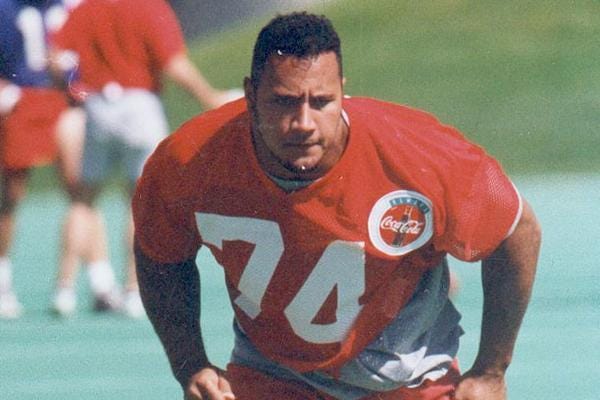
This is the part I really want to celebrate.
Football produces more talented players than the NFL has roster spots.
That is just math.
There are great college players every year who do not get drafted. Drafted players who get cut. Practice-squad guys who need actual game reps. Late bloomers. Players who simply need somebody to give them another look.
The CFL provides another legitimate professional road.
The league openly scouts across North America, and its 2026 player information says more than 200 Americans play in the league.
And history has given us some pretty incredible examples of what can happen when somebody takes that road.
Warren Moon
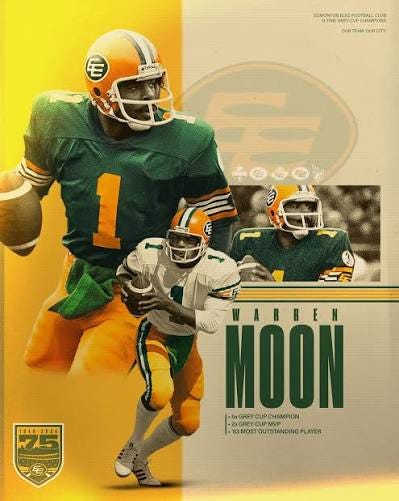
Warren Moon went undrafted by the NFL despite an excellent college career.
So, he went to Edmonton.
Then won five consecutive Grey Cups before eventually becoming a nine-time NFL Pro Bowler and Pro Football Hall of Famer.
That is not a failure story.
That is a different-road story.
Doug Flutie
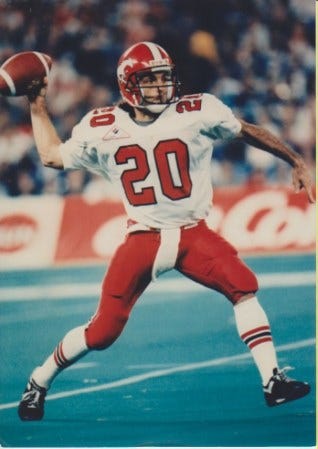
Doug Flutie already had American fame thanks to Boston College and one of the most famous plays in college football history.
But his CFL résumé became enormous.
Flutie won the league’s Most Outstanding Player award six times and won three Grey Cups.
Canada was not some footnote in Flutie’s football life.
It was one of the defining chapters.
Jeff Garcia
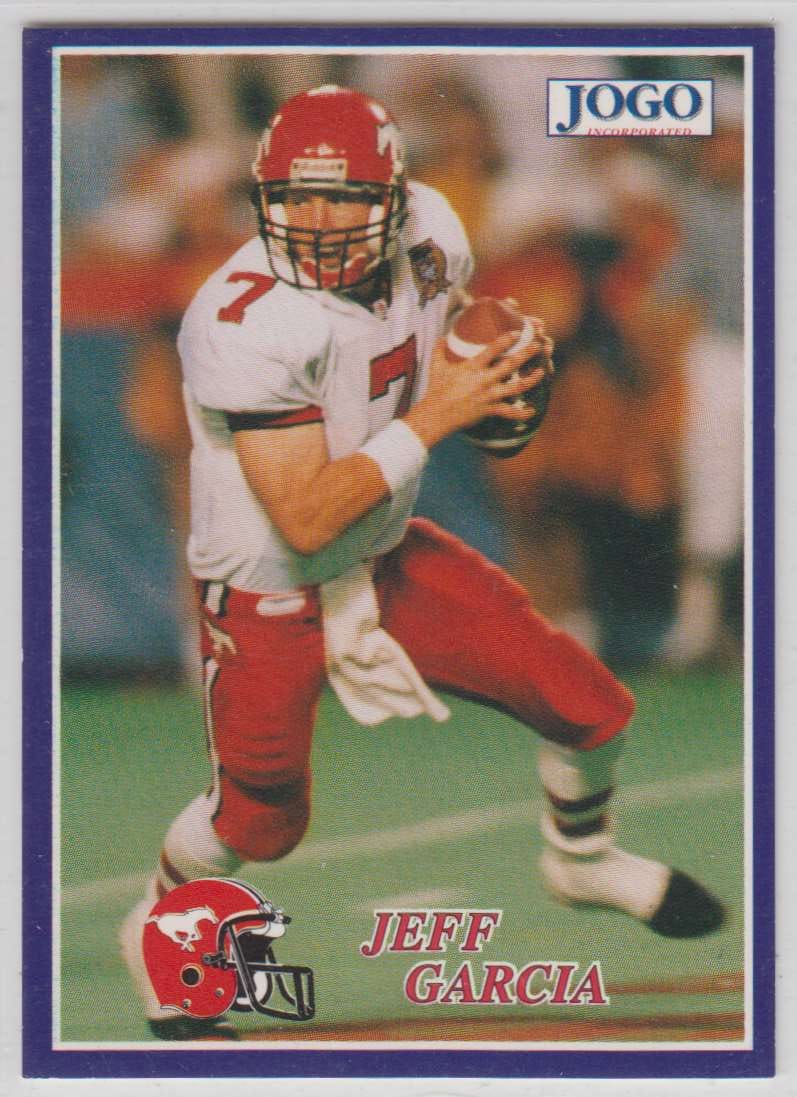
Jeff Garcia spent his early professional years in Calgary, eventually becoming a CFL All-Star and winning Grey Cup MVP in 1998 before moving into the NFL.
Again:
Different road.
Cameron Wake
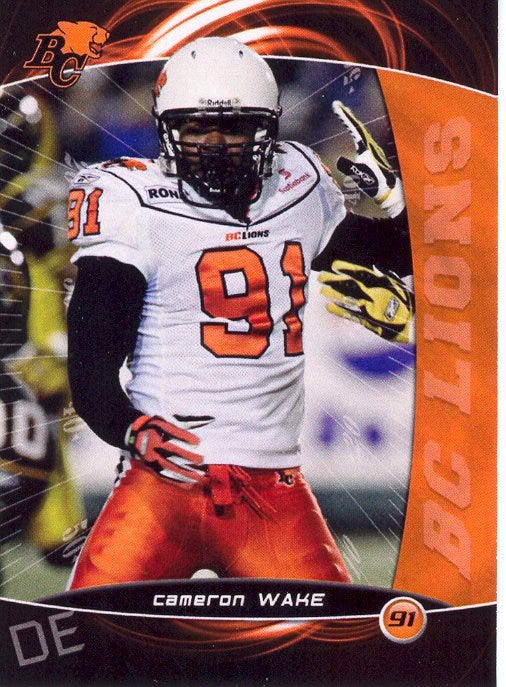
Cameron Wake became a dominant defensive player with the BC Lions before eventually building a long NFL career.
The CFL gave him somewhere to prove that he could wreck professional offenses.
Turns out?
He could.
Very well.
But there is another half to this story that matters just as much.
For Some Players, It Becomes Home
Celebrating the CFL only by listing players who eventually reached the NFL would completely miss the point.
Because Canadian football has its own legends.
- Anthony Calvillo became one of the most prolific passers the league has ever seen.
- Damon Allen.
- Ron Lancaster.
- Russ Jackson.
- Milt Stegall.
- Pinball Clemons.
- Jon Cornish.
These are not players whose CFL careers need an NFL asterisk to become important.
They belong to Canadian football history.
Calvillo retired as the CFL’s career leader in completions, while his longevity and production made him one of the defining quarterbacks in league history.
This is why I like the phrase:
For some players, the CFL becomes a bridge. For others, it becomes home.
Neither path is lesser.
They are simply different careers.
The Grey Cup Is Not the “Canadian Super Bowl”

This distinction matters too.
It is tempting to explain the Grey Cup to American readers by saying: “Oh, it’s basically Canada’s Super Bowl.”
Useful shortcut? Sure.
But culturally, that is backwards. The Grey Cup predates the Super Bowl by decades.
The trophy dates to 1909, while the modern CFL itself came together in 1958.
It has its own mythology. Its own great games. Its own heartbreak. Its own traditions.
And in 2026, the league is headed toward the 113th Grey Cup, scheduled for November 15 at McMahon Stadium in Calgary.
So, no.
The CFL does not need borrowed mythology. It has more than a century of its own.
Why Fans Love It
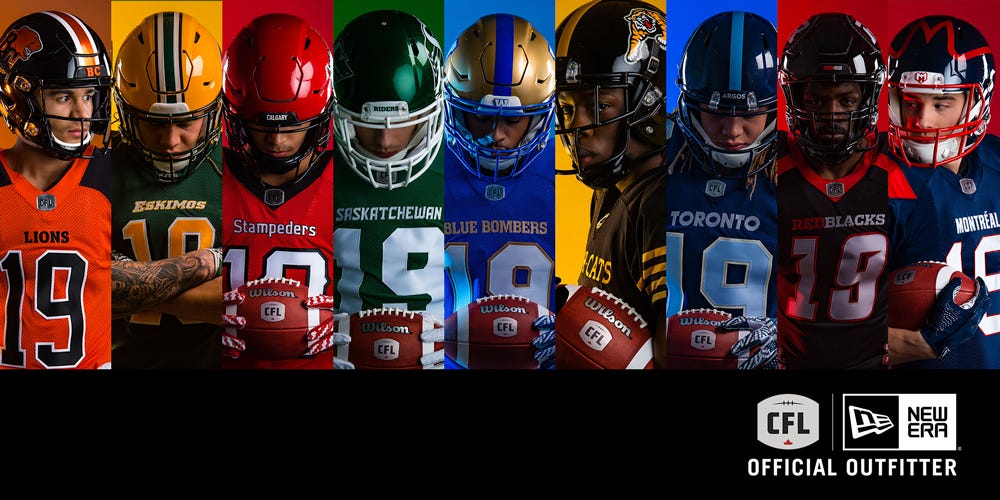
Here is the simplest reason: It is football. But not exactly the football you already know.
- Three downs create urgency.
- The field creates space.
- Twelve players create complexity.
- Motion creates speed.
- Special teams create chaos.
- Nine teams create familiarity.
You see these opponents. You know these fanbases. You remember what happened last time. And Canadian football has traditions that belong specifically to Canadian football.
- Labour Day rivalries.
- Prairie football.
- The Grey Cup.
- Cold-weather games.
- Regional identity.
- Community ties.
That is what sports become when they survive long enough.
Not merely entertainment.
Tradition.
Why This Matters
The CFL matters because there should be more than one definition of professional success.
Not every football story needs to end with someone holding the Lombardi Trophy. Not every great player gets drafted into the perfect situation. Not every career follows the road people expected.
Sports are full of people who needed one more opportunity.
Another coach. Another roster. Another system. Another country. Another chance to put film on tape and say:
Watch me.
That is worth celebrating.
And the CFL benefits too.
Canadian players have a major professional destination at home. American players have another legitimate league. Global players increasingly have another route into professional gridiron football; the CFL’s 2026 Global Draft included players from 12 countries.
Football gets bigger when there are more doors into it.
Modern Connection
The CFL and NFL feel like one of those alternate-universe stories where the timeline split centuries ago and both worlds kept developing.
Same ancestor. Different combat system.
One universe says: Four downs.
The other: Three.
One puts eleven players on the field. The other sends twelve.
One keeps receivers comparatively still before the snap. The other lets somebody come flying toward the line like they just activated a special move.
Same genre. Different mechanics.
And that is exactly why the CFL is interesting.
It does not need to become NFL Canada.
We already have the NFL.
Let Canadian football be Canadian football.
Final Whistle

The CFL does not have to be bigger than the NFL. It does not have to beat it. It does not have to apologize for being different.
And we do not need to pretend the two leagues have identical money, reach, or prestige to appreciate both of them.
The CFL simply needs to be what it has been for generations: professional football played its own way.
For some players, it is another chance. For some, it is the bridge that takes them somewhere else. For others, it becomes an entire career.
And for fans, it means another set of teams. Another set of rivalries. Another championship. Another Saturday worth caring about.
The field is wider. The rules are different. The road is different.
But it is still football.
And that is more than enough.
The Ctrl+Binge Question
If you could import one CFL rule into the NFL tomorrow, which one are you taking?
- Three downs?
- The wider field?
- Twelve players?
- The waggle?
- Or the CFL kicking rules