There are anime Americans know are huge. Your standard bearers.
- Dragon Ball.
- Pokémon.
- Naruto.
- One Piece.
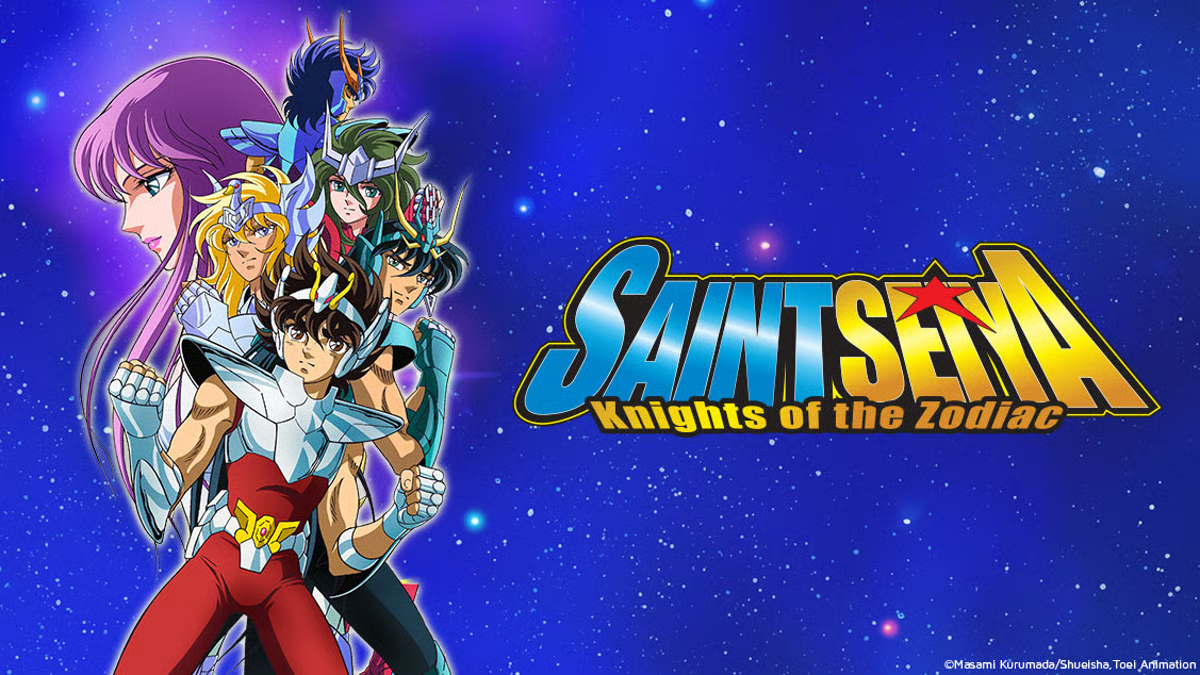
Then there’s Saint Seiya.
Depending on where you grew up, that name might immediately unlock childhood memories of armored warriors, constellations, impossible battles and somebody screaming about their Cosmo.
Or you might be an American anime fan staring at this article thinking:
Wait. Knights of the Zodiac?
And that disconnect may be one of the strangest stories in anime’s global history.
Because Saint Seiya is not some obscure old series modern fans dug out of an archive.
Masami Kurumada’s manga began in Weekly Shōnen Jump in the 1980s. Toei’s anime followed in 1986. From there, the franchise became enormous across parts of Europe, Latin America and Asia.
But in the United States?
We basically showed up late, changed half the furniture, and wondered why nobody stayed for dinner.
So, today’s Manga Monday isn’t only about whether Saint Seiya still holds up.
It’s about how one of anime’s biggest global franchises became one of America’s strangest blind spots.
The Elevator Pitch
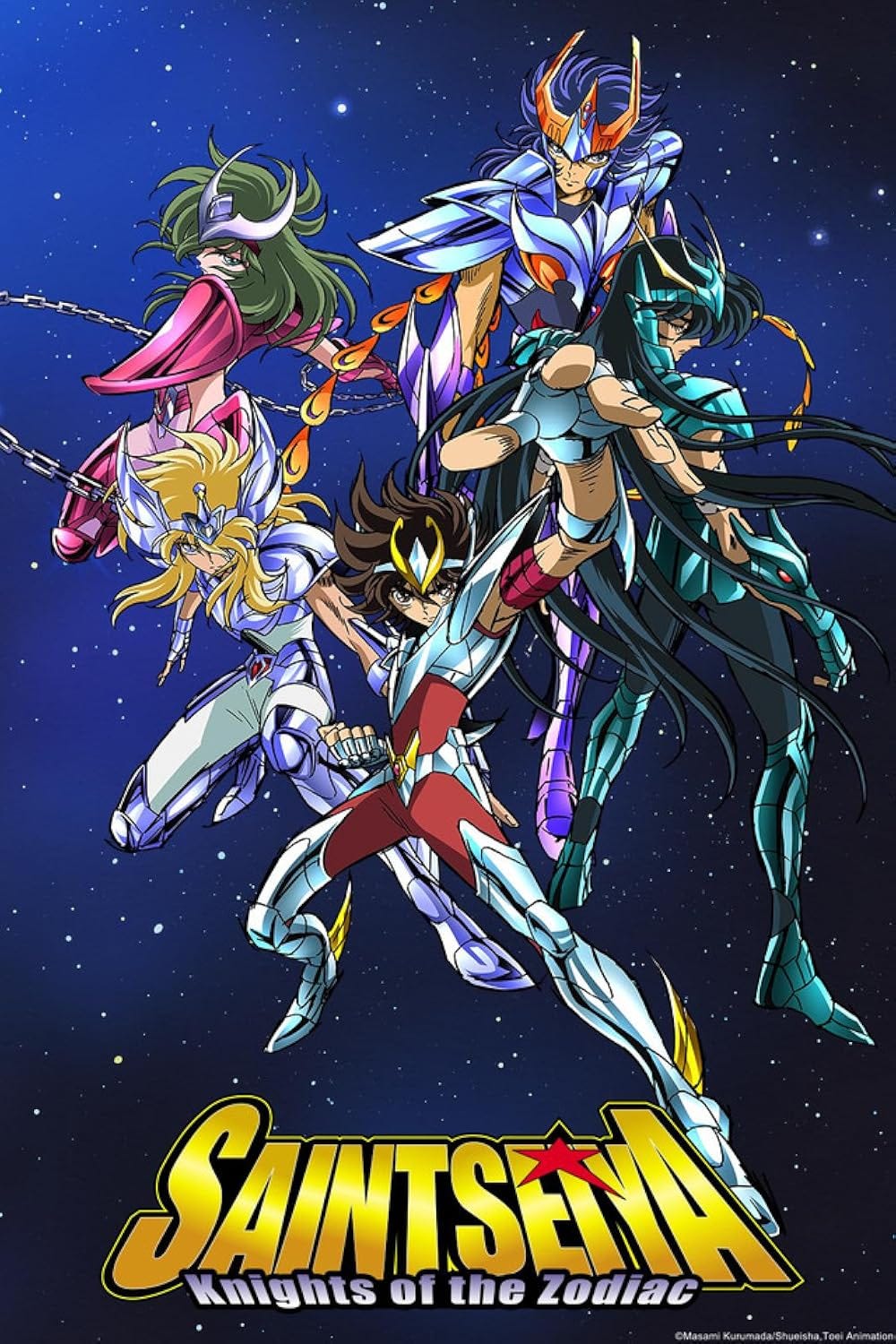
Long ago, warriors known as Saints fought in service of the goddess Athena.
Each Saint draws upon the power of the cosmos and wears sacred armor called a Cloth, with those Cloths connected to constellations and mythological symbols.
Our hero is Seiya.
His constellation is Pegasus.
And Seiya is one of several young Bronze Saints drawn into increasingly enormous conflicts involving rival warriors, sacred armor, ancient gods and threats that gradually expand far beyond anything resembling normal human problems.
Subtlety is not really the assignment here. And that’s part of the charm.
Saint Seiya is mythology run through an unapologetically 1980s battle-shōnen filter.
You get Greek gods.
- Constellations.
- Magical armor.
- Brotherhood.
- Sacrifice.
- Named attacks.
- Power hierarchies.
- Tournament energy.
- Enemies who seem impossibly stronger than our heroes.
And an almost religious commitment to the idea that if you are bleeding badly enough, the correct response is apparently: Stand back up.
The Familiar Version
If you only know Saint Seiya by reputation, it’s easy to reduce it to:
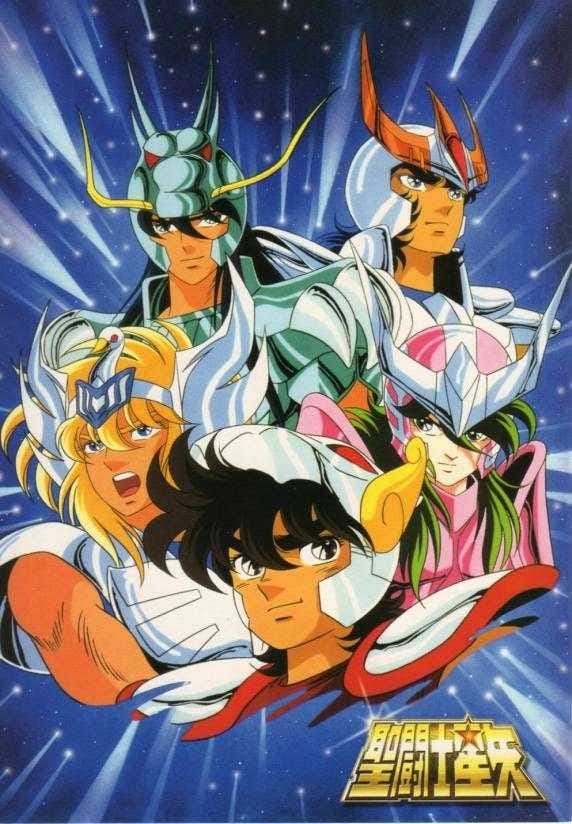
Pretty dudes in shiny armor yelling attack names.
Which…
is not entirely inaccurate.
The armor is shiny. The attack names are absolutely getting yelled. And everybody has enough hair to violate several workplace-safety regulations.
But that description misses why the formula became so effective.
Saint Seiya combines several incredibly powerful hooks into one remarkably accessible package.
The characters have distinct fighting identities.
The Cloths make them instantly recognizable.
Constellations give those identities mythological weight.
The hierarchy between Bronze, Silver and Gold Saints creates an immediately understandable progression system.
The gods and mythological imagery give every conflict a sense of scale larger than ordinary martial arts.
And the team itself gives viewers multiple personalities to attach themselves to.
It’s not simply:
Do you like Seiya?
It’s:
Who’s your Saint?
That distinction matters.
Because Saint Seiya isn’t only selling one hero.
It’s selling an entire mythology you can choose your place inside.
And that kind of storytelling tends to become very, very sticky.
But here’s where Saint Seiya becomes more interesting than another retro-anime recommendation.
Because the real question isn’t:
Was Saint Seiya popular?
We know it was.
The much more interesting question is:
Why did enormous parts of the world embrace it while the United States never really did?
To understand that, though, you first have to understand the guys wearing the Cloths.
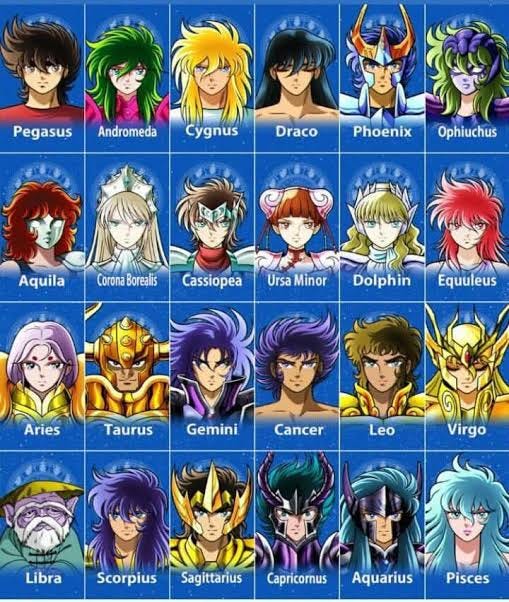
The Bronze Saints — Everybody Gets Their Guy
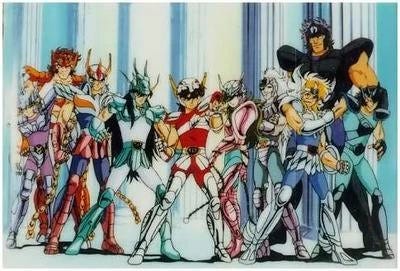
One of the smartest things Saint Seiya does is understand that a team becomes more memorable when everyone watching can find somebody to claim as their guy.
American audiences already understand this instinct.
Think Power Rangers.
You might like the whole team, but eventually everybody picks one.
Maybe you want the leader.
Maybe you want the cool one.
Maybe you want the powerhouse.
Maybe you gravitate toward the thoughtful one.
Maybe you’re waiting for the dangerous loner to show up late and immediately become the coolest person in the room.
Saint Seiya works on that same wonderful playground logic.
Seiya may have his name on the marquee, but the Bronze Saints are not interchangeable backup dancers.
They look different. Fight differently. Think differently.
And each one scratches a different part of the heroic-team itch.
Pegasus Seiya — The One Who Gets Back Up
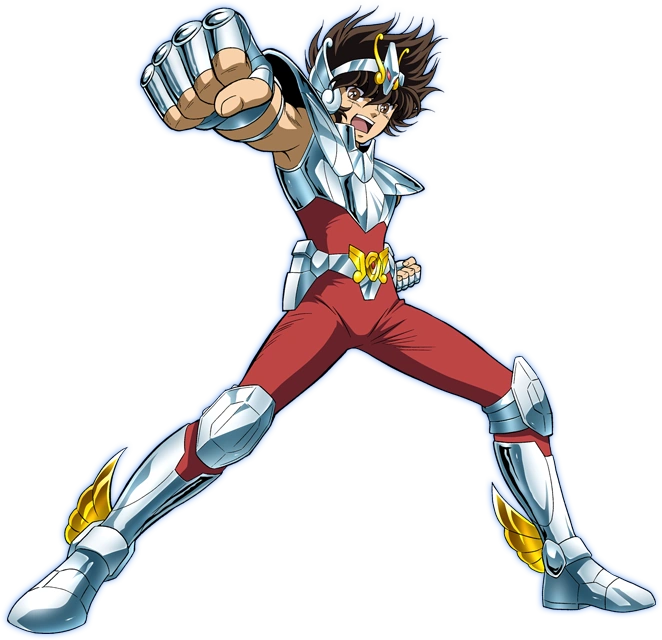
Seiya is the classic lead for a reason.
He’s stubborn.
Impulsive.
Brave almost to the point of self-destruction.
And if you knock him down, you had better be absolutely certain he isn’t getting back up.
Because he probably is.
Seiya embodies the central philosophy of Saint Seiya better than almost anyone:
Keep going.
He isn’t always the strongest person in the fight.
Quite often, he very clearly is not.
But strength in this universe isn’t only measured by what happens when two attacks collide.
It’s measured by how much of yourself you’re willing to put behind the next one.
That’s Seiya.
He’s the kid charging straight into something impossible because somebody has to.
And like so many great shōnen protagonists, his real superpower might simply be his refusal to accept that the fight is finished.
Dragon Shiryu — The Noble Warrior
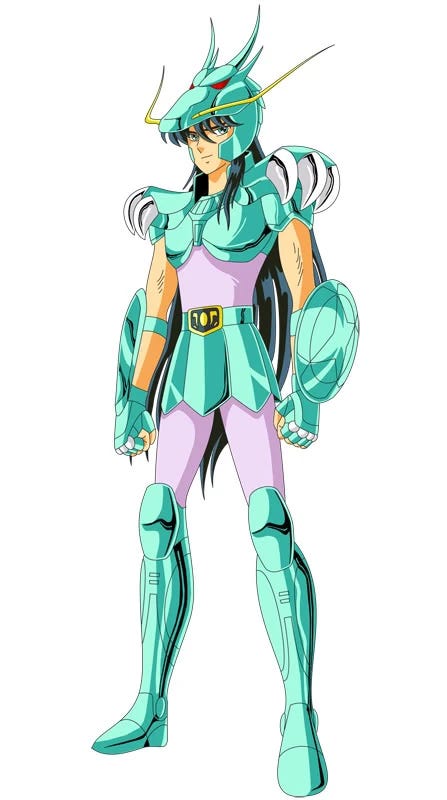
Then you meet Shiryu and immediately understand why so many people would pick Dragon.
Shiryu carries himself differently.
There’s discipline to him. Patience. Honor.
He feels closest to the classical martial-arts hero: someone for whom strength and character are supposed to develop together.
And his Dragon Cloth?
Come on. That’s an easy sell.
But Shiryu’s appeal goes deeper than aesthetics.
His willingness to sacrifice himself for the people around him makes him one of the clearest examples of Saint Seiya’s almost operatic approach to loyalty.
This is a series where friendship isn’t something you casually mention after the battle.
People will nearly die about it.
…Repeatedly.
Shiryu makes that sincerity work because you believe him.
If Seiya is the guy who keeps moving forward, Shiryu often feels like the guy asking:
What kind of person deserves this strength?
Cygnus Hyoga — The Cool One With the Wound Underneath
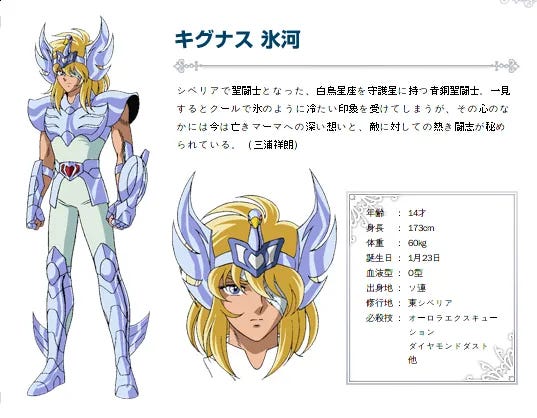
Every great five-person team needs somebody who looks like they’ve already rehearsed the pose for the poster.
Hello, Hyoga.
Cygnus Hyoga brings ice techniques, composure and a cooler outward personality than Seiya’s headfirst enthusiasm. But beneath that surface is a much more emotional character.
His connection to his mother gives him grief and attachment that help separate him from the others. And that matters.
Hyoga isn’t simply “the ice guy.” His powers visually communicate exactly what makes him interesting.
Cold exterior.
A tremendous amount happening underneath.
That’s the kind of straightforward symbolic character design old-school anime does beautifully.
You can understand Hyoga before anybody explains Hyoga.
And then the story gives you reasons to care about the person inside the Cloth.
Andromeda Shun — Strength Doesn’t Have to Look the Same
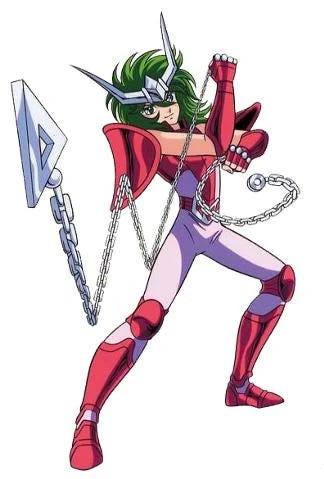
Shun may be one of the most interesting members of the group precisely because he challenges what audiences might expect the “warrior” of this era to look like.
He’s gentle. Compassionate. Reluctant to hurt people unnecessarily. And that could easily have been written as weakness.
Instead, Shun is enormously powerful. That’s important.
He isn’t kind because he’s incapable of fighting. He’s kind despite being completely capable of it.
His Nebula Chain also gives him one of the most instantly recognizable fighting styles in the group.
Where Seiya punches and Shiryu embodies martial discipline, Shun creates space, controls the battlefield and fights in a way that feels distinctly his.
And having somebody like Shun inside this five-man team broadens what heroism is allowed to look like.
Not every strong person needs to be loud. Not every warrior needs to love fighting. Not every boy needs to perform toughness the same way.
For a show from the 1980s, that’s a fascinating member of the team to have standing beside Seiya.
Phoenix Ikki — Oh, So THAT’S Your Guy
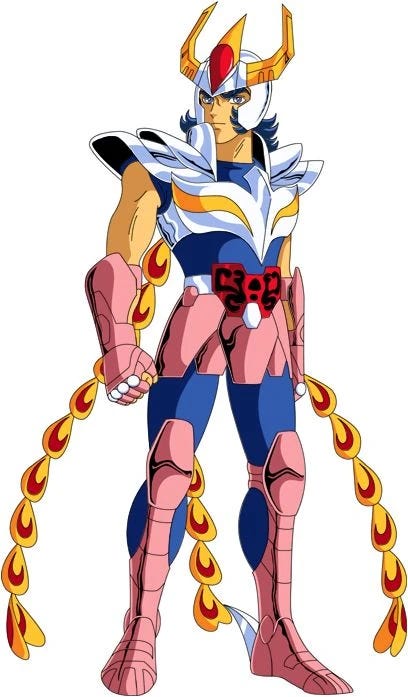
And then there’s Ikki.
Let’s be honest. Somebody reading this section has been waiting for him.
Phoenix Ikki has one of those character introductions that activates something ancient in the anime-fan brain.
He’s dangerous. Brooding. Powerful. Complicated.
He operates at the edge of the team rather than comfortably inside it.
And he has the Phoenix Cloth.
The man never stood a chance of not being cool.
Ikki fills that classic role of the character who isn’t quite the traditional teammate but becomes indispensable precisely because he brings a completely different energy.
There’s always one.
The Green Ranger. The sixth hero. The rival who eventually stands beside everyone else. The guy who appears when things have gotten very bad and makes you immediately think:
Oh. NOW we’re doing this.
Ikki’s relationship with Shun also gives both characters additional emotional weight, because behind all the Phoenix imagery and intimidating entrances is a brother whose history matters deeply to who he became.
So yes, Seiya is the hero.
But Saint Seiya understood something franchises like Power Rangers would also make incredibly easy for American kids to understand:
The team is stronger because nobody on it is the same person wearing a different color.
- Seiya gives you determination.
- Shiryu gives you honor.
- Hyoga gives you cool restraint and buried emotion.
- Shun gives you compassion without weakness.
- Ikki gives you the dangerous outsider.
Five Cloths. Five personalities. Five fighting styles. Five different answers to the question:
Who’s your favorite?
That isn’t a small part of why this franchise traveled.
It’s one of the reasons kids could make it their own.
The Cloths — One of Anime’s Great Visual Ideas
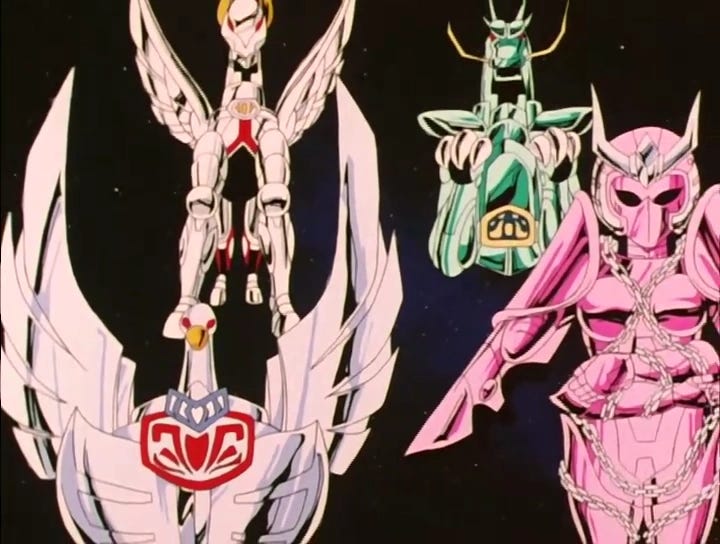
The Cloths deserve much more credit than simply being “cool armor.”
They are cool armor. Obviously.
But they’re also doing an absurd amount of storytelling work.
A Cloth communicates rank. Identity. Constellation. Fighting style. Mythological association. Character progression. And collectability. All at once.
You can look at one of these characters and immediately know the armor matters.
Then the series slowly teaches you why.
- Bronze.
- Silver.
- Gold.
The hierarchy is easy to understand before you know almost anything about the lore.
That accessibility is brilliant.
And visually, the Cloths create something every major long-running action franchise eventually learns:
Silhouette matters.
You should be able to look at the hero and know who you’re looking at. You should be able to look at the upgrade and understand that something changed. You should be able to see the armor and immediately want the toy.
And yes. That last part absolutely matters.
Because Saint Seiya isn’t simply a television story.
It’s one of those franchises where the character design practically begs kids to recreate the fantasy themselves.
Mythology Without Making It Homework
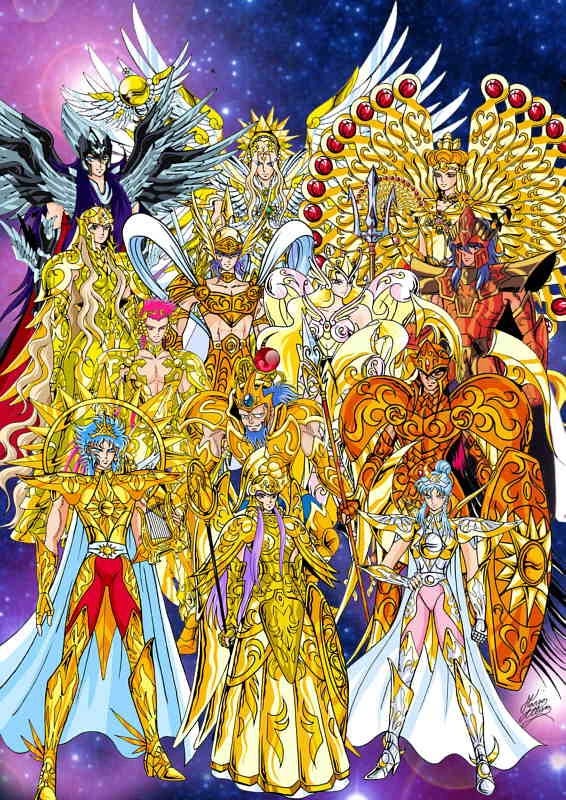
One of the smartest things Saint Seiya does is use mythology without requiring viewers to arrive with a classics degree.
- Athena.
- Poseidon.
- Hades.
- Pegasus.
- Andromeda.
- The Zodiac.
- Constellations.
- The underworld.
- Gods interfering with human affairs.
These ideas already come loaded with cultural weight.
The series doesn’t simply retell ancient myths. It treats mythology like an enormous toy box. And that gives the story a wonderful sense of scale.
You aren’t merely fighting Fighter Number Seven.
You’re fighting someone connected to symbols human beings have been telling stories about for thousands of years.
Then Saint Seiya takes that ancient imagery and runs it through 1980s anime logic.
What if Greek mythology had power levels? What if constellations gave you armor? What if the Zodiac signs were terrifying dudes standing between you and Athena? What if friendship could help you punch a god?
Now we’re talking.
The Power System — Burn Your Cosmo

Before anime fandom was putting every character into spreadsheets and calculating who scales above whom…
Saint Seiya had Cosmo.
The basic idea is beautifully shōnen:
There is extraordinary power within the human body.
The Saints learn to awaken it. Push it. Burn it.
And when somebody has apparently reached the absolute limit of what their body can handle?
Naturally, they discover another limit.
The individual Saints also have signature techniques tied closely to their identities.
- Seiya has Pegasus Ryusei Ken.
- Shiryu has Rozan Shoryu Ha.
- Hyoga fights through ice-based techniques.
- Shun uses the Nebula Chain.
- Ikki brings Phoenix imagery and overwhelming intensity into practically everything he does.
That gives combat character.
You aren’t simply watching numbers collide. You know who is fighting because the fighting style belongs to them.
And while modern viewers may find some encounters repetitive by current standards, the underlying formula is enormously recognizable.
- Impossible opponent.
- Hero gets destroyed.
- Hero remembers what matters.
- Cosmo burns brighter.
- Hero stands back up.
Repeat until somebody learns an important lesson about underestimating a teenager wearing constellation armor.
Endurance Is the Real Superpower
For all the gods, armor and cosmic attacks, I think the emotional center of Saint Seiya is something much simpler:
Endurance.
These characters get absolutely pulverized.
Cloths break.
Bodies should probably be broken.
Blood is everywhere.
People sacrifice themselves.
Enemies seem impossibly stronger.
And yet the Saints keep getting up.
That’s such a pure old-school battle-shōnen philosophy.
The point isn’t always that Seiya is stronger than whoever he’s fighting. Sometimes he very clearly is not. The point is that quitting is apparently not an available menu option.
Athena still needs him. His friends still need him. There’s still another step forward. So, he stands up.
And somewhere underneath all the mythological decoration is a very human fantasy:
Maybe courage isn’t never getting knocked down. Maybe courage is becoming the person who keeps finding a reason to stand again.
That idea travels.
Which may help explain why Saint Seiya traveled so well.
Why the Team Travels
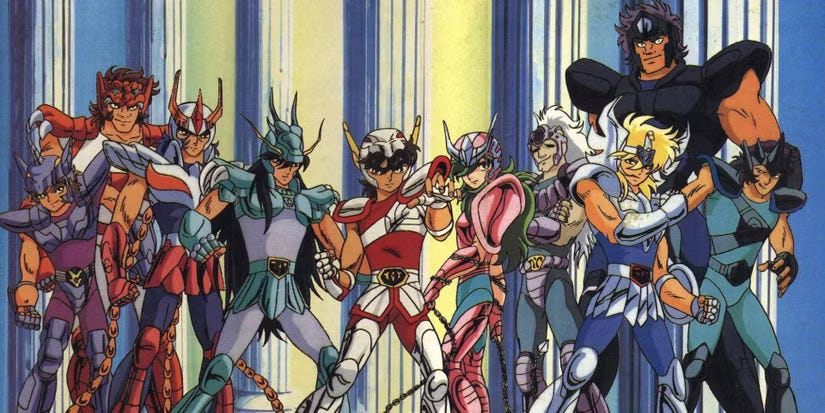
And this is where those five Bronze Saints feed directly into the global story.
A global franchise needs recognizable mythology.
But it also needs identification.
The Cloths gave children instantly recognizable designs.
The constellations gave those designs mythology.
The Bronze Saints gave them personalities.
So when Saint Seiya arrived in France, Latin America and elsewhere, audiences weren’t simply being introduced to one Japanese hero named Seiya.
They were being handed a team.
- You could choose Pegasus.
- Dragon.
- Cygnus.
- Andromeda.
- Phoenix.
You could argue about the strongest. You could copy their attacks. You could want their armor. You could decide which Saint you would be.
And suddenly a Japanese television series about warriors serving Athena doesn’t feel culturally distant at all.
It feels like the oldest playground game in the world:
Okay, which one are you?
That kind of fandom travels incredibly well.
A Global Phenomenon
Here’s where the American perspective can become misleading.
Because if you grew up in the United States, it can be easy to assume Saint Seiya occupies roughly the same cultural territory everywhere:
Important old anime. Recognizable name. Dedicated fanbase. Maybe something your hardcore anime friend told you to watch.
That is not the whole story.
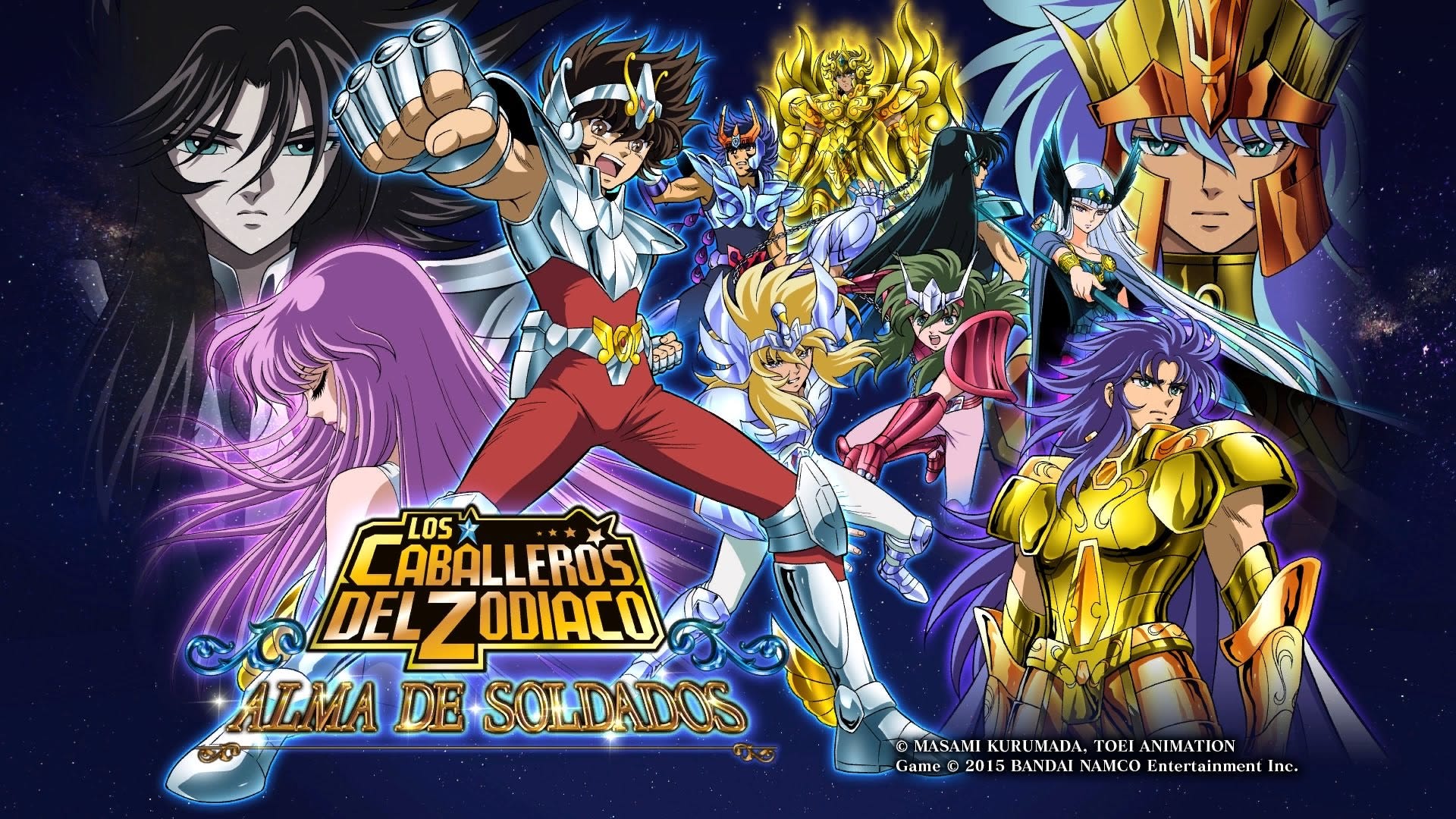
The original anime reached France in the late 1980s as Les Chevaliers du Zodiaque and became part of a huge wave of Japanese animation that helped define a generation of television there.
The series also became deeply established across Latin America as Los Caballeros del Zodiaco.
And that changes how we should talk about it.
Because for millions of fans around the world, Saint Seiya isn’t some archaeological discovery from anime history.
It’s childhood.
It’s the show people ran home to watch. The characters everybody knew. The armor kids wanted. The attacks people shouted.
The opening theme that immediately sends somebody back thirty years.
Americans sometimes discuss Saint Seiya like we’ve uncovered some fascinating forgotten artifact. Meanwhile, huge parts of the world are basically looking at us like:
You guys JUST found this?
America Was Fashionably Late
The timing alone is remarkable.
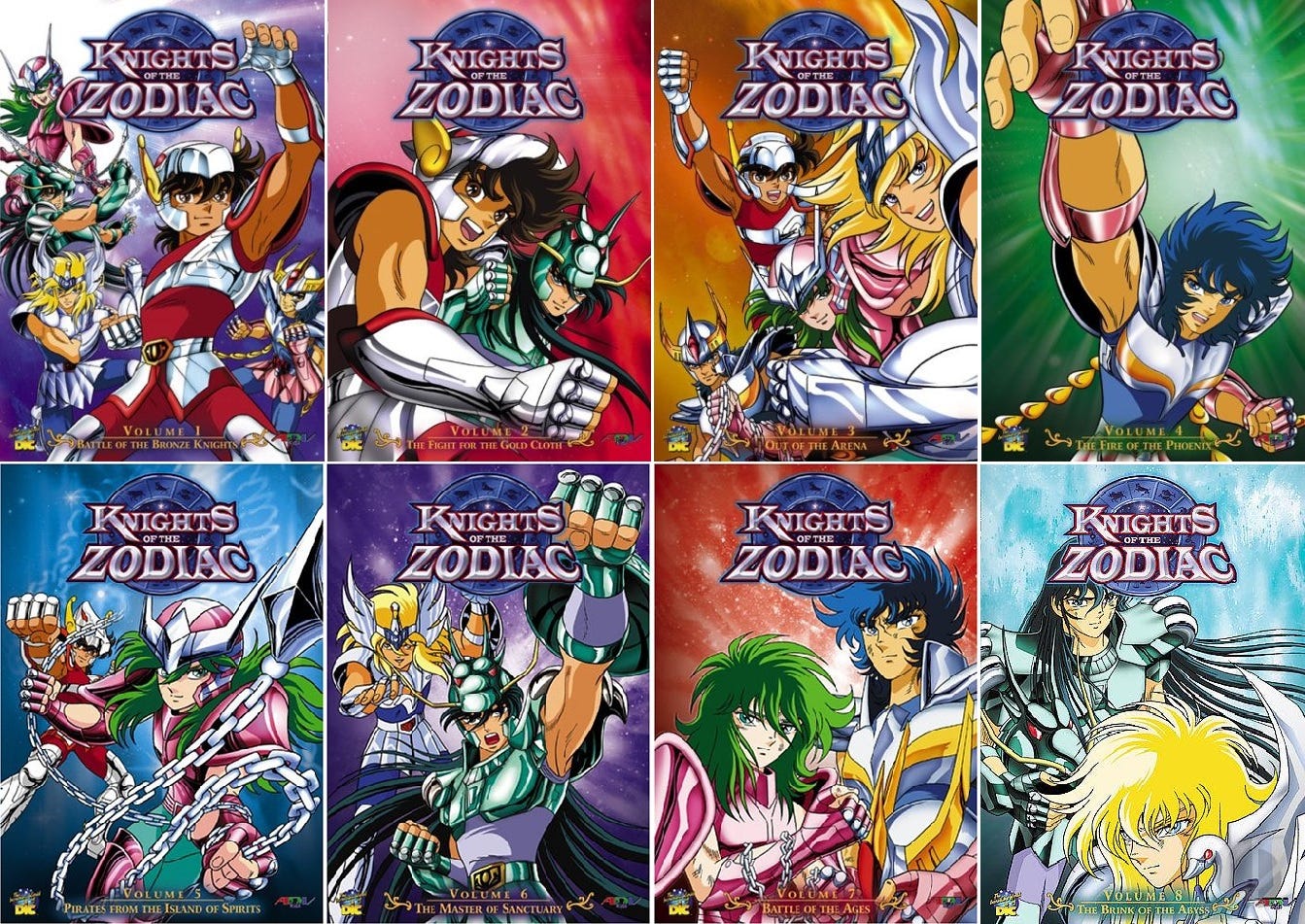
The anime began airing in Japan in 1986. France had it by 1988. The series spread across large parts of Europe, Asia and Latin America. The United States finally received DIC’s Knights of the Zodiac adaptation in…
2003.
Seventeen years after the original anime premiered.
Think about what American anime culture looked like by then. Dragon Ball Z had already become enormous. Pokémon had exploded into one of the biggest franchises on Earth. Digimon had been around. Yu-Gi-Oh! was established. Gundam Wing had helped introduce plenty of American viewers to mecha through Toonami.
Anime was no longer some completely unfamiliar language to American kids. And now you’re introducing a show from 1986.
That’s difficult.
Because instead of looking foundational…it risks looking familiar.
An American kid in 2003 could look at Knights of the Zodiac and recognize pieces of shows they had already watched.
But historically? Some of those arrows point backward. That’s the irony.
America encountered Saint Seiya after later generations of anime had already taught us the language it helped establish.
America Finally Gets Saint Seiya… Sort Of
And being late wasn’t the only problem. The version America received was heavily altered.
- DIC’s adaptation edited violent material.
- Blood was changed from red to blue.
- Dialogue was rewritten.
- Characters were renamed.
- Music was changed.
Only part of the original television series received that dub.
That matters.
Because Saint Seiya is melodramatic. Violent. Earnest.
Characters bleed. They suffer. They sacrifice themselves. They push themselves beyond reasonable physical limits.
The violence isn’t merely decoration. It helps sell the idea that standing back up actually costs something.
Turn the blood blue. Trim the harsher material. Change the music. Alter the dialogue. Eventually, you’re not simply translating the thing.
You’re changing its personality.
And then there’s perhaps the most gloriously 2003 detail imaginable:
The English adaptation used a Bowling for Soup cover of A Flock of Seagulls’ “I Ran.”
Look.
I like Bowling for Soup.
But there are sentences that could only have been created during one specific moment in history.
That is one of them.
So, Did America Reject Saint Seiya?
I don’t think that’s quite the right way to phrase it.
Because America never really received Saint Seiya under the same circumstances that allowed so many other territories to embrace it.
France encountered it when this style of Japanese animation still felt genuinely new.
Large parts of Latin America encountered Caballeros del Zodiaco during a period when Japanese animation was becoming deeply embedded in youth television culture.
America got a heavily modified adaptation in 2003.
Those are not equivalent experiments.
So saying:
“Saint Seiya failed in America.”
is technically easy.
But saying:
“American audiences rejected the same Saint Seiya everyone else loved.”
is much harder.
We were late. The market was different. The localization was different. Audience expectations were different. Competition was different.
And here’s the funniest part:
By 2003, American kids already understood the basic appeal perfectly.
- We had picked Power Rangers.
- Pokémon.
- Digimon.
- Gundams.
- Dragon Ball characters.
- Yu-Gi-Oh! monsters.
We knew the joy of choosing our guy.
The irony is that America was already primed to understand Saint Seiya. We just met it nearly two decades too late.
So maybe America didn’t reject Saint Seiya.
Maybe America never really received Saint Seiya under the same conditions that allowed the rest of the world to fall in love with it.
Style — Welcome Back to the 1980s
Visually, Saint Seiya is gloriously of its era. And I mean that as a compliment.
- The hair.
- The faces.
- The armor.
- The dramatic poses.
- The painted backgrounds.
- The colors.
- The music.
- The willingness to let every emotional moment become absolutely enormous.
There’s very little ironic distance.
When Saint Seiya wants something to matter, it MATTERS.
A friendship matters. A sacrifice matters. A duel matters. A Cloth matters. A promise matters.
Modern anime can look extraordinarily clean and technically polished. But older anime often carries a different texture.
You can feel the hand-drawn character of it.
There are shots that look like somebody should have printed them onto a poster and immediately hung them over a teenager’s bed.
And the Cloth designs in particular remain the franchise’s visual signature.
Forty years later, you can look at Pegasus, Dragon or one of those Gold Cloths and understand immediately why kids wanted the toys.
Let’s Be Fair
Watching Saint Seiya today does require some adjustment.
This is an anime from 1986.
The pacing can feel slow by modern standards.
Some battles stretch.
Certain story beats repeat.
Characters occasionally explain exactly what they’re doing while doing it.
The animation naturally fluctuates.
And battle-shōnen storytelling has evolved enormously since then.
If you’ve already watched decades of series influenced by similar ideas, some of Saint Seiya’s tricks may feel familiar rather than revolutionary.
That isn’t the show’s fault. But it does affect the viewing experience.
There’s also a particular kind of heightened melodrama here that you’ll either embrace or bounce off.
Nobody in Saint Seiya feels something at a four. They feel it at approximately seventeen.
But if you can meet the series on its own terms? That earnestness becomes part of the appeal.
This thing believes completely in friendship, sacrifice, courage and getting back on your feet.
Sometimes old-school anime works precisely because nobody is embarrassed about caring that much.
Who Is Saint Seiya For?
Give Saint Seiya a chance if you love:
- Classic battle shōnen
- Greek mythology
- Zodiac and constellation imagery
- Five-person hero teams
- Distinct fighting styles
- Magical armor
- Named attacks
- Tournament structures
- Escalating power hierarchies
- Extremely earnest heroism
- Characters who refuse to stay down
- Anime history
- Seeing the DNA of later action series
You may struggle with it if you need:
- Modern pacing
- Contemporary animation
- Short story arcs
- Subtle melodrama
- Very tightly structured combat
- Heroes who know when they should probably visit a hospital
And if your only exposure was the old American Knights of the Zodiac localization?
It’s worth remembering:
You may not have actually seen the version of Saint Seiya that made so much of the rest of the world fall in love with it.
Why Saint Seiya Matters
Saint Seiya matters because anime history looks different depending on where you’re standing.
There is no single universal story of how anime became global.
American fans have our landmarks.
- Toonami.
- Dragon Ball Z.
- Pokémon.
- Gundam Wing.
- Adult Swim.
- The Big Three.
But that’s our timeline. Elsewhere, different shows became generational touchstones.
Different characters became childhood icons. Different opening themes became songs an entire room could sing together twenty or thirty years later. And Saint Seiya is one of the clearest examples.
So maybe the lesson isn’t:
How did everyone else love this thing America didn’t?
Maybe it’s:
How much anime history do we miss when we assume America’s experience was the default?
That’s a much bigger conversation.
And it’s exactly why revisiting something like Saint Seiya matters.
Not simply because it’s old.
Because millions of people already know exactly why it’s important.
Ctrl+Binge Final Take
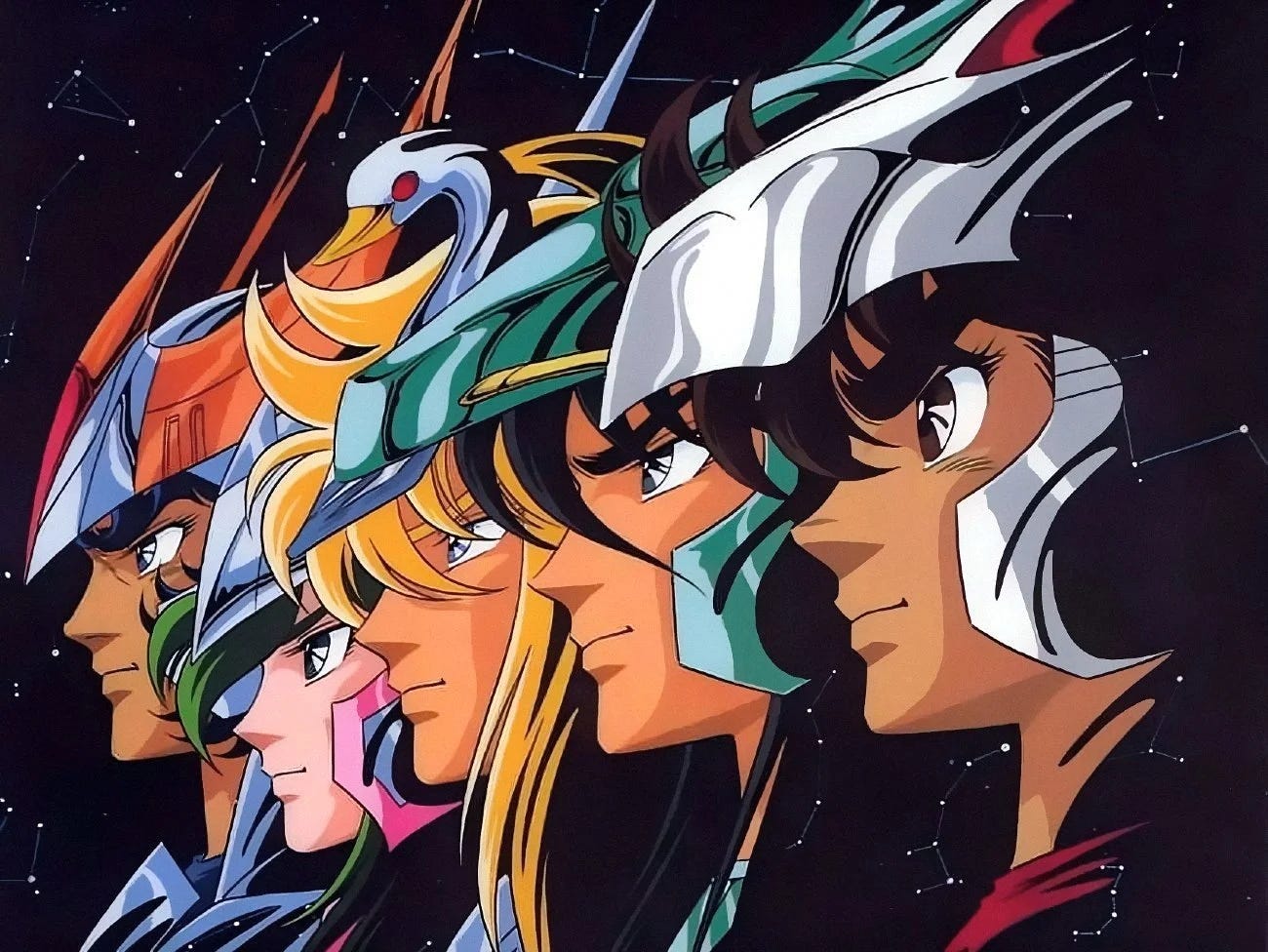
Saint Seiya isn’t fascinating because America somehow overlooked an obscure old anime. It’s fascinating because what America overlooked wasn’t obscure at all.
Millions of fans already knew Seiya. They knew Shiryu. Hyoga. Shun. Ikki.
They knew the Cloths. They knew Athena. They knew the Gold Saints. And they knew what it meant when one of these kids was broken, bleeding, barely standing…
and stood up anyway.
America wasn’t early enough to watch Saint Seiya become part of anime history.
But we’re not too late to understand why everyone else remembers it.
Sometimes discovering an old anime isn’t really discovering it at all.
Sometimes you’re just finally arriving at the party.
Join the Conversation
Anime history looks completely different depending on where you grew up.
So tell me:
What’s an anime that was absolutely HUGE where you grew up—but seems strangely overlooked everywhere else?