Opening Kickoff
In keeping with the Viking theme from yesterday, we have a very important question to answer:
When the Vikings were not sailing across the North Atlantic, trading, farming, fighting, telling stories, or making England extremely nervous… what did they do for fun?
They competed.
Of course they did.
Human beings have apparently always possessed the strange instinct to look at another person carrying something heavy, running somewhere fast, throwing something far, or hitting something with a stick and immediately think: I could beat that guy.
The Viking Age did not have organized professional leagues. No score bugs in the corner of the screen. No sponsored uniforms. No fantasy lineups. No guy yelling into a microphone that somebody lacked the heart of a champion.
But physical contests, games, tests of strength, strategy, and competition absolutely had a place in Norse life.
The Viking Ship Museum in Denmark even bases educational Viking games on a combination of written sources and archaeological finds from the Viking Age and early Middle Ages. Archaeology also gives us gaming pieces, dice, and game boards, while later written sources preserve stories of physical contests and ball games.
And the fun part? A lot of it feels surprisingly familiar.
- Wrestling.
- Swimming.
- Skiing.
- Archery.
- Strength contests.
- Ball games.
- Board games.
Strip away the uniforms, scoreboards, sponsorships, and instant replay, and the Vikings were doing something sports fans still understand perfectly well.
They wanted to know who was better.
The Surface Version
The popular image of a Viking usually does not leave much room for recreation.
- Helmet.
- Shield.
- Axe.
- Longship.
- Raid.
- Repeat.
Pop culture has spent generations turning the Viking Age into one endless road trip where everybody is either fighting someone, sailing toward someone they intend to fight, or drinking after fighting someone.
Real life was obviously much larger than that.
Viking Age Scandinavians farmed. Traded. Raised families. Crafted items. Travelled. Played music. Told stories. And yes, played games.
Some of those games seem to have been purely recreational. Others tested skills that were extremely useful in everyday Viking life.
Balance. Strength. Coordination. Endurance. Speed. Accuracy. Reading an opponent.
In other words, the line between sport, play, and training could get blurry.
And truthfully? It still does.
Boxing is a sport. Archery is a sport. Wrestling is a sport. Weightlifting is a sport.
All of those skills can be useful for considerably less friendly activities. The Vikings apparently understood that crossover just fine.
We need one important disclaimer before handing out the Viking ESPN package:
There was no ancient Norse rulebook preserved for us.
What we know comes from a mixture of archaeology and written material, much of which was recorded after the Viking Age. That means we need to be careful.
Finding gaming pieces tells us people played games. A saga describing a wrestling match or ball game tells us those activities mattered enough to become part of a story. But it does not mean we can recreate every rule, scoring system, or technique perfectly.
That actually makes this more interesting.
We have fragments. A game piece here. A board carved into wood there. A saga character getting extremely competitive somewhere else. And from those fragments emerges something very human:
These people liked to play. Sometimes very, very aggressively.
The Main Drive
Wrestling: The Original “Let’s Settle This”
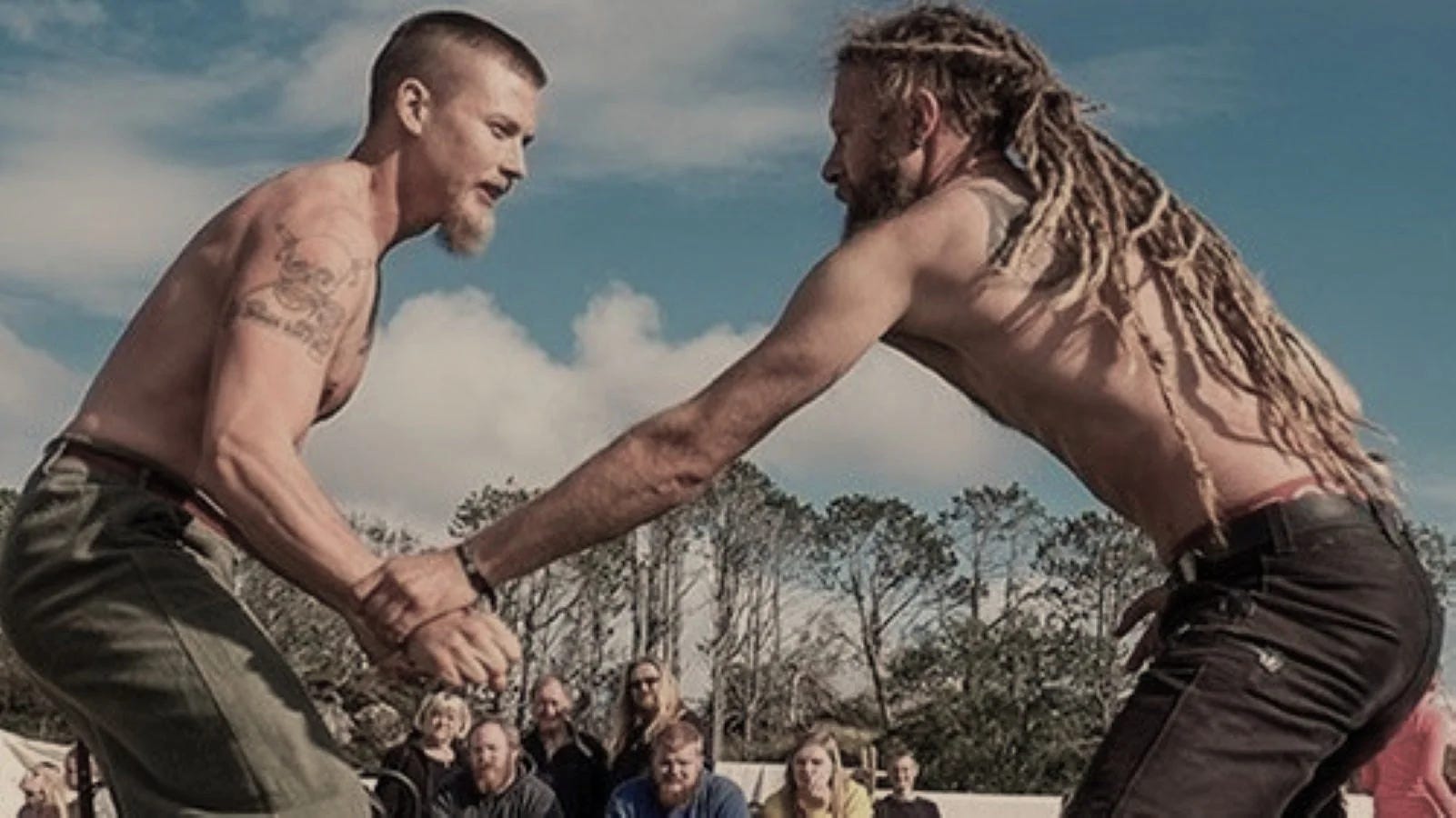
Start with perhaps the most universal sport imaginable.
Wrestling.
You do not need much equipment. You do not need a stadium. You barely need rules. You need two people and the mutual confidence that each one believes the other is about to hit the ground.
Wrestling appears throughout Old Norse storytelling, and Iceland later developed the wrestling tradition known as glíma, built around balance, positioning, trips, and throws.
We should be careful about simply taking modern glíma rules and declaring, “This is exactly how Vikings wrestled.” History is rarely that convenient.
But the larger connection is easy to understand.
Wrestling rewards exactly the kinds of traits Viking society could appreciate: Strength matters. But so does balance, leverage, footwork and timing. Knowing what your opponent is about to do.
That is why wrestling survives almost everywhere humans do.
Change the clothing. Change the rules. Change the century.
The basic argument remains: Put him on the ground before he puts you there.
Swimming: Useful Skill, Terrible Place to Trash Talk
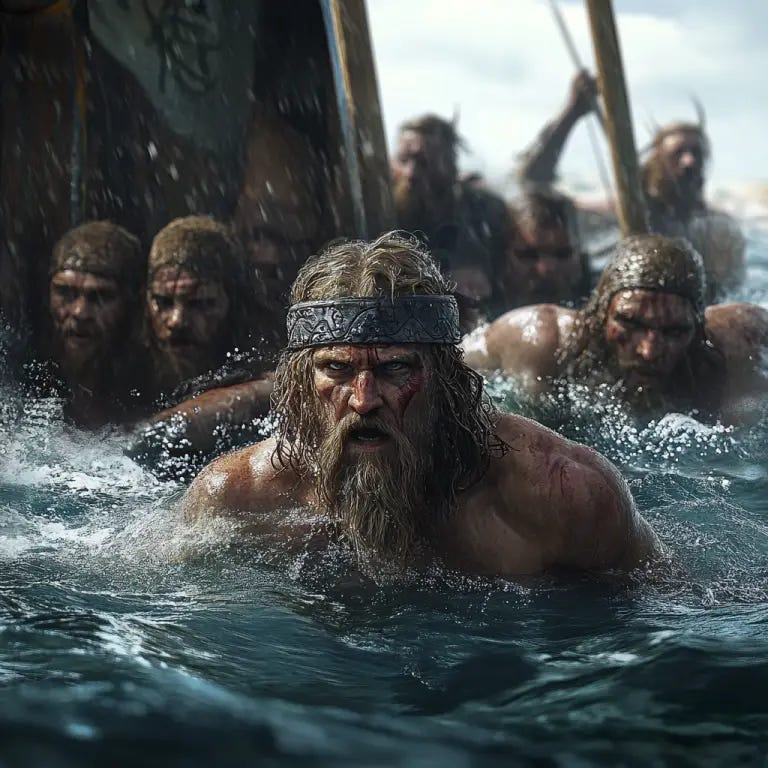
Swimming also appears as a measure of physical ability in Norse stories.
And for a culture built around ships and waterways? That tracks.
Swimming was not merely something you did at the hotel pool. Being comfortable in the water could be a genuinely useful skill. But humans being humans, useful skills tend to become competitions.
- Who can swim farther?
- Who can swim faster?
- Who can stay in longer?
- Who is absolutely going to regret saying, “Race you”?
That connection still exists today.
Running began as movement. Swimming began as survival. Throwing began as a useful physical skill. Then eventually somebody wanted to know who could do it best.
Congratulations. We invented sports again.
Skiing: Scandinavia Was Ahead of Us
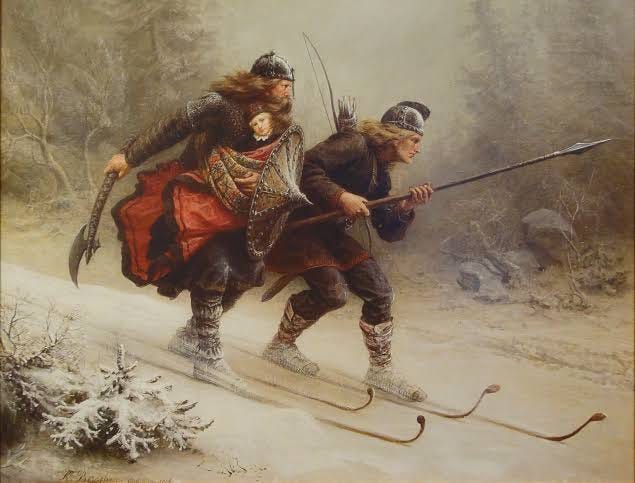
Then there is skiing.
Modern skiing can mean expensive resorts, chair lifts, goggles, perfectly groomed slopes, and paying twelve dollars for something called “mountain chili.”
For northern societies, skis had a much more practical beginning.
Snow was not a vacation destination. It was outside.
Moving efficiently across winter terrain mattered. So, skiing could be transportation, hunting skill, practical necessity, and eventually another way for people to demonstrate physical ability.
That makes Viking-era skiing wonderfully familiar.
A tool becomes a skill. A skill becomes something people are proud of.
Pride becomes: I bet I’m faster than you.
And now we have a race.
Archery and Throwing: Sport or Training?
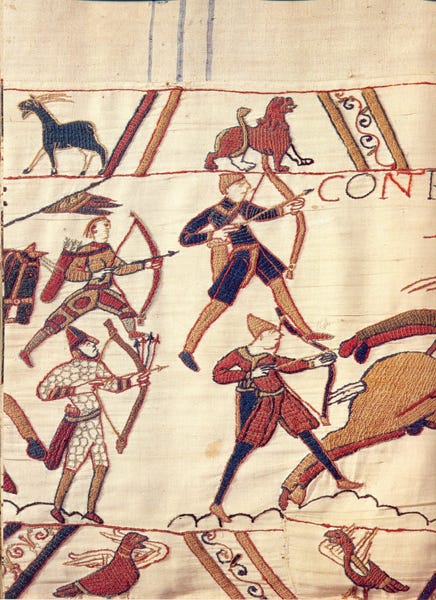
Archery creates another wonderfully blurry category. Was it recreation? Training? Competition? A practical skill?
Yes.
Probably some combination depending on the situation.
Target competition is almost inevitable once people become good at throwing or shooting something.
Who can hit the mark? Who can throw farther? Who can do it consistently?
The Swedish History Museum still uses tug-of-war, archery, and historical board games as hands-on ways for visitors to engage with Viking Age activity, while the Viking Ship Museum similarly uses games and warrior-training activities to explore the period.
The equipment has evolved. The instinct has not.
Modern Olympic archery may have standardized distances, equipment regulations, scoring rings, and officials.
But somewhere underneath all of that is still:
“See that thing over there? Bet I can Hit it.”
Strength Games: Proto-Strongman Energy
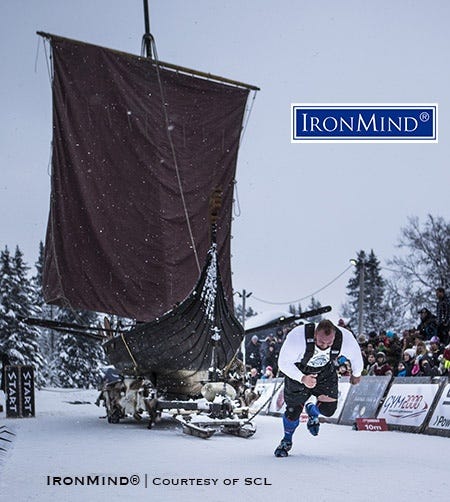
Then we get to perhaps the least surprising Viking sport category imaginable.
- Tests of strength.
- Lifting.
- Pulling.
- Carrying.
- Wrestling.
Anything that provided an opportunity to demonstrate that you were stronger than the person standing beside you.
This is where Viking recreation starts feeling like an early relative of modern Strongman competition.
Modern Strongman has Atlas Stones, log presses, farmer’s walks, vehicle pulls, and objects that appear to have been selected specifically because a reasonable human being would say: “Why would anyone lift that?”
Which is exactly why someone wants to lift it.
I have no trouble believing this basic conversation is ancient:
- “That rock is heavy.”
- “Yep.”
- “Bet you can’t lift it.”
And now an audience has formed.
Sports have been invented with less.
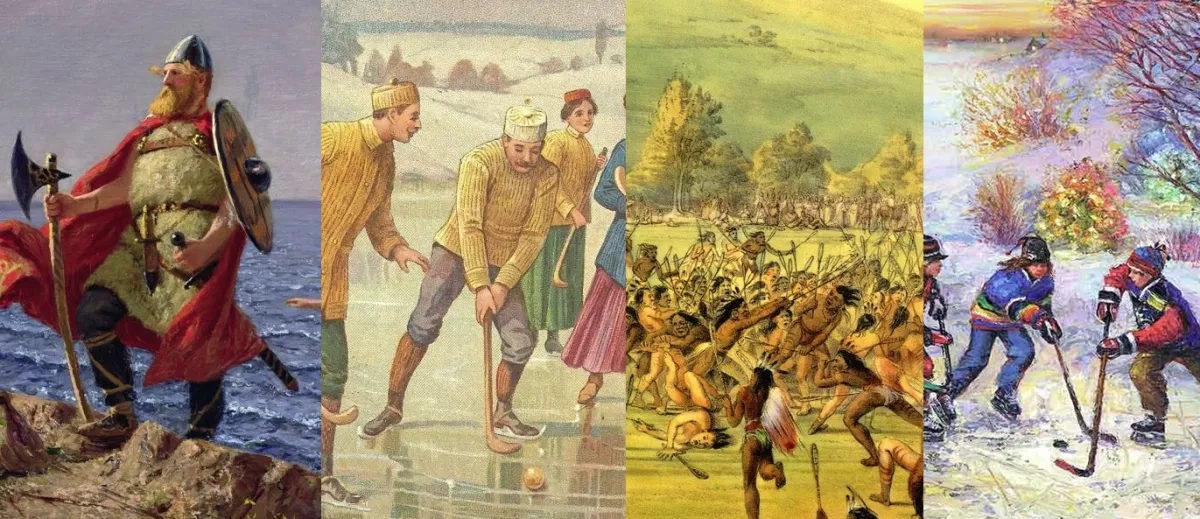
Knattleikr: Viking Baseball? Hockey? Lacrosse?
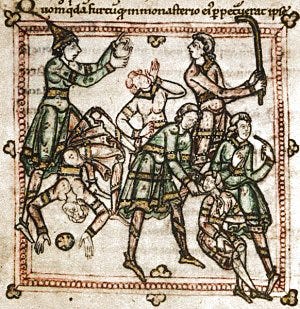
Now we reach the star of the show.
Knattleikr.
Literally, a ball game.
And this thing is fascinating because we know just enough about it to desperately want to know more.
Several Icelandic sagas mention knattleikr, but no complete rulebook survived. Modern researchers and reenactors therefore have to work from scattered descriptions rather than pretending we know exactly how the game functioned. Hurstwic’s research into the saga accounts emphasizes that uncertainty: the stories describe elements such as hitting, catching, running with a ball, physical contact, and disputes between players, but the full rules remain lost.
So, was knattleikr Viking baseball? Not really.
Viking hockey? Not exactly.
Lacrosse? Maybe there are similarities.
Rugby? You can find comparisons there too.
The real answer is better:
It was knattleikr.
Its own thing.
That is important because we have a bad habit of explaining every old sport by forcing it into a modern box.
“What modern game was this?” Maybe none of them.
What saga descriptions suggest is a competitive ball game with hitting, catching, running, and enough physicality that tempers could become part of the proceedings.
Which feels extremely on brand.
We lost the rulebook. We did not lose the knowledge that people got way too competitive playing it.
That may be the most timeless sports tradition of all.
The Indoor Game: Vikings Had Strategy Brains Too
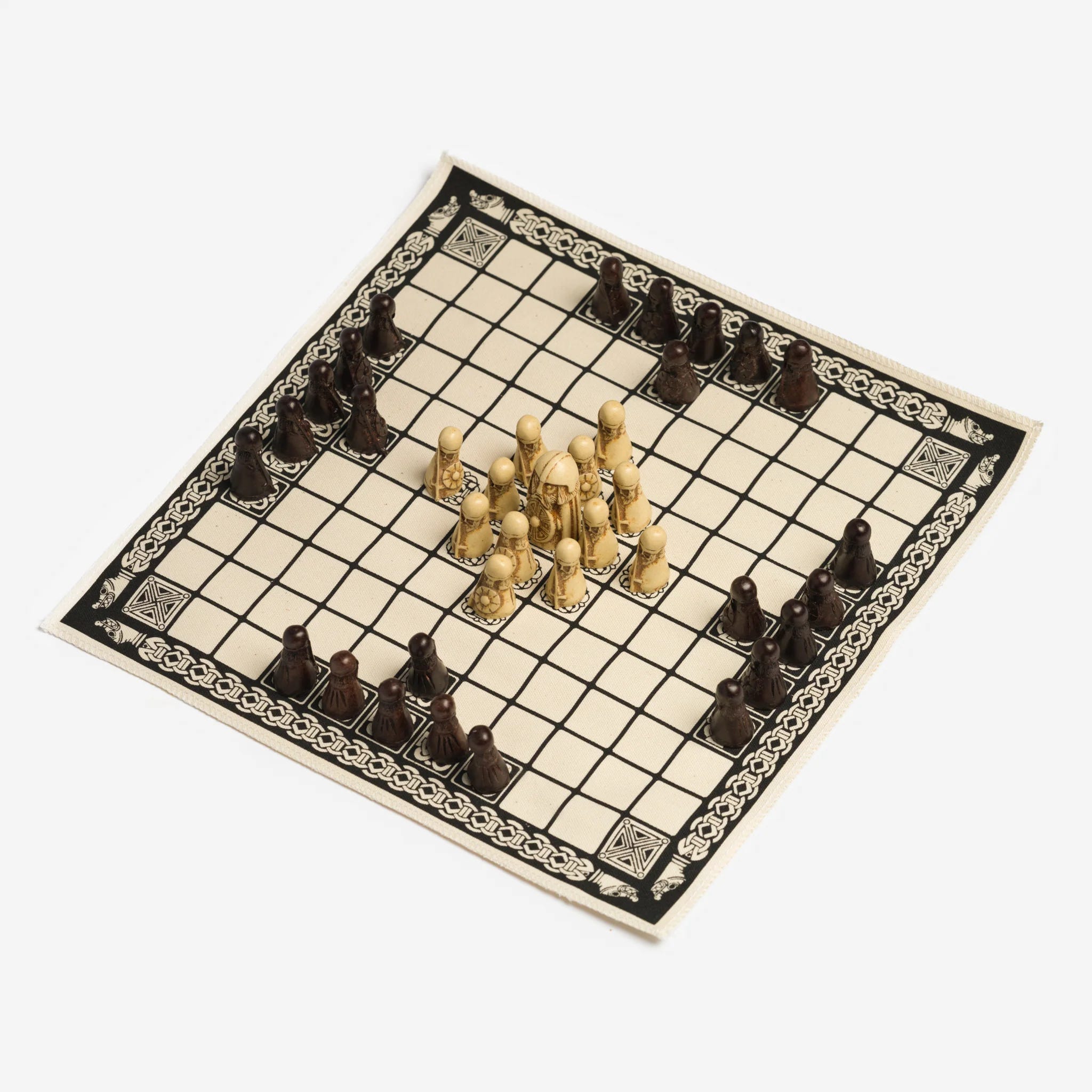
Physical competition was not the only game in town.
Archaeologists have repeatedly found gaming pieces and dice in Viking Age graves, made from materials ranging from glass and amber to bone, horn, and stone. Game boards have also survived, including a carved board from Aarhus. The Viking Ship Museum notes that saga literature refers to games such as nefatavl, while also warning that the exact rules of these older games are difficult to reconstruct.
Which means the Viking Age also had the person who could probably wrestle outside all afternoon and then come inside and ruin everyone’s evening over a strategy game. I respect that.
Games such as the tafl family involved strategy, positioning, and anticipating an opponent.
Different muscles. Same competitive urge.
The warrior wants to outmaneuver you. The board-game player also wants to outmaneuver you.
One of them just has snacks nearby.
What Made Viking Sports Hard?
This is probably the biggest difference between then and now: There was considerably less specialization.
Today, an elite athlete can spend years training almost exclusively for one sport.
- A sprinter sprints.
- A swimmer swims.
- A wrestler wrestles.
- An archer shoots.
Viking physical culture seems much closer to the idea of the all-around capable person.
Strength mattered. But so did agility. Endurance? You betcha. Balance? Totally. Weapon skill? C’mon. Swimming? In a maritime culture? Mental sharpness. All the time.
The Viking Ship Museum even points to a saga story in which a suitor is expected to prove himself through a package of abilities including weapons exercises, climbing, trials of strength, playing a strategy game well, and other accomplishments.
That is less like recruiting one specialized athlete.
That is the NFL Combine, Strongman, a chess tournament, and an outdoor survival show deciding to hold the same tryout.
Who Dominated?
We do not have Viking SportsCenter rankings.
No career leaderboards. No verified season statistics. No Norse GOAT debate we can solve by pulling up advanced metrics.
What survives instead is reputation.
Stories praise people for being unusually strong, unusually quick, skilled with weapons, excellent swimmers, capable wrestlers, talented skiers, or clever game players.
And that tells us something. The impressive person was often the well-rounded person.
Not simply someone who could overpower everyone.
Someone capable. Someone adaptable. Someone whose body and mind both worked under pressure.
That is a sports archetype we still love. The five-tool baseball player. The dual-threat quarterback. The complete athlete.
Why Fans Loved It
This part requires almost no historical translation. Why do humans enjoy sports now?
- Competition.
- Pride.
- Community.
- Entertainment.
- Status.
- Bragging rights.
Watching somebody perform something difficult extremely well. Seeing your person beat their person.
The technology surrounding sports has changed dramatically. The emotional machinery really has not.
You do not need a jumbotron to enjoy seeing someone make an incredible play. You do not need instant replay to argue about what just happened. You definitely do not need social media to trash talk your neighbor.
Humanity had that covered.
Why This Matters
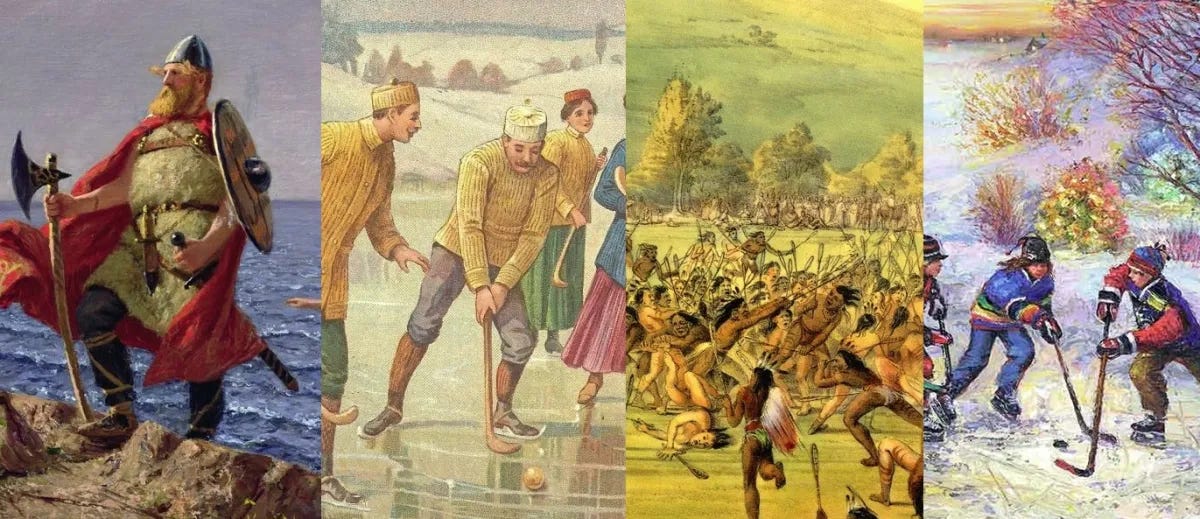
Viking sports matter because they help remove the costume.
When we hear “Viking,” it is easy to picture a historical character type instead of a person.
- Raider.
- Warrior.
- Explorer.
- Shield.
- Longship.
But people living a thousand years ago still needed recreation.
They still got bored. They still wanted to prove themselves. They still played. They still competed. They still probably talked considerably more trash than the archaeological record can preserve.
That makes history smaller in the best possible way.
Suddenly, the Viking is not just the person sailing toward England.
He is also the guy insisting that he can absolutely beat his friend in a wrestling match.
Now I know this person.
Modern Connection
Wrestling.
Swimming.
Skiing.
Archery.
Strongman competition.
Ball games.
Strategy games.
None of these would look exactly the same today. But the basic DNA is recognizable.
And if we want the anime comparison, Viking sports almost feel like the training episode before the raid arc.
Strength challenge. Wrestling match. Archery contest. Swimming competition. Strategy game. Mysterious ball sport whose rules nobody fully understands anymore.
Tell me that does not sound like the episode where the entire cast discovers which member of the party is secretly good at everything.
The equipment changes. The rules change. The jerseys appear. Sponsors arrive. Television arrives. Fantasy leagues arrive. Someone eventually invents debate television and makes everything worse.
But competition survives.
Final Whistle
The Vikings had sports. Maybe not sports exactly as we organize them today.
- No conferences.
- No franchises.
- No championship rings.
- No salary cap.
But they competed physically. They played ball games. They wrestled. They tested strength. They swam. They skied. They shot. They played strategy games.
And they did something people have probably been doing for as long as two humans have possessed approximately the same skill:
They compared themselves.
That may be the most familiar thing about Viking sports.
A thousand years changes the equipment. It changes the rules. It changes the stadium.
But apparently, it does not change the human instinct to look at the person next to you and say:
“Bet I can beat you.”
The Ctrl+Binge Question
If you had to enter one Viking sporting event, what are you choosing?
Wrestling?
Swimming?
Skiing?
Archery?
A strength contest?
Knattleikr?
Or are you staying safely inside with the board-game crowd?