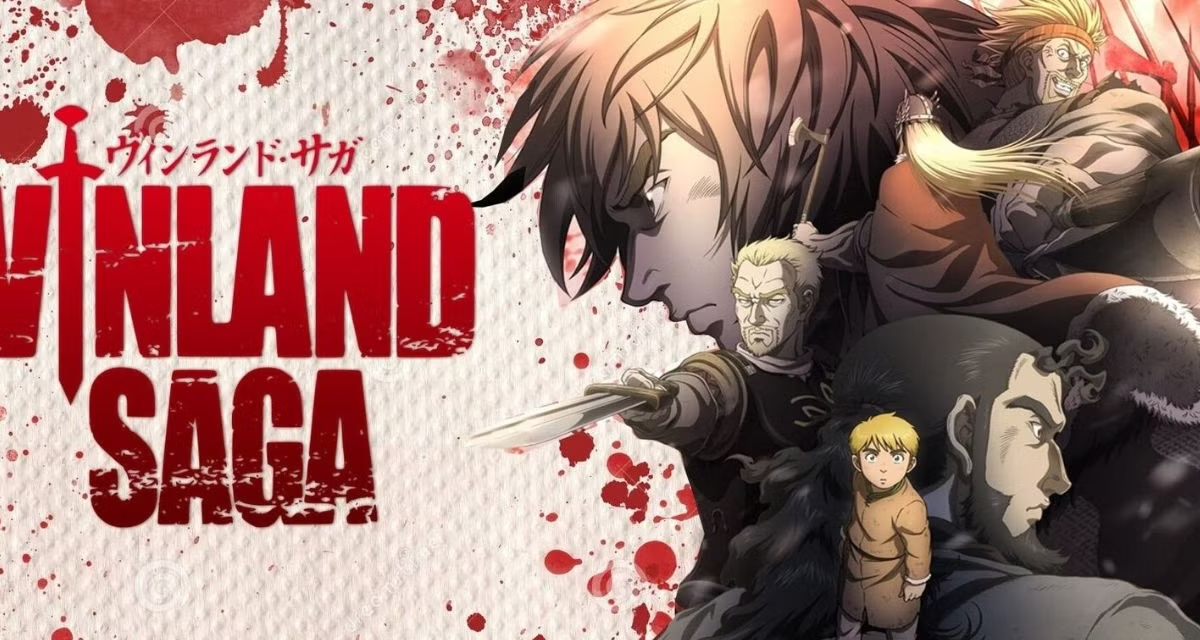
Warriors. Longships. Kings. Raids. Duels. Blood feuds. Revenge. Men trying to make their names immortal because their bodies certainly won’t be.
At first glance, Vinland Saga looks exactly like the kind of story centuries of heroic tradition trained us to recognize.
- A boy’s father is murdered.
- The boy swears revenge.
- He grows into a terrifying fighter.
- He lives among Vikings.
- He chases the man responsible.
There it is. There’s our saga.
Except Vinland Saga starts asking an uncomfortable question almost immediately: What if becoming the legendary warrior is actually the tragedy?
Because Thorfinn becomes everything the old heroic archetype seems to demand.
He becomes brave. Lethal. Fearless. Respected. Dangerous.
And absolutely miserable.
So, while Vinland Saga borrows the language of the Viking epic, it isn’t simply trying to recreate one.
It’s interrogating the values underneath it.
The old heroic question might be: What deeds will make people remember your name?
Vinland Saga asks something harder: What kind of person will be left when you’ve done them?
The Elevator Pitch
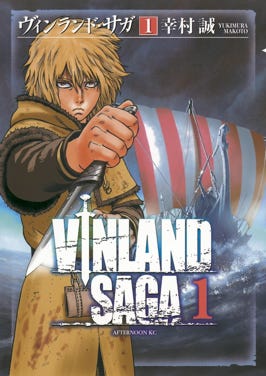
Vinland Saga follows Thorfinn, the son of a legendary warrior named Thors, during the Viking Age.
As a child, Thorfinn grows up hearing stories of distant lands and dreaming about Vinland; a peaceful country far across the sea.
Then his father is killed.
And Thorfinn’s life narrows into one purpose: Revenge.
He attaches himself to the mercenary band led by Askeladd, the man responsible for Thors’ death, waiting for his opportunity to defeat him in an honorable duel.
Years pass.
Thorfinn grows from an angry child into an extraordinarily capable warrior.
But while he’s becoming better at killing, he’s becoming worse at practically everything else involved with being alive.
That’s where Vinland Saga separates itself from a traditional revenge story.
This isn’t primarily a story about whether Thorfinn can defeat the man he hates.
It’s about what hatred does to someone who allows it to become an identity.
And eventually, it’s about whether that person can build something new after discovering revenge never contained the future he thought it did.
The anime’s own official description calls it the story of a “true warrior,” and for its second season explicitly frames what comes after the prologue as a story of atonement and salvation. That tells you exactly how seriously the series takes the question behind all its battles.
The Familiar Version
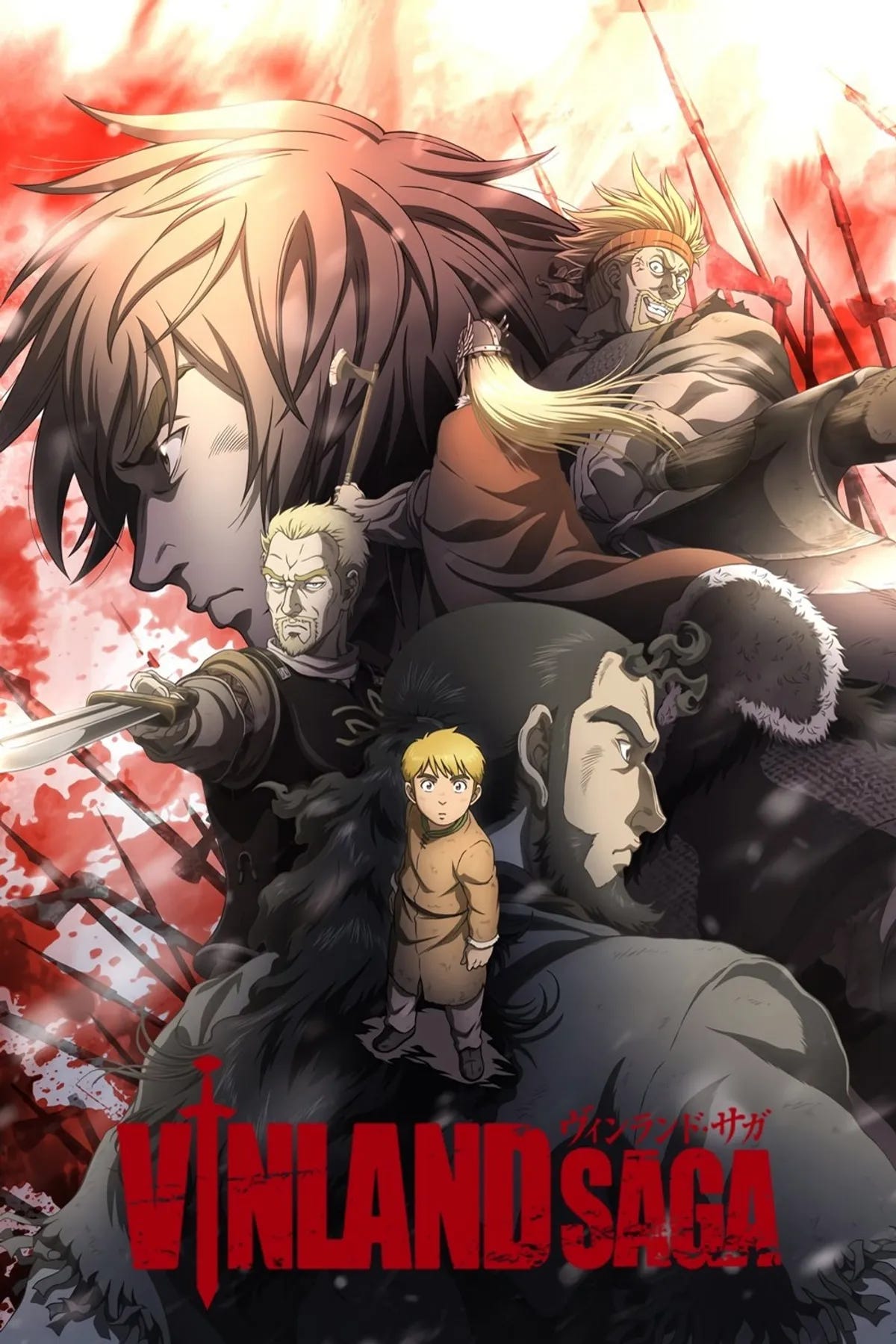
Most people encountering Vinland Saga for the first time could reasonably assume they’re getting a Viking action epic.
And to be fair? They are.
There are longships cutting through freezing seas. There are battles between armies. There are raids.
- Political schemes.
- Mercenary companies.
- Kings.
- Duels.
- Axes.
- Daggers.
People being thrown distances that should concern several branches of medical science.
Thorkell exists.
That alone should qualify this thing as Viking entertainment.
And Season 1 especially gives you plenty of the surface-level appeal associated with the warrior saga.
Thorfinn is fast, dangerous, and increasingly infamous.
Askeladd commands men through a mixture of intelligence, charisma, cruelty, and experience.
Canute becomes entangled in struggles for political power.
Warriors talk about strength. Men chase reputation. Death can become currency. The battlefield becomes a place where identity is proven.
None of that is accidental.
Vinland Saga understands why these stories endure.
Warriors are compelling. Courage is compelling. Strength is compelling. Watching somebody do something impossible while refusing to show fear is compelling.
The series never pretends otherwise.
But that’s the shallow read.
Because Vinland Saga isn’t really asking whether these men are impressive.
They obviously are.
The real question is: Should anyone want to become them?
That’s where the series turns.
Vinland Saga doesn’t deconstruct Viking heroism by making warriors boring.
It makes them incredibly cool. Then it shows you what their world costs.
The violence is exciting. The fighters are charismatic. The victories are impressive. And then the camera keeps rolling.
Thorfinn — The Boy Who Mistook Revenge for Purpose
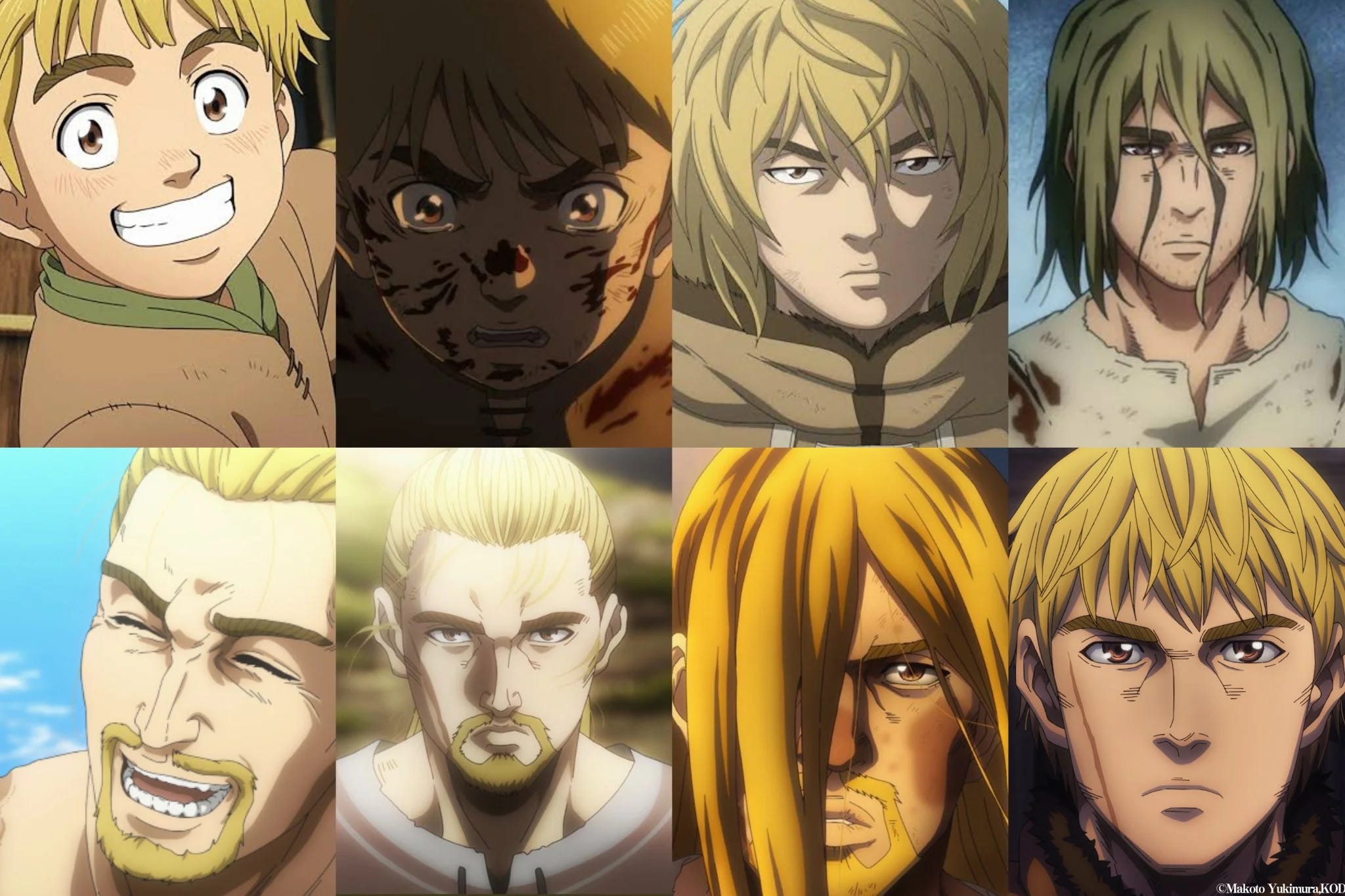
Thorfinn begins as a child fascinated by warriors.
That matters.
He doesn’t begin this story understanding the horror of violence.
He thinks swords are cool. He thinks adventure is exciting. He thinks his father must have incredible stories about war.
Then his father dies. And suddenly Thorfinn’s childish understanding of strength hardens into something far uglier.
He decides that revenge will honor his father. He decides that killing Askeladd will give meaning to the loss. And from that point forward, almost everything else becomes irrelevant.
Food matters because he needs to survive. Combat matters because it makes him stronger. Missions matter because Askeladd offers him chances at a duel.
Years disappear. Relationships barely develop. The future becomes a blank space waiting for one thing:
Askeladd’s death.
That’s what makes Season 1 so tragic.
Thorfinn actually succeeds at becoming an exceptional warrior. He just fails to notice that he’s building himself into the exact kind of person his father, Thors, was trying to save him from becoming.
He inherits his father’s physical ability long before he understands his father’s wisdom.
And there’s something heartbreaking about watching a child believe he’s honoring his father while walking directly away from everything that father tried to teach him.
Thors — The Warrior Who Already Finished the Argument
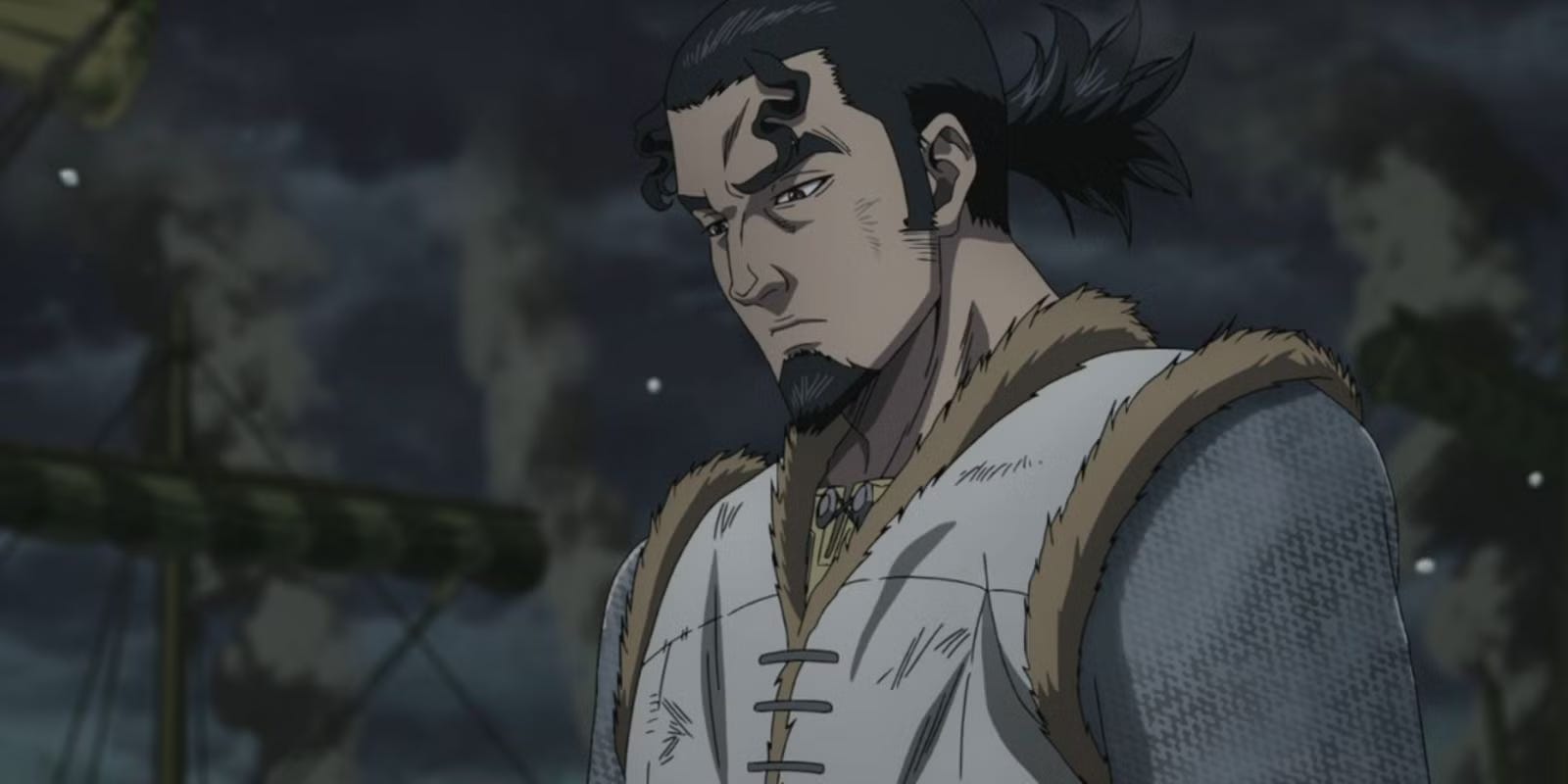
Thors is the philosophical foundation of Vinland Saga. And importantly, his worldview carries weight because he earned it.
Thors isn’t some sheltered man telling soldiers that violence is unpleasant.
He has fought. He has killed. He has lived the warrior life. He has been feared. He has been respected. He knows exactly what martial strength can accomplish.
And he walks away.
That makes his philosophy much harder to dismiss.
When Thors tells Thorfinn that he has no enemies, the idea sounds absurd to a child living in a world organized around conflict.
When he says a true warrior needs no sword, it sounds contradictory.
How could the strongest warrior be the one who doesn’t fight?
But Thors has already reached the end of the path everyone else is still celebrating. He knows what waits there.
That’s why his real accomplishment isn’t becoming powerful. It’s realizing power doesn’t need to be exercised simply because you possess it.
He has already become the legendary warrior. The next step in his growth is deciding he doesn’t want to live as one.
And that question. “What comes after becoming strong?” …eventually becomes Thorfinn’s entire life.
Askeladd — The Enemy Who Becomes Everything Else
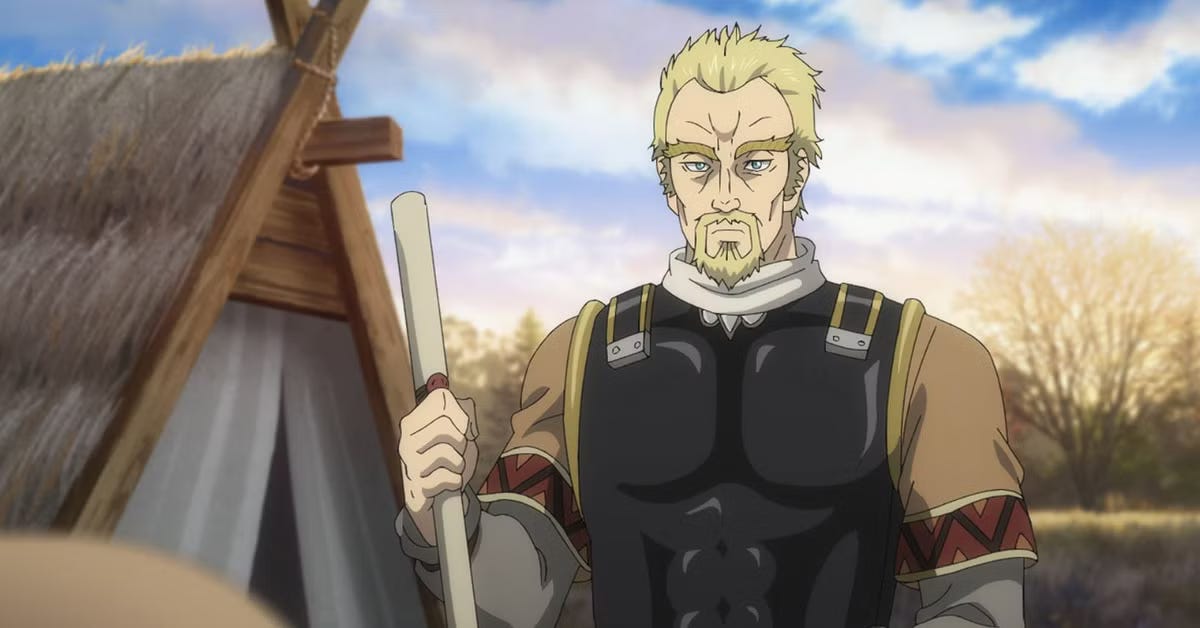
And then there’s Askeladd.
One of the best things Vinland Saga does is refuse to let him remain a simple revenge target.
- He’s cruel.
- Manipulative.
- Brilliant.
- Pragmatic.
- Charismatic.
- Dangerous.
- Capable of genuine horror.
And over time, he also becomes one of the most important people in Thorfinn’s life….Which is deeply uncomfortable.
Thorfinn thinks Askeladd is merely the obstacle between himself and closure.
Instead, Askeladd becomes his commander. Teacher. Enemy. Tormentor. Measuring stick. And in a warped way, something approaching a surrogate parental figure.
Thorfinn organizes his life around him.
Every duel. Every mission. Every improvement. Every humiliation.
Everything leads back to Askeladd.
So, the relationship becomes bigger than revenge.
And that’s why its ending matters so much.
If one person has become the organizing principle of your entire identity… What happens when that person disappears?
Thorfinn spends years telling himself that killing Askeladd will finally begin the rest of his life.
Then that future is taken away from him.
And he discovers something horrifying: There wasn’t anything underneath the revenge.
Canute — Another Answer to the Same World
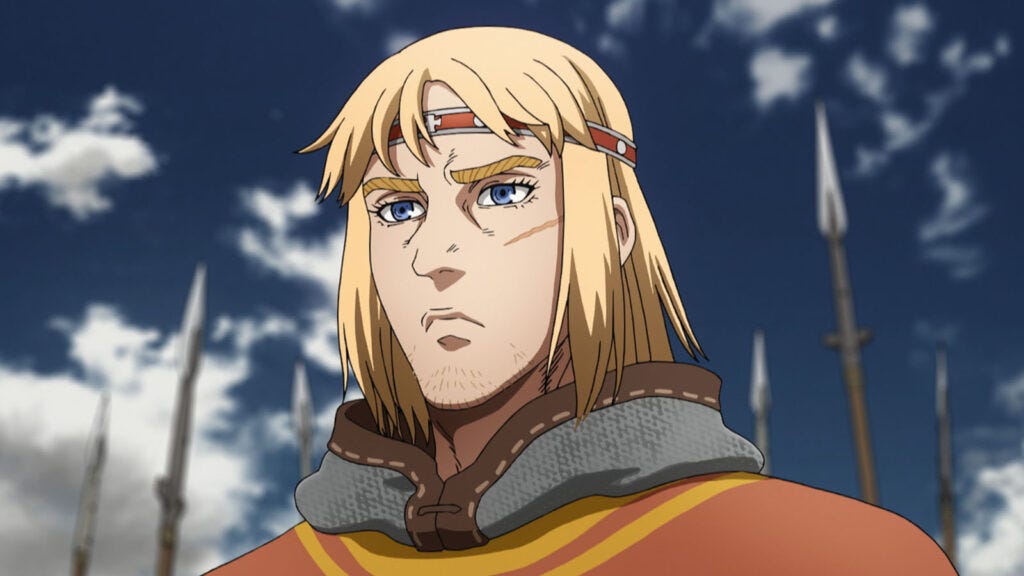
Canute gives us another response to violence.
Thors sees the warrior system and walks away from it. Thorfinn is consumed by it. Canute learns to use it.
That makes him an essential counterpoint.
He begins seemingly ill-suited to the masculine expectations surrounding him.
Then gradually becomes politically formidable.
He develops ambition. Authority. Conviction.
He learns that power can force the world to move.
And unlike Thorfinn, Canute increasingly responds to suffering by trying to place himself in a position strong enough to reshape society from above.
That’s fascinating because Vinland Saga doesn’t give us one simplistic moral equation.
Strength isn’t always useless. Political power isn’t automatically evil. Pacifism isn’t treated as easy.
Every character is looking at the same brutal world and asking: What am I supposed to do about this?
Their answers diverge.
That’s where the story becomes much richer than “violence bad.”
Thorkell — The Viking Archetype Given Legs
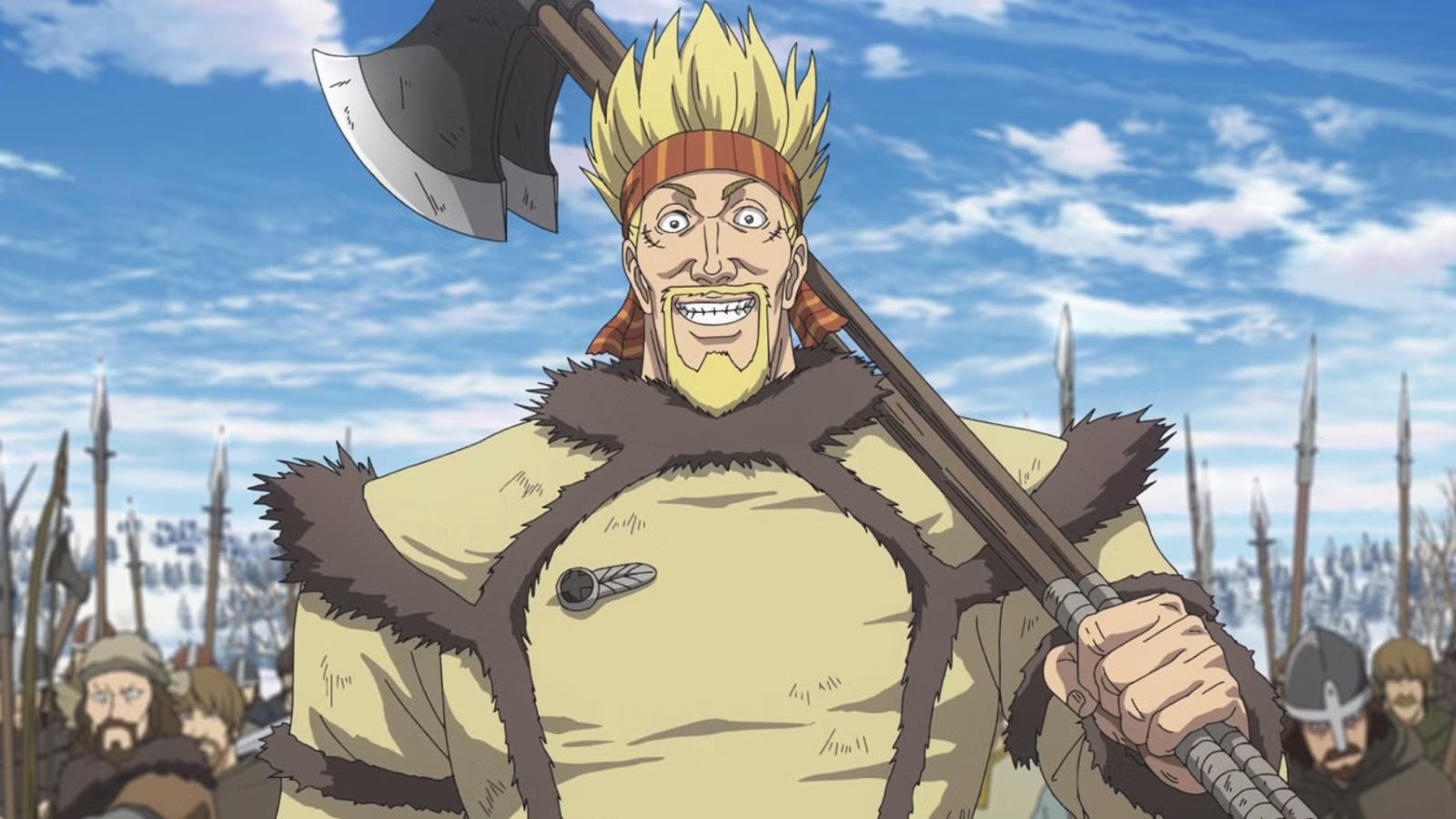
If we’re talking about warrior archetypes, we have to talk about Thorkell.
Because my God. Look at this magnificent bastard.
Huge. Fearless. Loud. Joyful. Violently enthusiastic. Completely alive when he’s fighting.
He values strength. He respects courage. He laughs at danger. He’s practically heroic legend walking around in human form.
And Vinland Saga does something smart with him: It allows him to be incredibly entertaining.
The series doesn’t turn the pure warrior archetype into some boring strawman.
Thorkell is fun. He’s charismatic. He’s sincere. He’s weirdly lovable. You understand exactly why stories about men like this survived.
But he’s also revealing something troubling. War is where Thorkell feels most alive.
So, what happens when violence isn’t simply something you’re good at? What happens when it becomes the only environment where existence makes sense?
That’s a very different question.
And Vinland Saga keeps letting us enjoy Thorkell while quietly asking whether we’d actually want his life.
Einar — What the Saga Looks Like From the Other Side
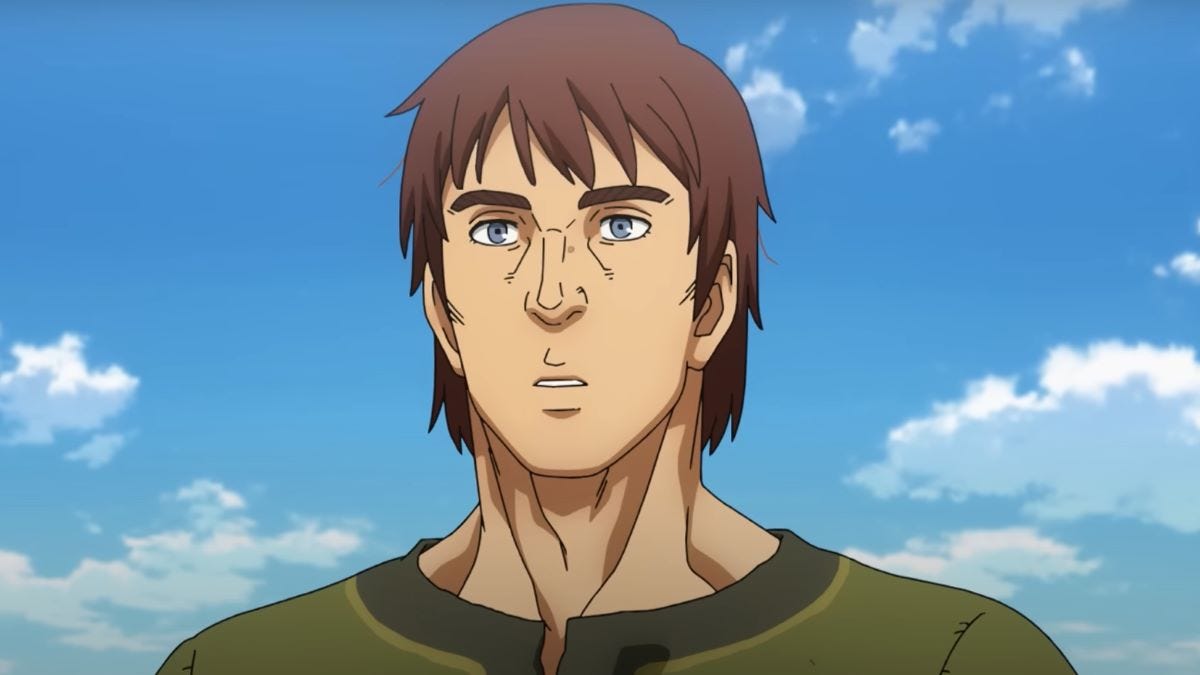
Einar becomes one of the most important characters in the entire story because he provides something warrior epics can easily obscure: The view from the village.
Heroes remember battles. Kings remember territory. Warriors remember worthy opponents. Einar remembers what happened to the people standing underneath all that glory.
His life is shaped by the consequences of Viking violence from the opposite perspective.
Homes destroyed. Family lost. Freedom taken. And that matters tremendously once his life intersects with Thorfinn’s.
Because Thorfinn has been the person on the other side.
He has participated in raids. He has helped violent men accomplish violent things. He has treated other people’s suffering as background scenery in the pursuit of his own revenge.
Einar forces the story to turn the camera around.
What does a Viking raid look like if you’re not following the Viking? What does the “adventure” look like to the farmer whose home is burning? What does the legendary warrior look like to the person burying someone afterward?
That’s one of the sharpest ways Vinland Saga interrogates the heroic tradition. The story doesn’t tell us the warriors weren’t impressive.
It asks us to remember the people paying for that impressiveness.
A Viking Saga Arguing with the Viking Saga
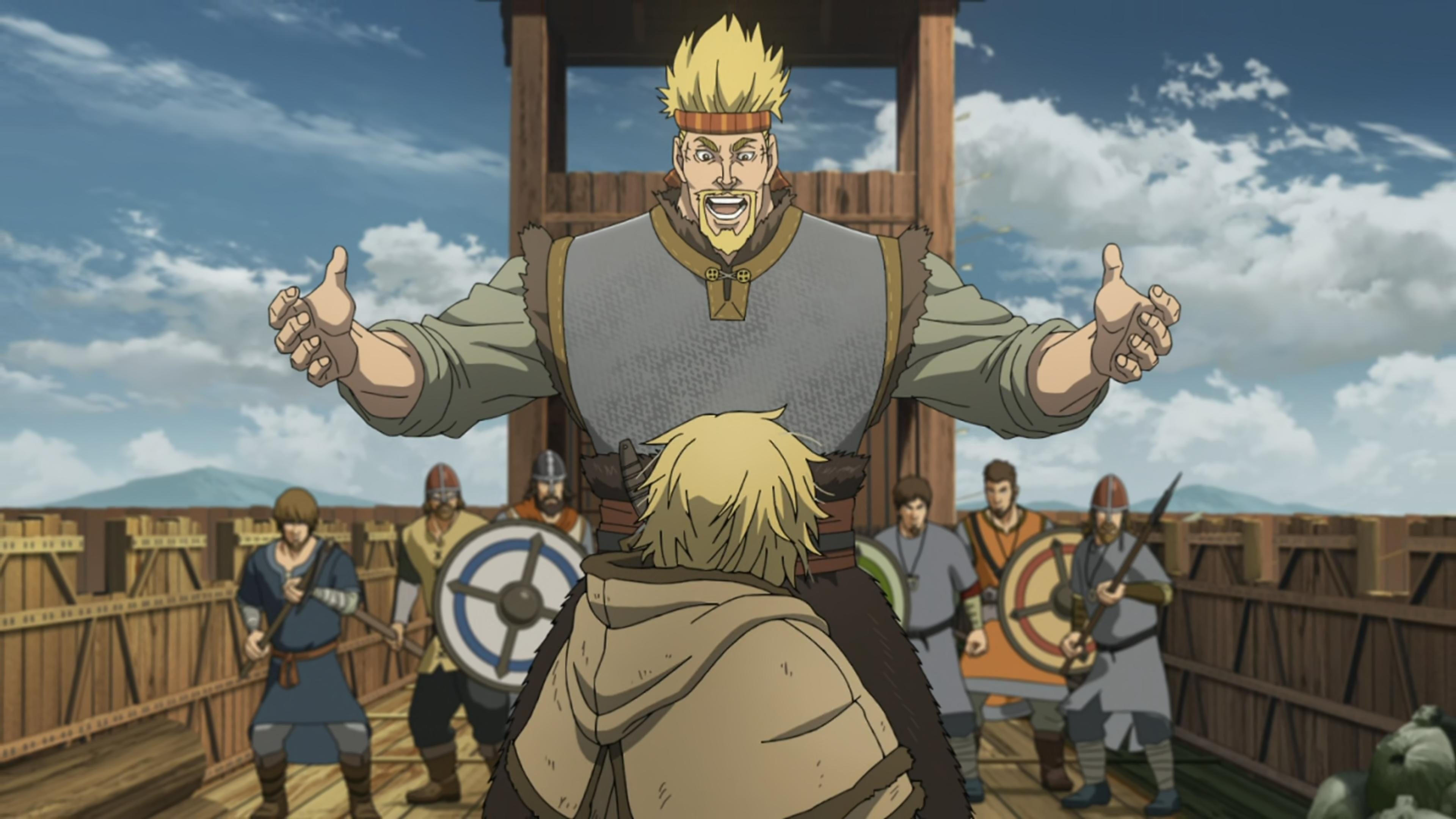
This is where the comparison with stories like Beowulf becomes really interesting.
Beowulf isn’t a simplistic celebration of violence.
It knows that warriors die. It understands feuds. It understands duty. It understands grief. It understands glory.
Its world is full of warnings about pride, vengeance, kingship, loyalty and the fragility of human life.
But its heroic vocabulary is still deeply concerned with martial courage, honor, reputation, loyalty and deeds capable of surviving the person who performed them.
Beowulf’s fame matters. His courage matters. His willingness to face death matters. Glorious deeds matter.
The poem itself repeatedly connects heroic action with lasting renown.
Vinland Saga understands that tradition.
Then it asks: What if the desire to become worthy of the song destroys the person living the life?
Thorfinn becomes the kind of warrior whose deeds could fill a saga. But the further he travels into that identity, the further he moves from happiness.
His reputation grows. His humanity shrinks. His fighting ability improves. His capacity to imagine a future disappears.
That’s the deconstruction.
Not that warrior stories were stupid. Not that courage doesn’t matter. Not that strength is meaningless.
But that a culture capable of recognizing only one kind of strength may create men who know how to die gloriously…and have absolutely no idea how to live.
The Worldbuilding — History With Dirt Under Its Fingernails
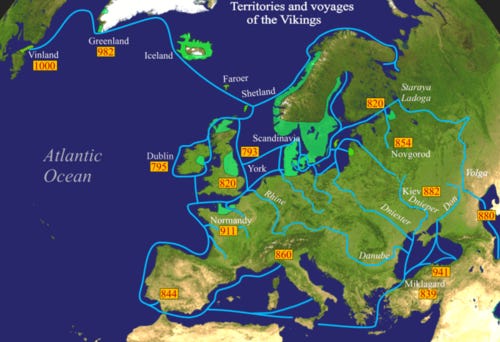
Vinland Saga benefits enormously from its historical setting because the philosophy never feels detached from the world producing it.
We get England.
Denmark.
Iceland.
The North Atlantic.
Kings.
Christianity.
Norse customs.
Mercenary armies.
Slavery.
Raiding.
Trade.
Exploration.
Political ambition.
And people trying to survive between all of it.
The world feels harsh because historically inspired institutions shape everyone’s possibilities.
You aren’t simply dealing with individually violent men. You’re dealing with cultures where violence can generate status.
Economies where slavery is normalized. Kings who need armies. Armies that need resources. Warriors who need employers.
Families caught beneath all of it.
That’s why Thorfinn’s eventual philosophy is so difficult.
He isn’t simply deciding: “I personally dislike fighting.”
He’s beginning to question systems that everyone around him considers normal.
That’s a much bigger challenge.
Can a person escape the values that created him? Can he refuse to participate in cycles everyone else treats as inevitable? Can he build something different without simply recreating the same violence somewhere else?
That’s why Vinland becomes more than a destination.
It becomes an idea.
Vinland — Not Somewhere to Conquer
Even the title eventually becomes part of the argument.
Vinland represents something beyond war. Beyond slavery. Beyond revenge. Beyond the social systems Thorfinn has spent his life trapped inside.
And there’s a beautiful reversal buried in that.
Traditional Viking stories often place enormous importance on voyages.
New land. New territory. New opportunities. New places to establish power.
Thorfinn wants to cross the sea searching for somewhere he doesn’t have to conquer.
That’s a completely different relationship with exploration.
The journey stops being: What can we take when we arrive?
And becomes: Can we find somewhere where taking isn’t necessary?
That’s an extraordinary evolution from the angry child who believed killing one man would fix his life.
Combat — The Violence Is Supposed to Look Good
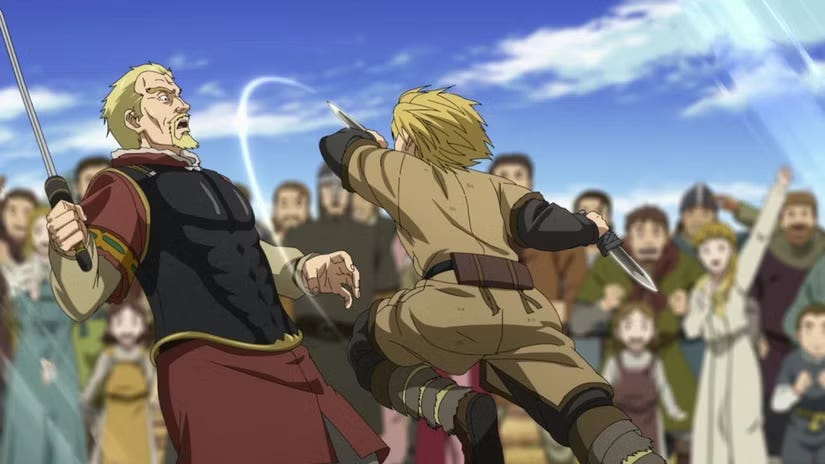
Here’s something important: Vinland Saga has fantastic fights.
And it should.
Thorfinn moves like a human knife. Askeladd is precise. Thorkell seems personally offended by the limitations of human anatomy.
Battles can be fast, brutal and thrilling. The choreography communicates personality. How someone fights tells us something about them.
And that’s essential to the series’ larger argument.
Because Vinland Saga understands why violence is seductive.
Strength looks impressive. Skill looks impressive. Confidence looks impressive. Standing across from someone terrifying and refusing to back down looks impressive.
If the series made every warrior pathetic and every fight miserable to watch, its philosophy would be easy.
Instead, it lets you feel the excitement. Then it shows you the bill.
That’s smarter.
The show doesn’t need to pretend martial greatness isn’t attractive. It asks whether attraction and virtue are actually the same thing.
Season 2 — Why Are We Farming?
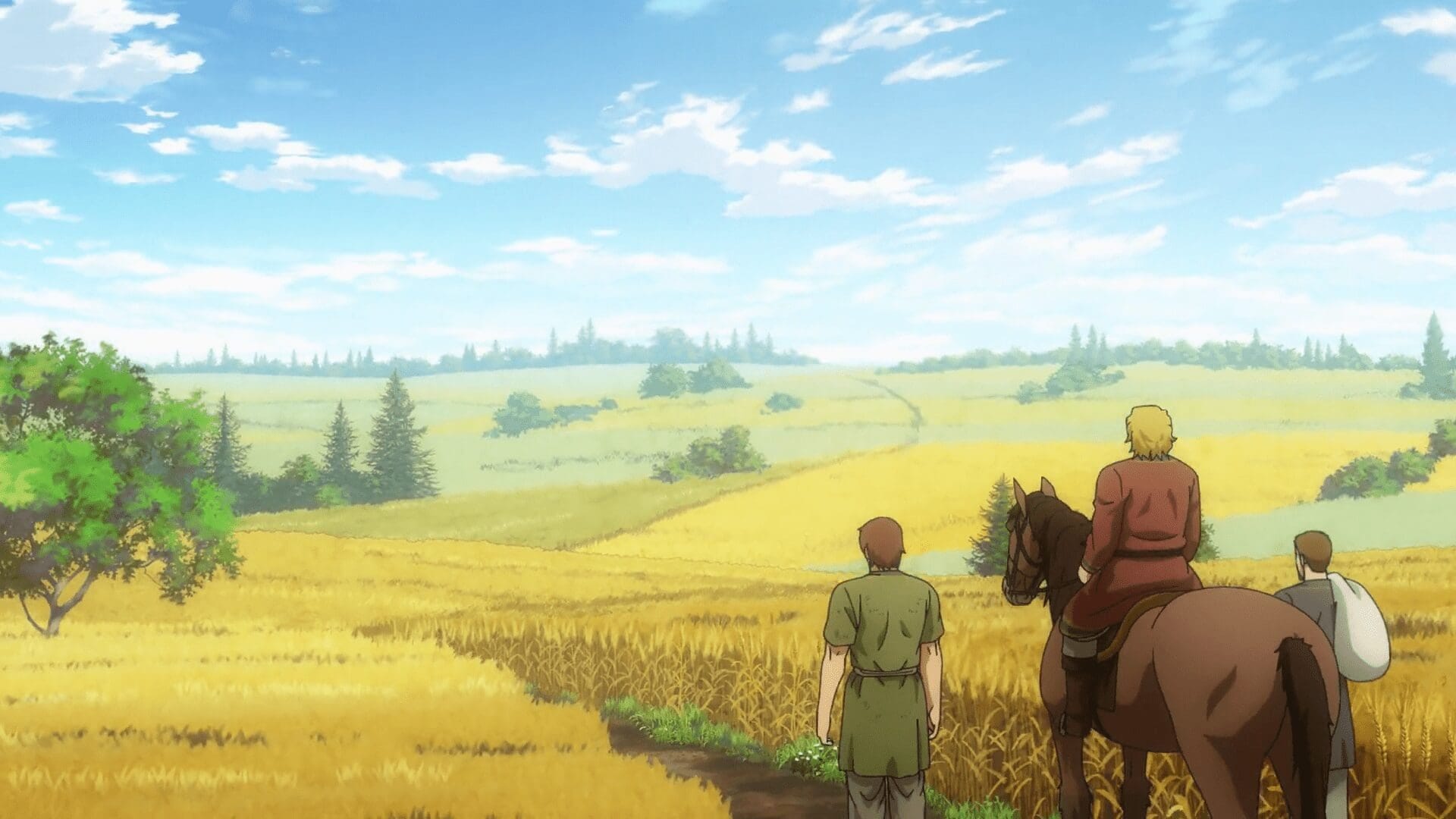
And then Season 2 commits what may be the most important act of the entire series.
It takes one of anime’s most dangerous young warriors…and gives him a field.
I love this.
Because inevitably someone watches Season 1, gets attached to the warfare, reaches the next stage of Thorfinn’s life and goes: WHY ARE WE FARMING?!
Because that’s the point.
Season 1 teaches Thorfinn how to destroy. Season 2 asks whether he can create.
Can he grow something? Can he maintain a relationship? Can he confront guilt? Can he imagine tomorrow? Can he become responsible for something other than another person’s death? Can he discover value in work that leaves something alive when he’s finished?
You don’t deconstruct the warrior by giving him a larger enemy.
You give him a field.
The battlefield asks: How many people can you defeat?
The farm asks: What can you build if you stop fighting?
That’s why the slower pace isn’t a betrayal of Vinland Saga.
It’s the payoff.
“I Have No Enemies” Is Not Naïveté
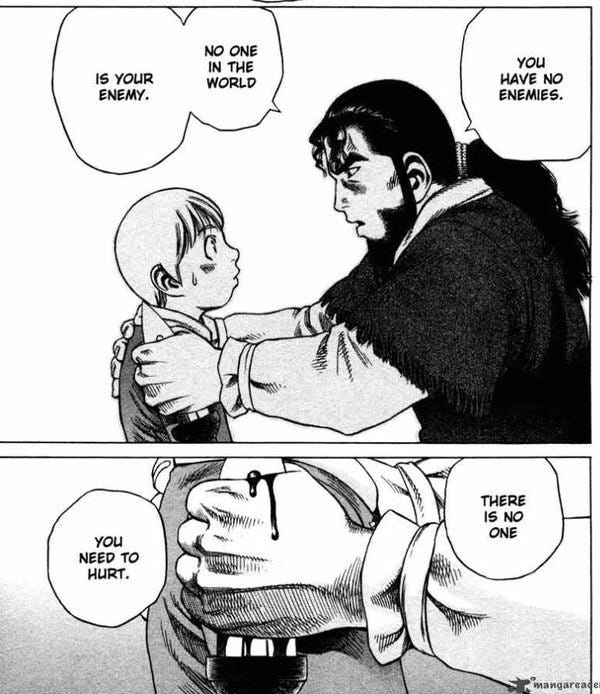
This is one of the most important things to understand about Thorfinn.
The idea that you have no enemies can sound childish when removed from context.
Just don’t hate anybody! Don’t fight! Peace!
Fantastic.
Except Thorfinn doesn’t arrive at this philosophy because he’s sheltered from violence. He arrives there because he understands violence too well.
He has killed people. Watched people die. Lost family. Dedicated years to revenge. Participated in warfare. Lost his reason for living. Been enslaved. Carried guilt. Had to confront what his own hands have done.
When someone like that begins rejecting the very concept that other human beings should automatically become enemies, the idea carries completely different weight.
He’s not saying conflict doesn’t exist. He’s not saying dangerous people aren’t real. He’s saying he doesn’t want hatred to determine the shape of his life anymore.
That’s not weakness.
For Thorfinn, violence is easy. He’s good at it.
The difficult thing is learning not to reach for the skill that defined him.
That’s why his father’s words eventually mean something they couldn’t possibly mean to him as a child.
The Emotional Core — What Is True Strength?
This is what Vinland Saga is really about.
Strength.
But not merely physical strength.
Every major character seems to offer a different definition.
- For young Thorfinn: Strength means being able to kill my enemy.
- For Thors: Strength means not needing to.
- For Askeladd: Strength means understanding people and surviving a brutal world.
- For Canute: Strength means possessing enough power to change the world.
- For Thorkell: Strength means finding something powerful enough to test you.
- And eventually, Thorfinn starts developing another answer: Strength might mean having every reason to hurt someone and choosing another path anyway.
That last definition is brutally difficult.
Anyone can proclaim peace when peace costs them nothing.
Thorfinn’s philosophy matters because choosing another path asks him to reject the very thing he’s best at.
Violence once gave him identity.
Now restraint has to give him purpose.
And that’s why his story becomes so powerful.
Style and Presentation — Yes, We Need to Talk About MUKANJYO
All right.
Special recognition is required.
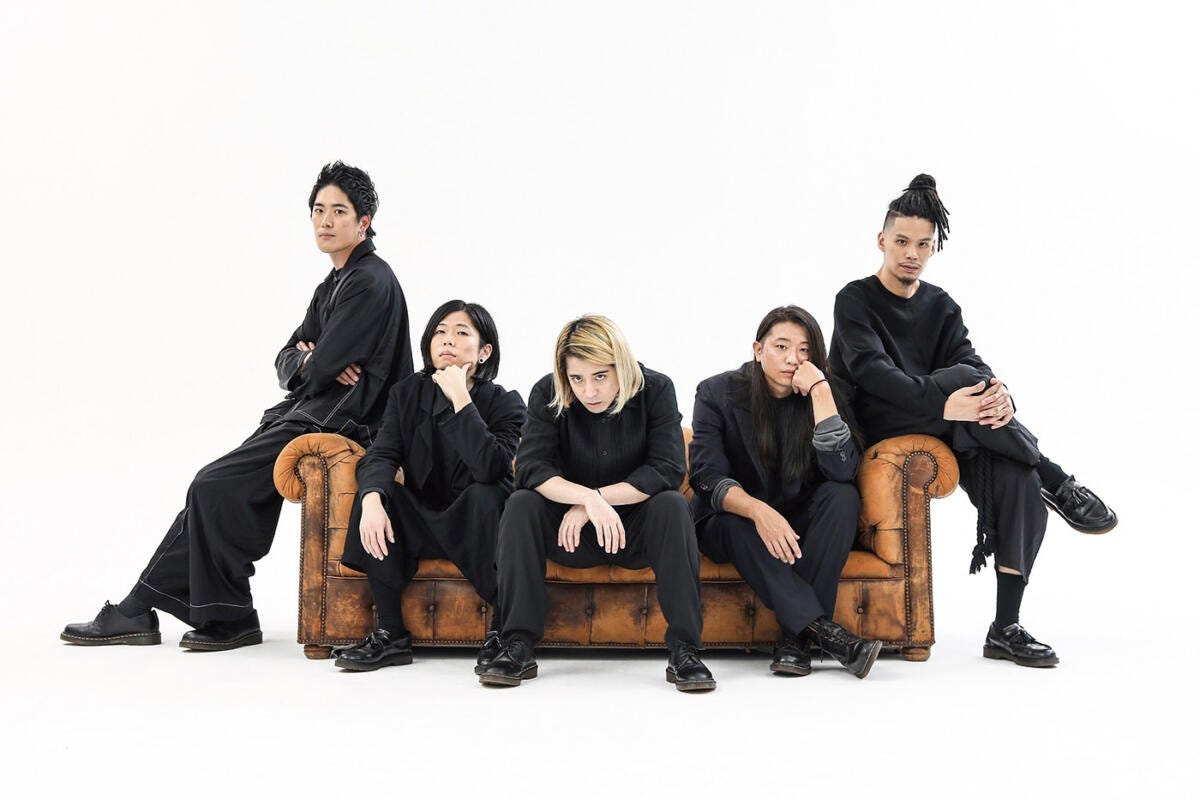
Because Vinland Saga’s first anime opening is an absolute BANGER.
“MUKANJYO” by Survive Said The Prophet.
One of the best openings in anime. Full stop.
The anime’s official materials confirm “MUKANJYO” as the first-season opening theme, and Survive Said The Prophet’s vocalist Yosh specifically connected the song’s creation to Thorfinn’s revenge, noting that revenge never brought fulfillment in his own experience. That’s almost absurdly perfect for everything the story is doing.
What’s fascinating is how perfectly that energy fits the Thorfinn we’re watching.
- Angry.
- Restless.
- Charging forward.
- Desperate.
- Convinced that movement must mean progress.
The song gives Season 1 exactly the aggressive momentum the story requires.
You hear “MUKANJYO” and think: LET’S GO.
And Vinland Saga eventually answers: Okay. But where exactly are you going?
That’s what makes the presentation so effective.
The series gives you the adrenaline of the warrior fantasy while slowly undermining the assumptions beneath it.
Let’s Be Fair
Vinland Saga asks a lot from its audience.
Especially once its priorities become clear.
If you enter solely wanting nonstop Viking warfare, the series will eventually challenge that expectation directly.
The pacing slows. Combat becomes less central. Long stretches become concerned with work, guilt, relationships, politics, philosophy and recovery.
That can absolutely frustrate viewers who fell in love with the pure momentum of Season 1.
Season 2 in particular requires patience.
It wants you to sit with Thorfinn. It wants you to feel how empty his life has become. It wants rebuilding to take time. And rebuilding is naturally less explosive than destruction.
Some viewers may also find parts of the combat exaggerated compared with the otherwise historically grounded presentation.
Thorkell is not exactly operating within OSHA-approved human specifications. But the heightened action serves the larger heroic atmosphere the story is examining.
Most importantly, this is not a show where the protagonist’s development can be measured by increasingly large explosions.
If you need constant escalation, Vinland Saga may occasionally feel like it’s moving in the opposite direction.
Because it is.
Who Is Vinland Saga For?
Watch Vinland Saga if you love:
- Historical fiction
- Viking-era stories
- Character-driven drama
- Revenge stories that actually interrogate revenge
- Political intrigue
- Complicated antagonists
- Morally difficult characters
- Incredible action that serves the story
- Slow-burn character development
- Stories about guilt and redemption
- Philosophical questions about violence
- Anime willing to completely redefine its protagonist
You may struggle with it if you need:
- Constant combat
- Traditional power progression
- Rapid pacing
- Clean heroes and villains
- Revenge stories that end with simple catharsis
- A protagonist whose growth always means becoming more dangerous
And if you’re willing to watch a story change alongside its protagonist?
There are few anime that commit harder.
Why Vinland Saga Matters
Vinland Saga matters because it understands something fundamental about heroic storytelling: It is easy to ask whether someone is strong enough to win.
It is much harder to ask what winning is supposed to accomplish.
Human cultures have spent centuries telling stories about warriors.
We remember their battles. Their courage. Their victories. Their deaths. Their names.
There’s something deeply human about that.
But Vinland Saga turns the old warrior story around and asks us to inspect the person inside the legend.
What did he lose? What did he become? Who paid for his glory? Can he ever stop?
And if he does stop…
what comes next?
That’s why the series’ shift away from revenge is not a rejection of its premise. It’s the fulfillment of it.
Thorfinn was never supposed to become the greatest killer. He was supposed to understand what his father meant by a true warrior.
That requires a much longer journey.
The sword is easy.
The harder question is whether he can ever become strong enough to put it down.
Ctrl+Binge Final Take
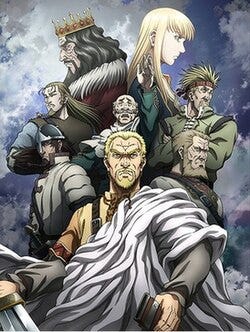
Thorfinn once believed becoming strong meant becoming dangerous.
His world gave him plenty of evidence.
Warriors earned glory. Kings earned power. Violence earned respect. Revenge gave him purpose.
Then he got everything that road had to offer. And discovered there was nothing waiting at the end of it.
So, Vinland Saga eventually asks a harder question than whether Thorfinn can defeat his enemies.
Can he become strong enough to stop needing them?
That’s what makes this more than a Viking action series.
It looks like a saga. Sounds like a saga. Fights like a saga.
Then turns around and asks whether the warrior those stories celebrate is actually the man we should want to become.
Thors gave Thorfinn the answer when he was still too young to understand it.
A true warrior needs no sword.
Join the Conversation
Which requires more strength:
Defeating someone who wronged you or having the power to hurt them and choosing not to?