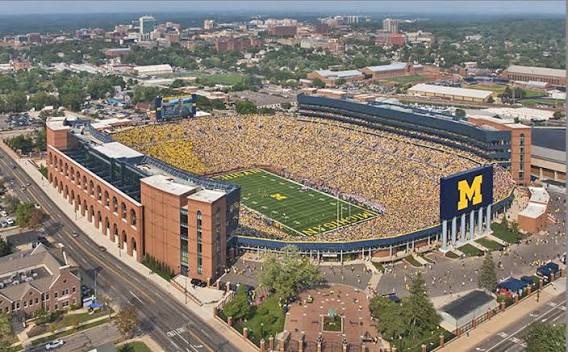
College football starts before kickoff.
It starts with flags on porches. Tailgates opening before lunch. Fight songs echoing across campus. Alumni putting on the same colors they wore twenty years ago. Students pretending they are not emotionally dependent on a third-and-seven.
A marching band forming a tunnel. A mascot doing something ridiculous. A rivalry trophy sitting somewhere nearby like an artifact from a fantasy quest. And somewhere, in some college town, an entire state is about to have its weekend ruined by a kicker.
That is college football.
Not just football played by college students. Not just the NFL with younger players. College football is school identity turned into a sport.
It is history, rivalry, marching bands, tailgates, mascots, recruiting, money, tradition, chaos, and 100,000 people yelling at a nineteen-year-old because he missed a tackle.
Last week, we talked about high school football and why Friday night still matters. This week, we graduate.
Because if high school football asks, “Where are you from?” College football asks, “Who do you belong to?” That is the biggest difference.
College football is tribal in a way few American sports can match. The NFL is cleaner. The players are the best in the world. The stadiums are enormous. The business is polished. The product is professional.
College football is messier. Older. Weirder. More emotional. More unreasonable. And honestly, that is why people love it.
So, with opening weekend arriving and a full Saturday slate waiting for us, let’s make college football make sense.
The Surface Version
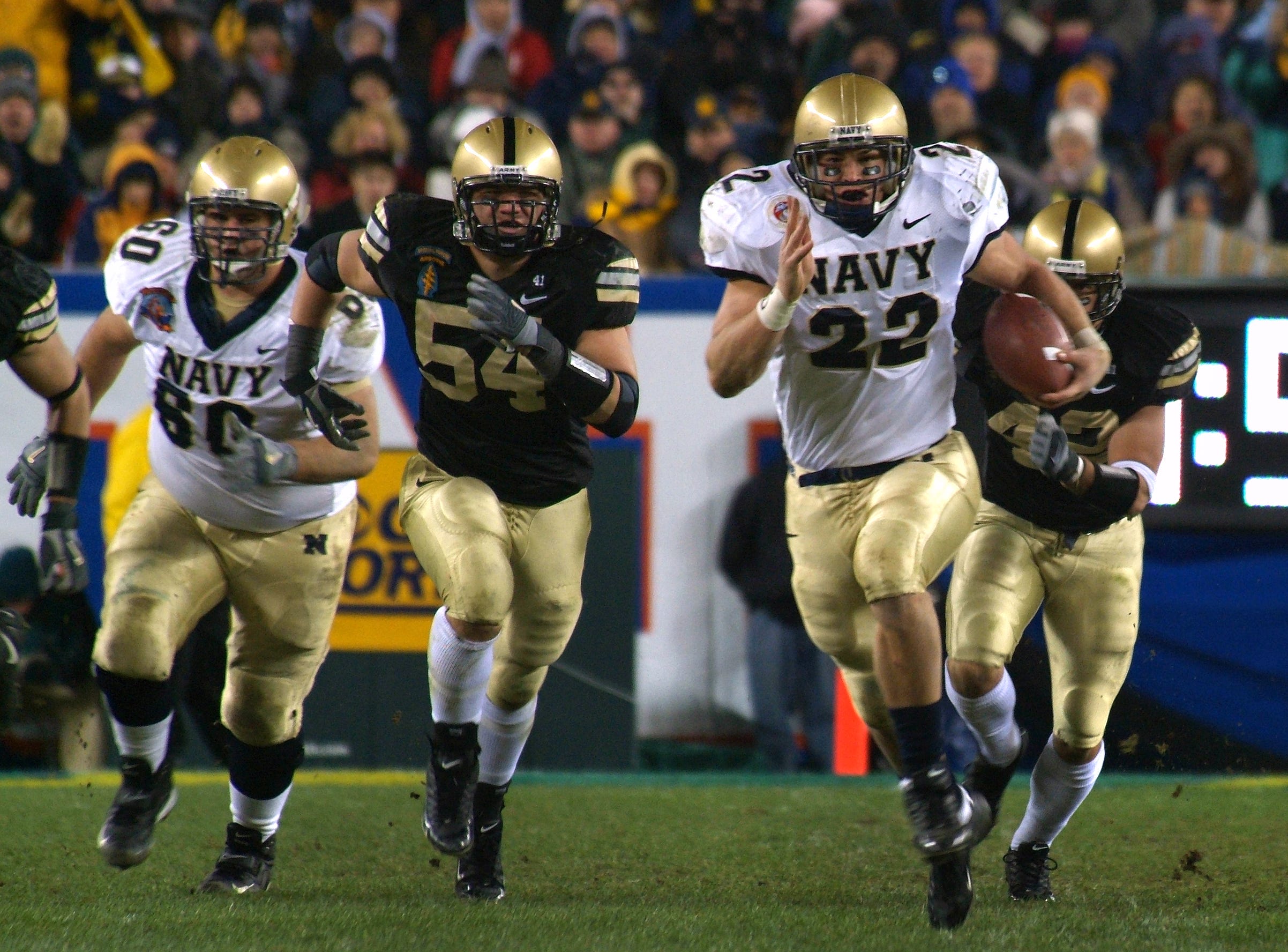
The surface version is easy: College football is football played by college teams. Same basic idea as the NFL.
Two teams. Eleven players on each side. Four downs to gain ten yards. Touchdowns. Field goals. Punts. Turnovers. Music playing loudly. Coaches wearing headsets and looking like they have seen the future and did not enjoy it.
That description is not wrong. It just leaves out the soul.
Because college football is not simply a developmental league for the NFL. Yes, plenty of future NFL stars come through college football. Yes, scouts watch. Yes, draft boards matter. Yes, recruiting rankings can make fanbases act completely normal, which is to say not normal at all.
But college football has its own identity.
- Its own calendar.
- Its own language.
- Its own grudges.
- Its own ghosts.
The players change every few years. The traditions do not.
That is one of the strangest and most powerful things about college football. The quarterback may only be on campus for three or four seasons. The fight song was there before him. The rivalry was there before him. The alumni were yelling before him. The colors were sacred before him. The stadium had memories before him.
In college football, the jersey is temporary. The story is not. College football is the sport where the past never really leaves the stadium.
That is the key.
Every Saturday, the game happening then is also carrying the weight of games that happened decades ago.
That is why people care so much.
When Michigan plays Ohio State, it is not just two football teams. When Texas plays Oklahoma, it is not just another neutral-site game. When Auburn plays Alabama, it is not just another in-state rivalry. When Army plays Navy, it is not just a football game.
College football does not simply have history. It makes people sit next to it every Saturday. That can be confusing for newcomers.
You turn on a game and hear announcers talking about a rivalry trophy, a coach from 1969, a game from 1984, a fight song, a conference championship scenario, recruiting implications, playoff rankings, and some punter’s grandfather who played in the same stadium.
And somehow, all of it matters.
College football is not clean. It is layered.
That is why the sport feels less like a schedule and more like a family tree where everyone is mad at each other.
How College Football Works, Without Needing a Coaching Binder
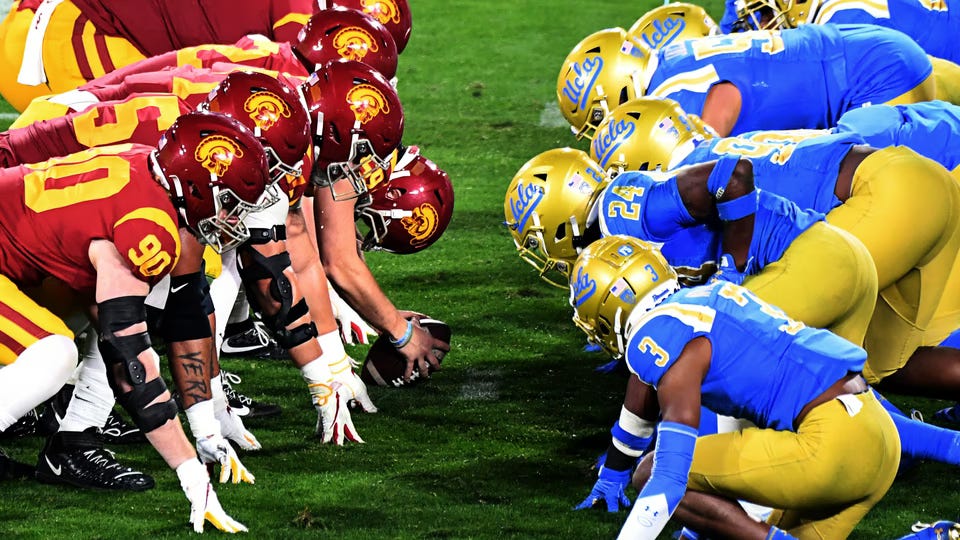
The basic game is still football.
One team has the ball. That team is the offense. The other team tries to stop them. That team is the defense.
The offense gets four downs to move the ball ten yards. If they do, they earn a new set of downs. If they do not, they usually punt, attempt a field goal, or gamble on fourth down.
A touchdown is worth six points. A field goal is worth three. After a touchdown, the team can kick for one extra point or try for two.
Special teams handle kickoffs, punts, field goals, and extra points. They do not get enough attention until something goes wrong, at which point everyone suddenly becomes an expert.
That is the field version. The bigger structure is where college football gets interesting.
College football teams play regular-season schedules that mix conference games, nonconference games, rivalry games, and sometimes early-season matchups designed to test or showcase a program. The sport has conferences, rankings, bowl games, playoff arguments, and a whole ecosystem of traditions that make the regular season feel like a long audition.
The regular season is shorter than baseball, basketball, or hockey, so losses feel heavier.
One bad Saturday can wreck a dream. One rivalry win can save a disappointing season. One upset can turn a normal weekend into a campus holiday. That scarcity gives college football urgency.
Baseball asks who can survive the summer. College football asks who can survive Saturday.
The Ancient Roots: Harvard, Yale, and the Ivy League
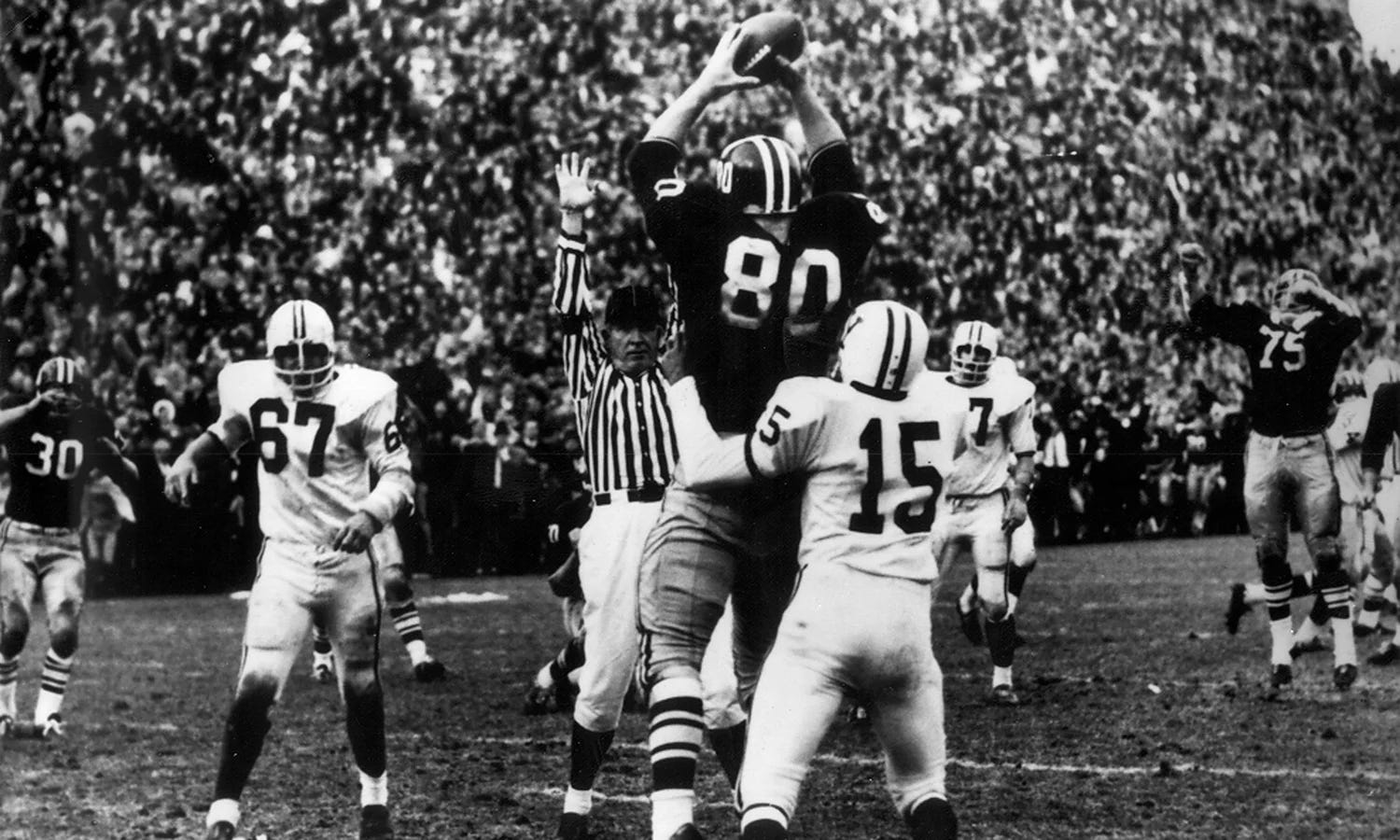
Before college football became SEC tailgates, Big Ten power, playoff rankings, national signing day drama, and television money, it belonged to a much older world.
Ivy League students. Eastern schools. Rule disputes. School pride. A sport still figuring out what it wanted to be.
Harvard’s own history notes that Yale hosted the first Harvard-Yale football game in 1875, a game Harvard won in front of student supporters who traveled from Cambridge. Harvard also describes the annual Harvard-Yale rivalry as “The Game,” tracing it back to that 1875 matchup.
That matters because it reminds us that college football was strange and tribal before it was huge.
The sport did not begin as a polished national entertainment machine. It began with schools trying to beat other schools and students deciding that mattered.
That is still the emotional engine.
The uniforms are better now. The stadiums are bigger. The money is much, much louder. But the oldest heartbeat is still there.
Our school against your school. Our colors against your colors. Our people against your people.
College football has changed constantly, but that part has never really left.
Rivalries: The Sport’s Real Religion
If you want to understand college football, you have to understand rivalries. Not just “two teams that play each other a lot.” Real rivalries.
The kind with names. Trophies. Songs. Signs. Generational grudges. Family arguments. Thanksgiving tension. Group chats that become unsafe after one blocked punt.
College football rivalries are not always rational. That is what makes them great.
The stakes might be a conference title. They might be playoff positioning. They might be recruiting momentum. They might be bragging rights. They might be nothing more than making sure the other fanbase has a miserable offseason.
That is enough.
Michigan vs. Ohio State: The Game
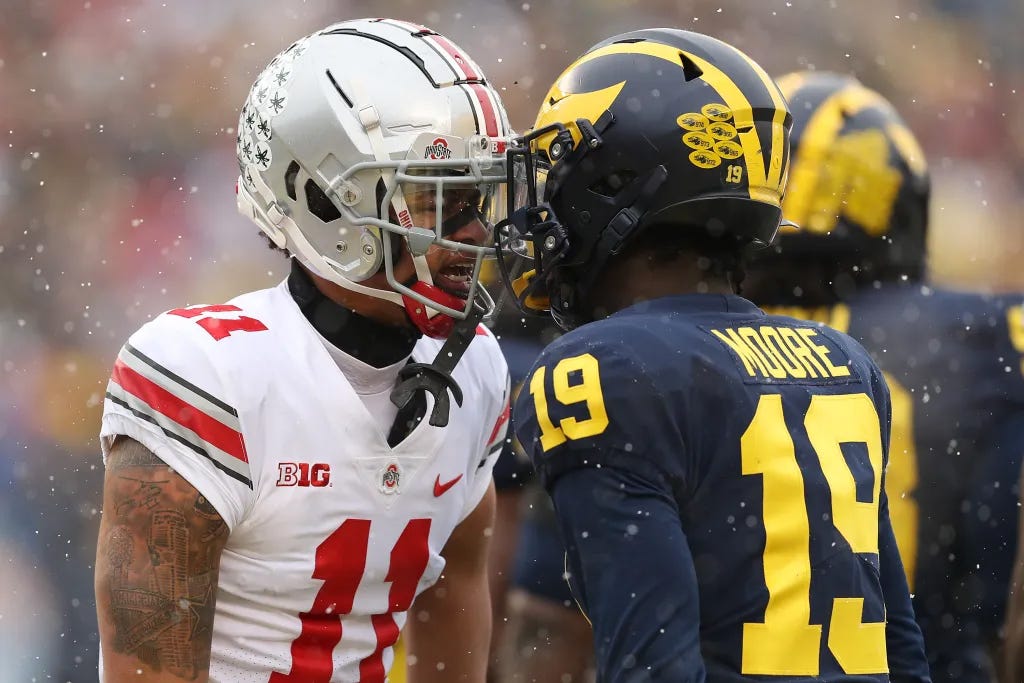
Michigan and Ohio State is often treated as the standard answer when people talk about the greatest rivalry in college football.
Part of that is history. The rivalry began when the teams first met in 1897, according to the University of Michigan’s Bentley Historical Library’s joint rivalry history with the Ohio State University Archives.
But the reason it became The Game is bigger than age.
It is geography. It is Big Ten power. It is recruiting. It is decades of stakes. It is two enormous fanbases measuring seasons by one Saturday.
For Michigan and Ohio State, the game at the end of the regular season is not simply “a game.” It is the game that can redeem a year or stain it.
That is why the name works.
No sponsor slogan needed. No poetic title needed.
Just:
The Game.
Everybody involved knows exactly what that means.
Texas vs. Oklahoma: The Red River Rivalry
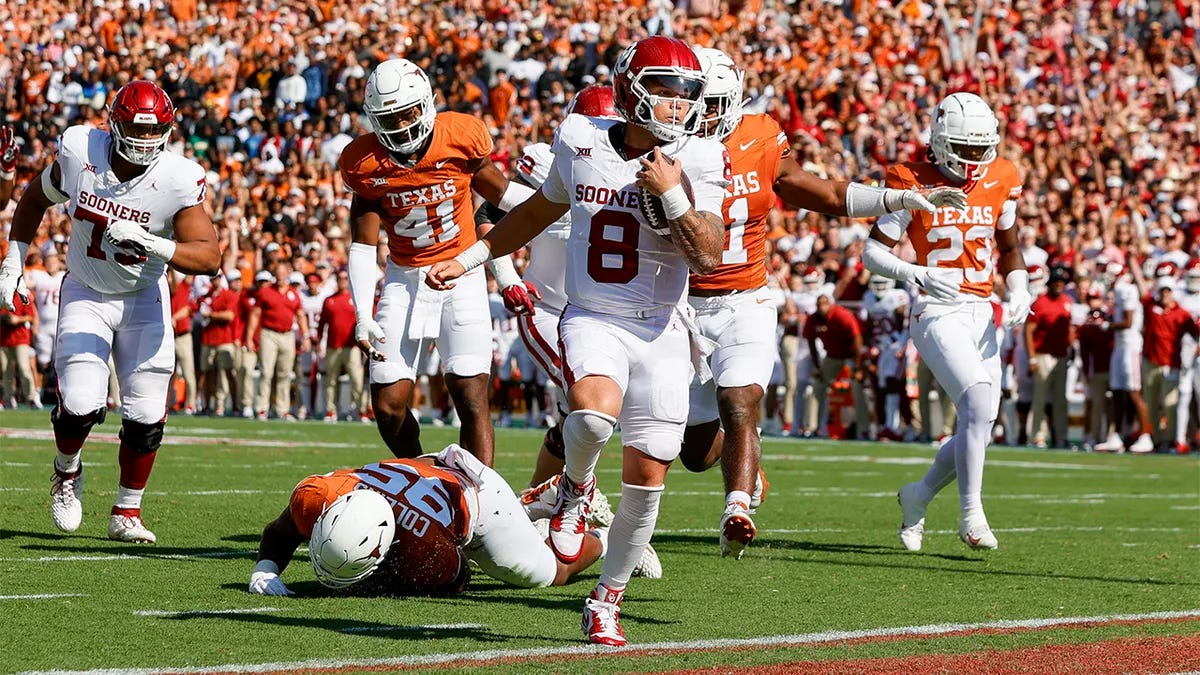
The Red River Rivalry is college football theater at its best.
Texas and Oklahoma meet in Dallas, at the Cotton Bowl, surrounded by the State Fair of Texas. The University of Texas notes that the rivalry has been played since 1900, has been held annually in Dallas since 1912, and has been a centerpiece of the State Fair since 1929.
That is absurd in the best way.
A neutral-site rivalry game. Two massive brands. One stadium split between burnt orange and crimson.
State pride. Fair food. Conference stakes. A trophy. A grudge.
It feels less like a football game and more like two neighboring kingdoms agreeing to fight in the middle of a carnival.
That is college football.
Oregon vs. Oregon State
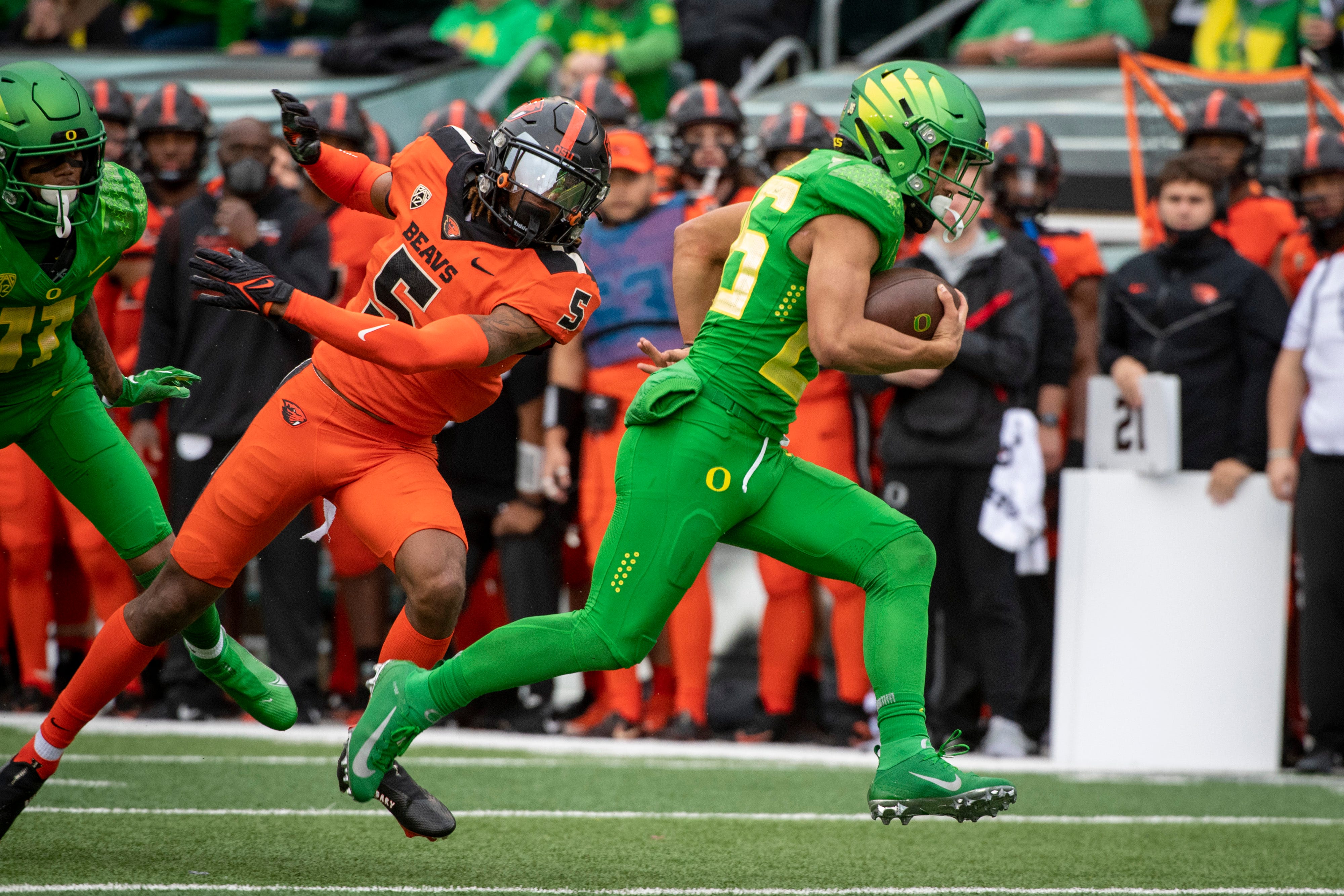
Oregon and Oregon State have one of the country’s most recognizable in-state rivalry histories. Oregon State’s archives have described the matchup as one of the most-played rivalry games in college football.
For years, the rivalry was widely known as the “Civil War,” but both universities agreed in 2020 to stop using that name.
That is worth mentioning because college football traditions are not frozen forever.
Some traditions stay. Some evolve. Some get reconsidered. That does not make the rivalry disappear.
It means the sport keeps arguing with its own history. And honestly, that is very college football too.
Rivalry Names Are Their Own Language
College football rivalries are so tribal that many of them do not even need normal names.
They sound like folklore.
- The Iron Bowl — Alabama vs. Auburn
Alabama’s biggest in-state grudge match, where the entire state feels like it has picked a side. The rivalry’s “Iron Bowl” name is tied to Birmingham’s industrial heritage and has become synonymous with Alabama-Auburn. - The Egg Bowl — Ole Miss vs. Mississippi State
Mississippi’s rivalry game, named for the golden egg-shaped trophy the winner gets to claim. - The Holy War — BYU vs. Utah
A rivalry with religious, cultural, and state identity baked into the matchup. - Bedlam — Oklahoma vs. Oklahoma State
The name fits because Oklahoma-Oklahoma State has always carried a little chaos with it. - Clean, Old-Fashioned Hate — Georgia vs. Georgia Tech
One of the best rivalry names in sports because it does not even pretend to be polite. - The Border War / Border Showdown — Kansas vs. Missouri
A rivalry rooted in geography, history, and two fanbases that never needed much help disliking each other. Missouri announced in 2004 that the rivalry would officially shift from “Border War” to “Border Showdown.” - The Backyard Brawl — Pittsburgh vs. West Virginia
A perfect name for two regional neighbors who play like they are fighting over the same driveway. - The Apple Cup — Washington vs. Washington State
A state rivalry tied to Washington identity and one of the cleanest trophy-game names in college football. - Paul Bunyan’s Axe — Minnesota vs. Wisconsin
The winner literally claims an axe trophy, because college football rivalry trophies are delightfully unhinged. - The Territorial Cup — Arizona vs. Arizona State
A rivalry name that sounds older than the state itself, which is exactly the kind of energy college football loves.
That is not a normal sports schedule. That is a map of grudges.
Some names come from geography. Some from trophies. Some from state pride. Some from old wounds. Some are just weird enough that only college football could have kept them alive.
That is the point.
College football does not merely organize games. It names them like legends.
The Stars: College Football Makes Legends Before the Pros
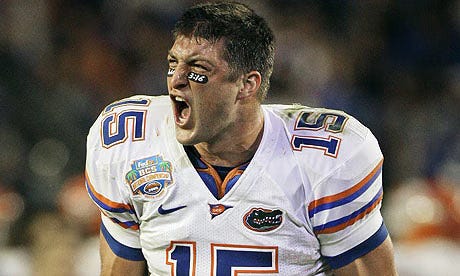
College football stars feel different because fans often meet them before they become professional brands. They are campus legends first.
Before the NFL draft. Before commercials. Before fantasy football. Before the business fully takes over.
A great college football player can belong to a campus in a way professional athletes rarely belong to a city.
Tim Tebow is the perfect example. Tebow became the first sophomore to win the Heisman Trophy, and he remains one of the defining personalities of modern college football. He was not just a quarterback at Florida. He was an emotional engine. A symbol. A weekly argument. A player people either loved, respected, rolled their eyes at, or all three at once.
Herschel Walker at Georgia felt mythic. He won the Heisman Trophy in 1982, becoming the second Georgia Bulldog to win it. He looked like a player from the next level who had arrived early.
Bo Jackson at Auburn belongs in that same folklore category. He won the Heisman in 1985, but even that undersells the way people talk about Bo. He became less like an athlete and more like a tall tale that happened to have box scores.
And then there is O.J. Simpson.
You have to handle that name carefully because history changed how it feels. But as a college football figure, Simpson was enormous. The Pro Football Hall of Fame describes him as a two-time unanimous All-American at USC and the 1968 Heisman Trophy winner.
That is part of college football too. The sport creates legends early. Sometimes those legends age cleanly. Sometimes they do not. Sometimes the player’s later life completely changes how the old highlights feel.
College football does not exist outside history. It gets tangled in it.
Why Fans Love It
College football gives fans more than a sport. It gives them identity. That is why people who did not even play football can care so deeply.
Maybe they went to the school. Maybe their parents did. Maybe their whole family did. Maybe they grew up nearby. Maybe the team was on every Saturday in their house. Maybe the colors just became part of childhood.
That is how college football gets you. It does not ask only who you root for. It asks where your people are.
- The campus matters.
- The colors matter.
- The mascot matters.
- The band matters.
- The fight song matters.
- The stadium matters.
- The rival losing matters almost as much as your team winning.
College football is a beautiful, unreasonable machine for turning Saturdays into emotional weather.
A win can make the whole weekend feel lighter. A loss can make every family gathering feel like a postgame call-in show.
And when a rivalry game goes wrong?
Good luck.
Someone is bringing that up for the next 364 days.
The Modern Shift: NIL and Players Getting Paid
For decades, college football sold itself as amateur athletics while becoming one of the biggest entertainment engines in American sports.
That tension was always there.
The stadiums were huge. The TV deals were huge. The coaching salaries were huge. The merchandise was huge. The postseason arguments were huge.
But the players, the people actually taking the hits and creating the moments, were restricted in how they could profit from their own names.
Then NIL changed the conversation.
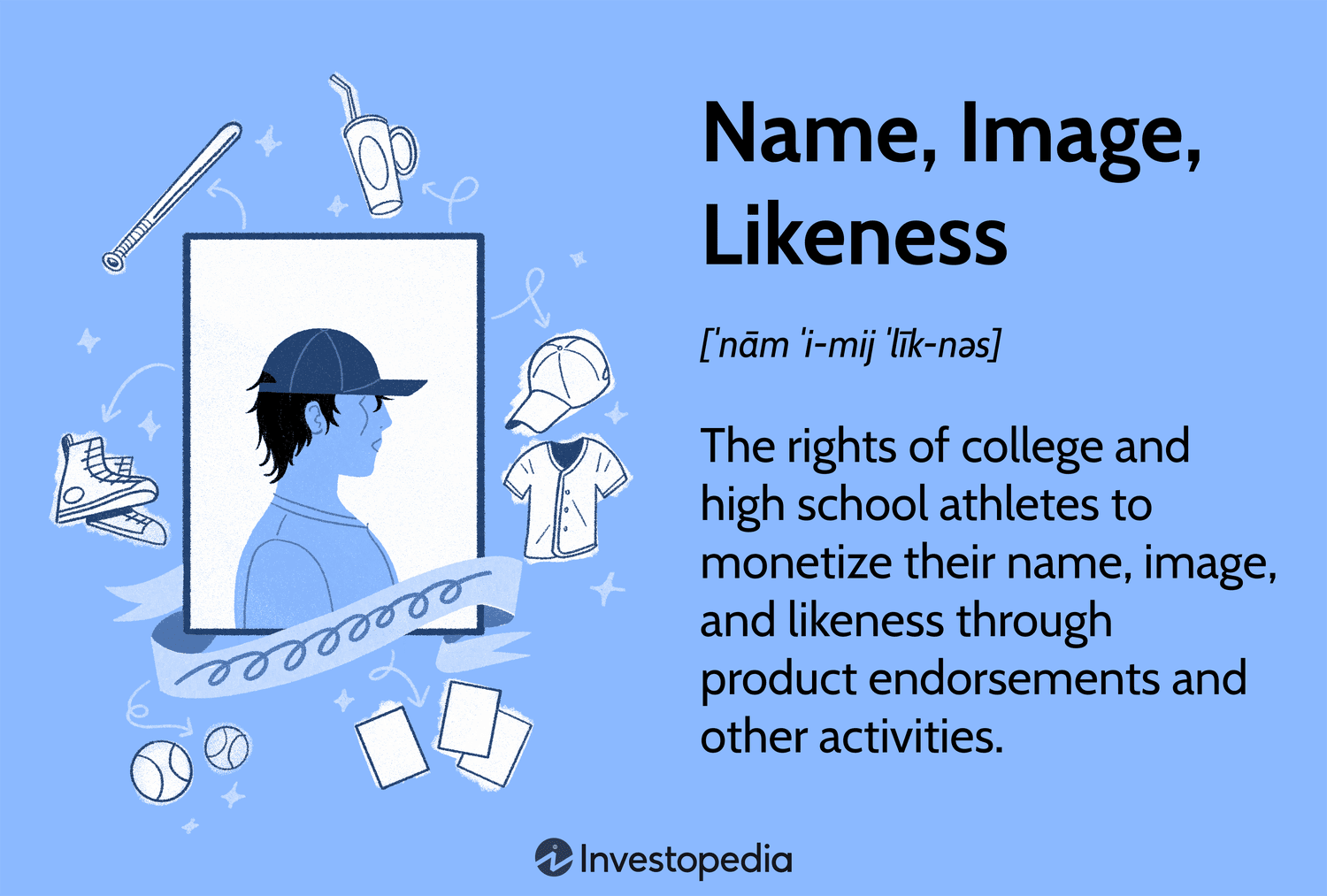
NIL stands for name, image, and likeness. The NCAA says an NIL deal allows an athlete to be compensated for letting a company, brand, or person use their name, image, or likeness, including things like social media posts, appearances, or endorsements. NCAA rules still distinguish NIL from pay-for-play, including compensation simply for athletic participation or achievement.
That distinction matters.
But let’s be honest: The old world is gone.
AP reporting in 2026 described a college sports landscape transformed by NIL, lawsuits, and a legal settlement that allowed schools to directly pay athletes a pool of money annually on top of scholarships and NIL deals.
So, college football now lives in a strange in-between place.
Still school. Still tradition. Still bands and rivalry trophies and campus pride.
But also, contracts. Collectives. Agents. Roster building. Transfer movement. Market value.
The quiet part is not quiet anymore.
College football used to insist it was not a business. NIL made everyone say the quiet part louder. That does not mean players getting paid is bad.
In fact, it is hard to argue that everyone around the sport should profit except the athletes whose bodies create the product.
But it does change the feeling.
It makes the sport more honest. Also messier. And college football has always been good at messy.
Postseason?
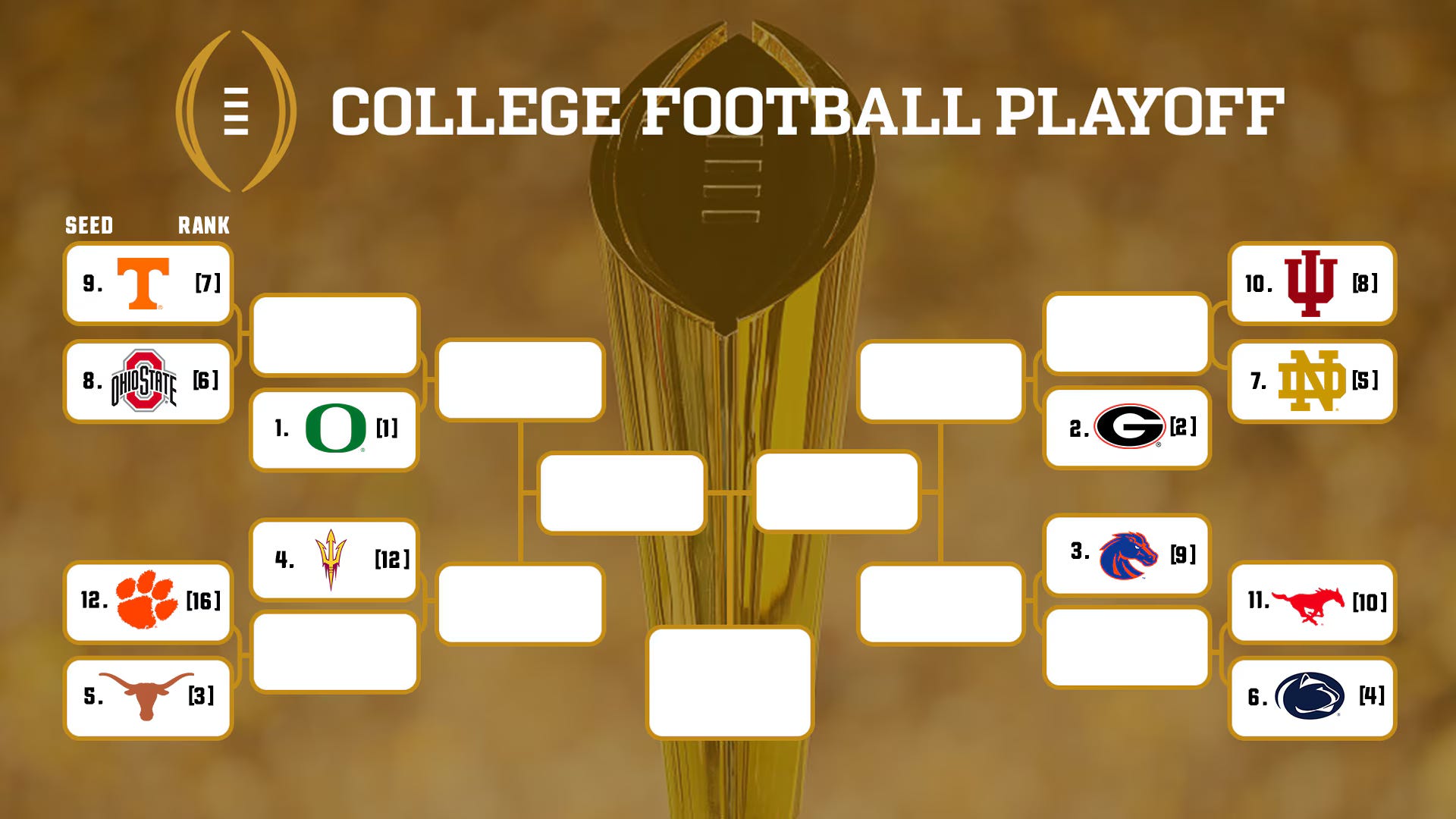
College football also has one of the strangest endings in sports. The best teams chase the College Football Playoff, where the season becomes a true national championship race. Everyone else filters into the bowl system: a sprawling postseason of historic games, strange sponsors, regional traditions, and television inventory.
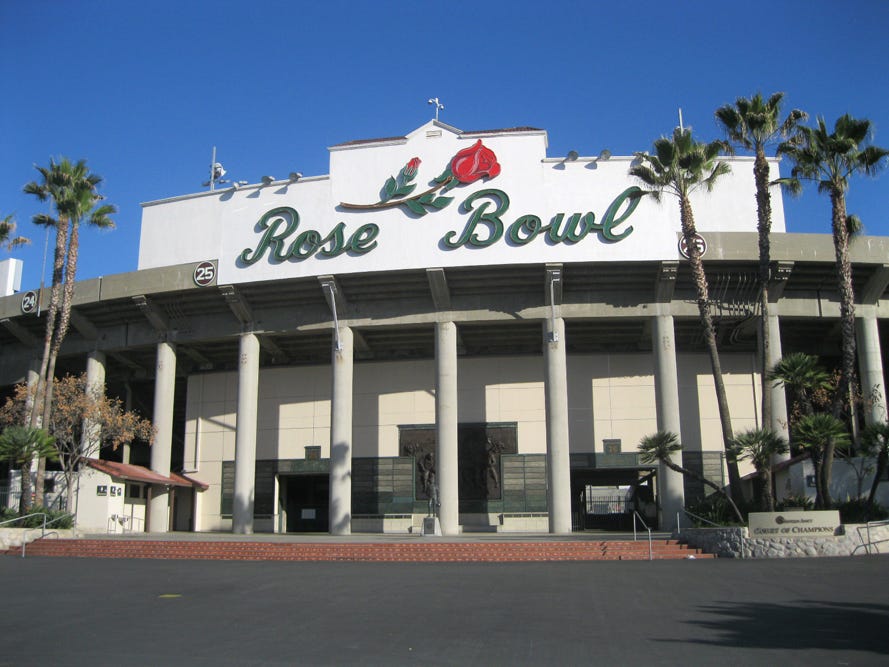
Some bowls, like the Rose Bowl, feel nearly as old and sacred as the sport itself. Others, like the Pop-Tarts Bowl, are ridiculous in the best possible way and remind you that modern college football is still part tradition, part spectacle, and part business deal with a frosting mascot.
Why This Matters
College football matters because it is where history, identity, money, youth, tradition, and chaos all collide.
It is old Ivy League roots and modern NIL collectives. It is marching bands and media deals. It is Red River and recruiting rankings. It is Bo Jackson highlights and playoff arguments. It is Harvard-Yale history and Alabama-Auburn hatred. It is a campus becoming a stadium and a stadium becoming a memory.
For newcomers, that can feel overwhelming.
There are too many teams (138). Too many conferences (10). Too many rivalry names (~14,300).
Too many traditions. Too many rankings (1-25).
Too many people yelling about strength of schedule like they are defending a doctoral thesis.
But once you understand the emotional logic, college football makes more sense.
It is not just about finding the best team. It is about belonging to a story. That story may be glorious. It may be painful. It may involve your team losing by three because a twenty-year-old kicker missed wide right.
That is the risk. That is the deal. That is Saturday.
Modern Connection
The NFL is the polished final boss league.
College football is the chaotic academy arc where every school has its own uniform, theme song, rival, tragic backstory, and unreasonable fanbase.
That is why it fits so naturally into the Ctrl+Binge universe.
College football is basically a long-running anime with 130-plus rival schools, inherited grudges, fight songs, mascot lore, transfer arcs, recruiting battles, and one final playoff tournament where everyone argues about the bracket.
There are:
- Powerhouse Programs.
- Underdog schools.
- Villain coaches.
- Hero quarterbacks.
- Upset episodes.
- Training arcs.
- Transfer arcs.
- Redemption seasons.
- Betrayals.
Mascots that should not be allowed near children. And rivalry games that feel like season finales even when neither team is winning the championship.
That is college football. It is not always logical.
But it is almost always a story.
Final Whistle
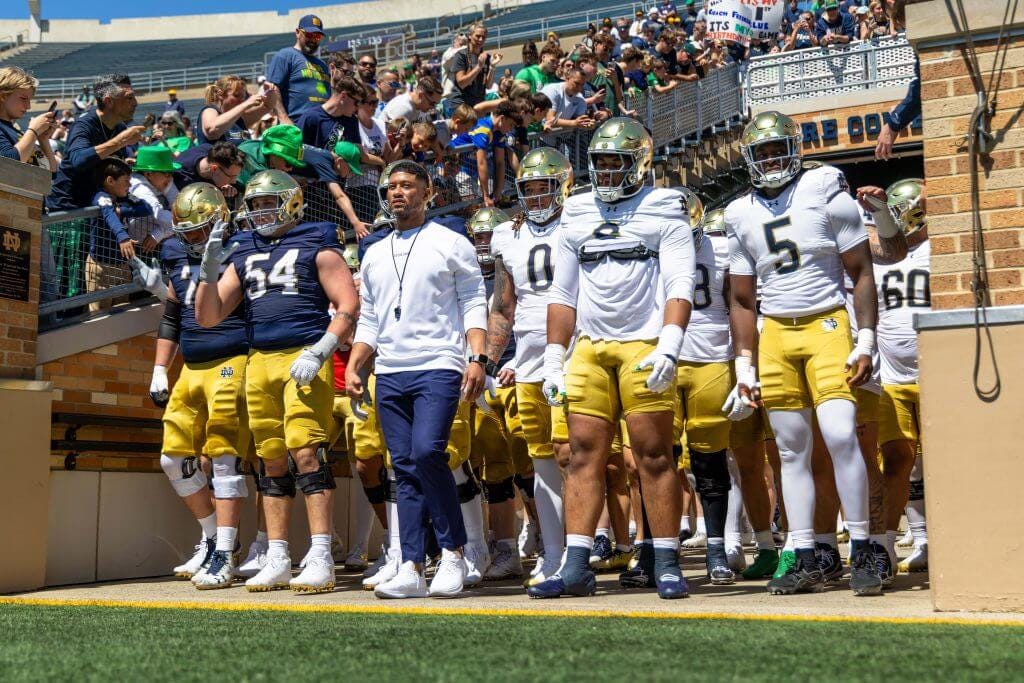
College football is not always clean. That is part of the problem.
It is also part of the charm.
It is old and modern. Amateur and commercial. Local and national. Sacred and ridiculous.
It can make a Saturday feel like a holiday and a rivalry game feel like family history.
It can turn a campus into a cathedral, a mascot into a symbol, a fight song into a memory, and a single play into something people talk about for the rest of their lives.
The NFL may be football’s highest level. But college football is where the sport learned how to become mythology.
That is why Saturday became sacred.
The Ctrl+Binge Question
What is the greatest rivalry in college football?
- Michigan vs. Ohio State?
- Texas vs. Oklahoma?
- Alabama vs. Auburn?
- Army vs. Navy?
- Harvard vs. Yale?
- Kansas vs. Missouri?
- Oregon vs. Oregon State?
Or is there another rivalry that deserves the crown?