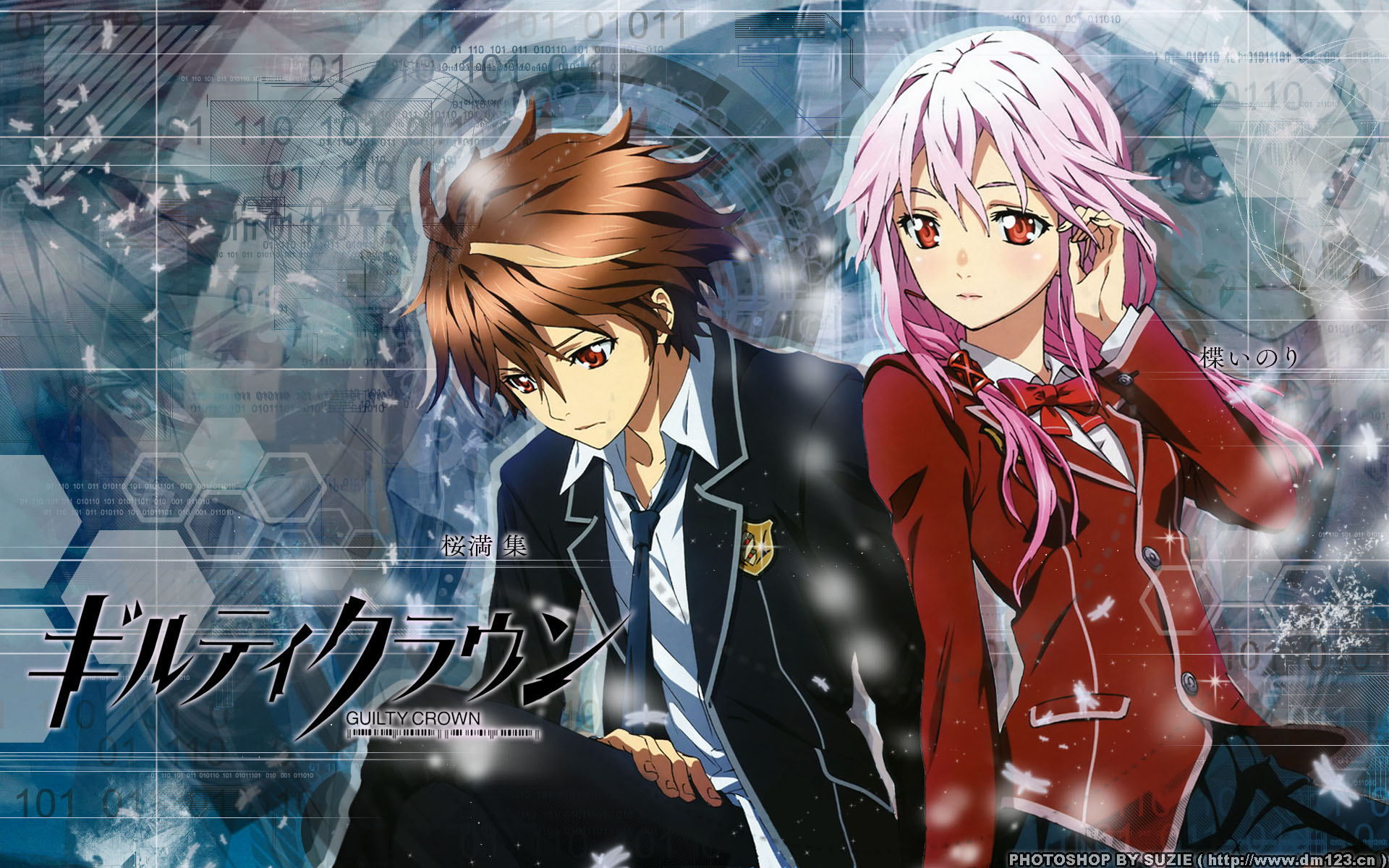
It has one of anime’s greatest soundtracks. One of its coolest power systems. Political revolution. A viral apocalypse. Remote-controlled mecha. And a protagonist who will occasionally make you want to reach through the television and shake him.
Welcome to Guilty Crown.
At first glance, this 2011 anime feels like somebody threw dystopian science fiction, Code Geass, a pandemic thriller, supernatural powers, high-school drama, and a Hiroyuki Sawano concert into a blender.
And somehow? It works. Until sometimes it doesn’t. And that’s part of what makes Guilty Crown such a fascinating anime to revisit.
Because more than a decade later, people still remember Inori. They still listen to the music. They still talk about the Voids. They still debate Shu. And an entirely new generation eventually discovered this story about isolation, outbreaks, and quarantine while experiencing a global pandemic of their own.
Talk about timing.
Guilty Crown is ambitious. Beautiful. Messy. Occasionally frustrating. But beneath everything it’s trying to do is a surprisingly personal question:
Who gets to decide who you become?
The Elevator Pitch
Japan, 2039.
Ten years earlier, the country was devastated by the Apocalypse Virus during an event remembered as Lost Christmas.
Japan survived, but it didn’t emerge unchanged.
The nation now exists under the control of the GHQ, an international organization maintaining order while the resistance group Funeral Parlor fights against it.
Caught between them is Shu Ouma.
Shu isn’t a revolutionary. He isn’t a soldier. He’s an awkward, socially isolated high-school student who has trouble connecting with the people around him.
Then he meets Inori Yuzuriha.
Inori is the singer of EGOIST and a member of Funeral Parlor, and their meeting eventually results in Shu obtaining something called the Void Genome.
Suddenly, Shu possesses the Power of the King.
He can reach into another person’s chest and extract their Void: a physical manifestation of something hidden within their heart.
One person may produce a sword. Another a shield. Another something completely unexpected.
Your soul becomes something tangible. And Shu can wield it. That’s when his quiet life ends.
The Familiar Version
There are a few things people tend to remember about Guilty Crown.
First?
Inori.
The pink hair. The striking outfits. The mysterious personality. Even people who haven’t watched the entire series may recognize her.
Second?
The music.
We’ll get there. Trust me.
And third:
“Isn’t this basically Code Geass?”
Look…we understand. We get it.
- Occupied Japan.
- Resistance movement.
- Teenage protagonist receives mysterious supernatural power.
- Charismatic revolutionary leader.
- Mecha.
- Political conspiracies.
- Beautiful mysterious girl.
There are similarities.
But calling Guilty Crown a Code Geass clone doesn’t really capture what makes it interesting.
Because Shu isn’t Lelouch. Not even in the slightest.
Lelouch walks into his story already believing he’s capable of changing the world. Shu barely knows what to say to the person sitting next to him.
That difference matters.
Because Guilty Crown isn’t primarily interested in watching a brilliant leader obtain power.
It’s interested in watching an uncertain kid receive power before he’s emotionally prepared to carry it. And then watching what that power does to him.
Guilty Crown isn’t really about whether Shu becomes a revolutionary. It’s about something far more uncomfortable.
What happens when someone who doesn’t know who he is suddenly gains the power to reach inside everyone else?
That’s where the real story begins.
The Characters
Shu Ouma
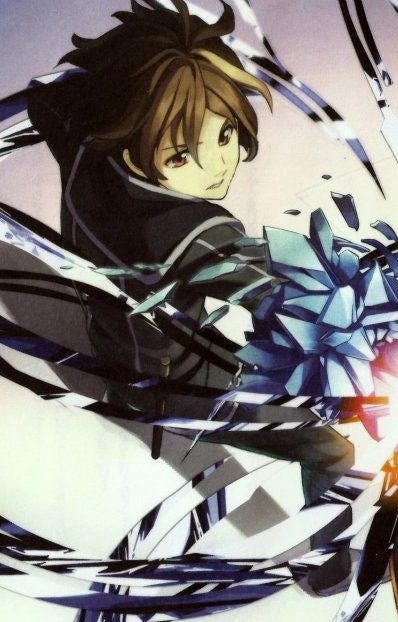
Let’s get this out of the way.
Shu can be frustrating. Very frustrating.
He’s insecure. Passive. Jealous. Afraid. Occasionally selfish. And when the pressure becomes overwhelming, he can make genuinely terrible decisions.
If you’re expecting another Lelouch, that may drive you insane. But Shu isn’t supposed to be Lelouch. He’s a lonely teenager who struggles to connect with other people before suddenly being handed enormous power and told that people need him.
That’s terrifying.
Shu’s development isn’t a clean climb toward heroism. Sometimes power makes him brave. Sometimes it gives him purpose. Sometimes it reveals the ugliest parts of himself. Sometimes he becomes exactly the kind of person he never imagined becoming.
That’s what makes his journey interesting even when Shu himself isn’t particularly likable. The crown arrives long before he’s ready to wear it.
Inori Yuzuriha
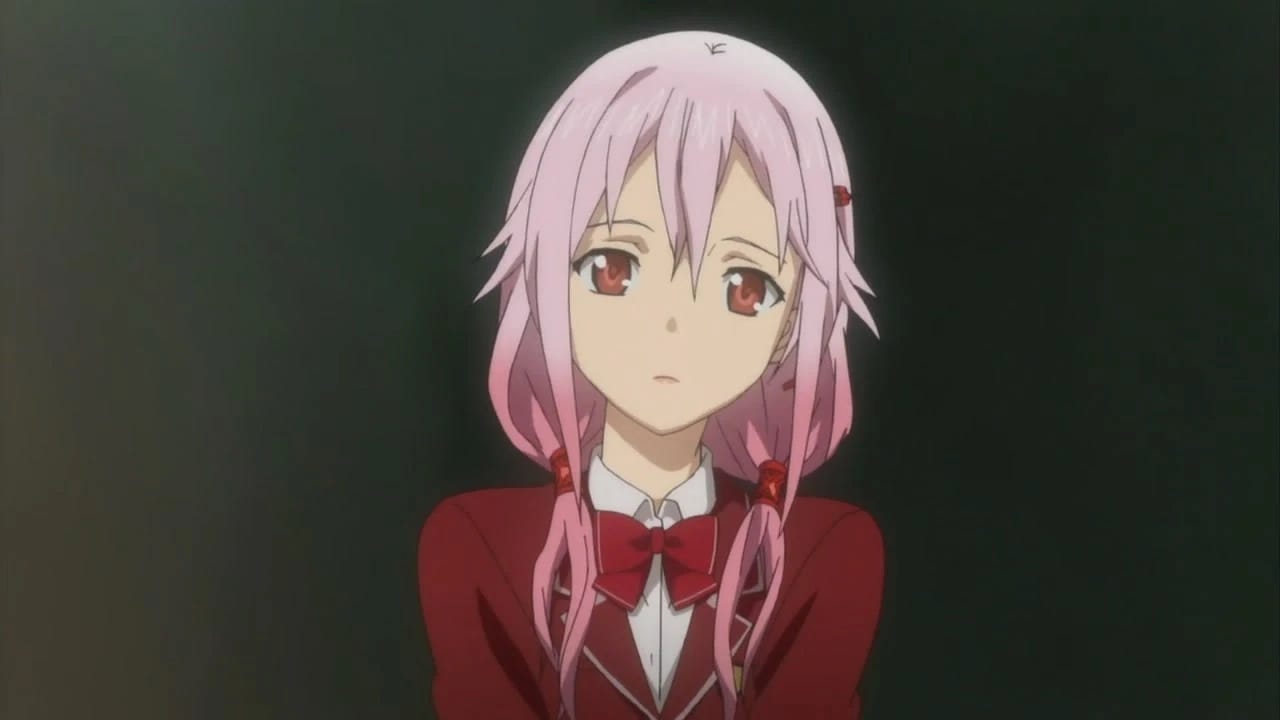
It’s easy to remember Inori as the beautiful pink-haired singer.
But Inori is wrestling with the same question as Shu.
- Who am I? And how much of me actually belongs to me?
Other people constantly place expectations upon her. They need her to be something. Represent something. Become something.
Her connection with Shu becomes meaningful because both characters are searching for identities they can actually call their own.
And Inori has something Shu desperately lacks. A way to express herself.
Music.
We’ll come back to that.
Gai Tsutsugami
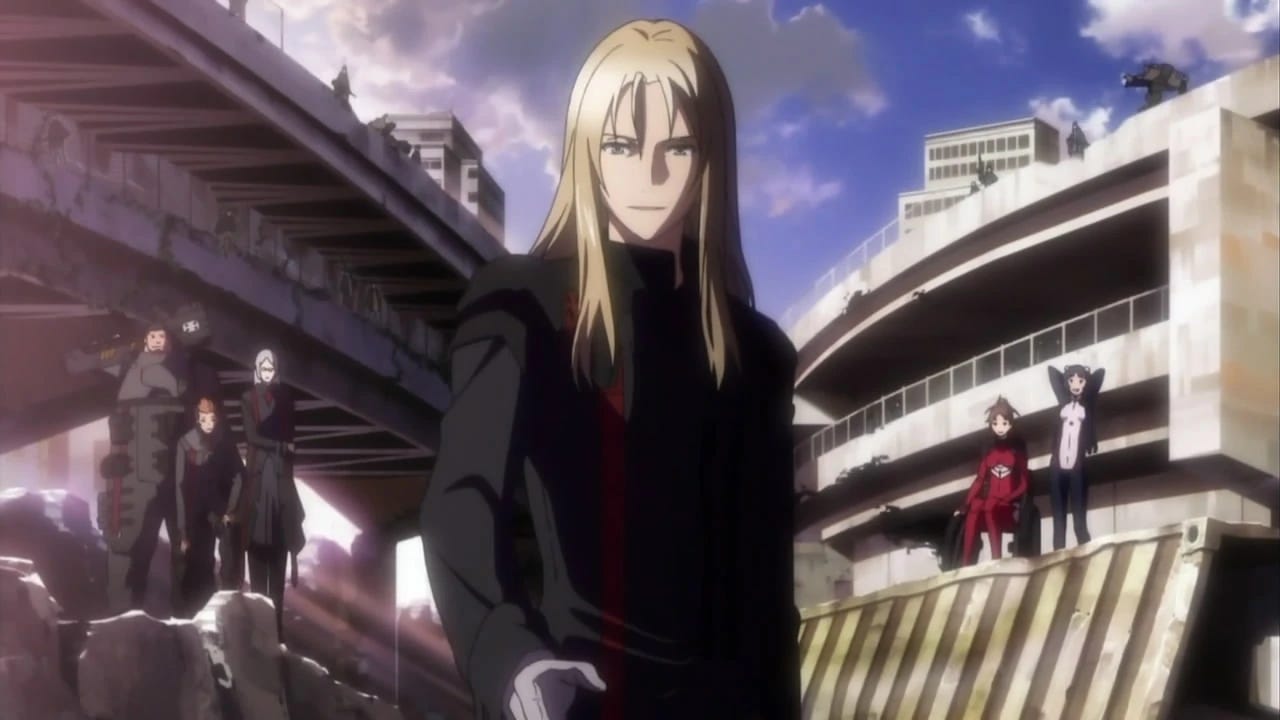
Gai looks like the protagonist of another anime who accidentally wandered into Shu’s story.
He’s charismatic. Confident. Beautiful. Competent.
People listen when he speaks. People follow when he moves.
Shu looks at Gai and sees everything he believes a leader is supposed to be. That’s what makes Gai so important.
He isn’t merely a rival. He’s an idea. This is what leadership looks like. At least from the outside.
As Guilty Crown progresses, that image becomes considerably more complicated.
Because confidence has a cost. Leadership has a cost. And sometimes the people who look strongest are carrying things nobody else can see.
A World Built on Control
Guilty Crown throws a lot at you.
- Lost Christmas.
- The Apocalypse Virus.
- GHQ.
- Funeral Parlor.
- Government control.
- Resistance.
- Scientific experimentation.
- Political maneuvering.
There is a LOT happening in 22 episodes. Sometimes too much. But the atmosphere created by all those moving pieces is excellent.
This version of Japan constantly feels five minutes away from another catastrophe.
And underneath everything is the question of control.
Who controls the country? Who controls information? Who controls the virus? Who controls technology? Who controls Shu? Who controls Inori?
Almost everyone in Guilty Crown is trying to exert control over something.
That’s what makes Shu’s ability so thematically interesting.
Because his power allows him to do something extraordinarily personal.
He can reach inside another human being.
Voids, Mecha, and a Show That Refused to Pick One
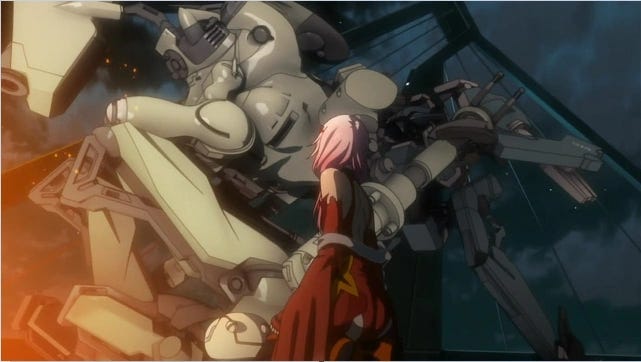
Some anime would build an entire series around the Void system. That would have been enough. The idea is fantastic.
Every person possesses a unique Void representing something hidden within their heart. Shu can physically extract it and use it.
There’s your anime. Done.
Then Guilty Crown apparently looked at that concept and said: You know what this also needs? Mecha. And I respect the audacity.
The Endlaves aren’t simply traditional piloted robots, either. They can be operated remotely. That creates a fascinating contrast between Guilty Crown’s two major combat systems.
Using a Void is intimate. Shu must reach directly into another human being and pull something hidden inside them into the world. It’s personal. Almost invasive.
The Endlaves represent the opposite.
Distance. Technology allows someone to fight somewhere else without physically occupying the battlefield in the traditional mecha sense.
One system requires extraordinary closeness. The other creates separation.
Intimacy versus distance.
And Guilty Crown is constantly wrestling with both.
Shu desperately wants human connection but struggles to create it. The Void Genome allows him to reach into people more literally than anyone else possibly could.
Meanwhile, the technology surrounding him makes it increasingly possible for people to act without ever truly confronting one another face-to-face. That’s an incredibly interesting combination.
And it’s also quintessential Guilty Crown.
Why choose between supernatural weapons and mecha when you can have both?
The Power of the King
The Void Genome also creates one of the most interesting moral questions in the series.
If someone’s Void represents something deeply personal about them… How much right does Shu have to use it?
Suddenly the Power of the King isn’t simply cool. It’s invasive.
Another person’s inner self becomes something Shu can wield. And as Shu changes, his relationship with that power changes too.
The Void system becomes more than a convenient excuse for creative weapons. It becomes storytelling.
Power reveals character.
Not just the character of the person whose Void is extracted. The character of the person holding it.
Music: The Other Power in Guilty Crown

And now… We need to talk about the music. Because you cannot properly review Guilty Crown without talking about what you hear.
Hiroyuki Sawano’s score is enormous.
Emotional.
Bombastic.
Melancholic.
Beautiful.
Then there’s EGOIST.
Inori isn’t simply designed to look like a singer. Music exists inside the identity of the story.
That matters.
Because Guilty Crown is filled with people who struggle to say what they actually feel.
Shu retreats inward. Inori searches for an identity she can call her own. Gai performs confidence because everyone around him needs to believe in it.
The Void Genome literally reaches inside people searching for something true.
And then there’s music.
No extraction required. No weapon necessary.
Someone sings. And for a few minutes, everyone understands.
That’s what makes music such an important part of Guilty Crown.
Inori uses music to reach people inside the story. And the music reaches us outside it. The barrier disappears.
Sometimes Guilty Crown’s writing doesn’t quite earn the enormous emotional height a particular scene is reaching for.
Then Sawano’s score arrives. And somehow?
The music gets it there anyway. That’s how powerful this soundtrack is.
The Emotional Core: Identity
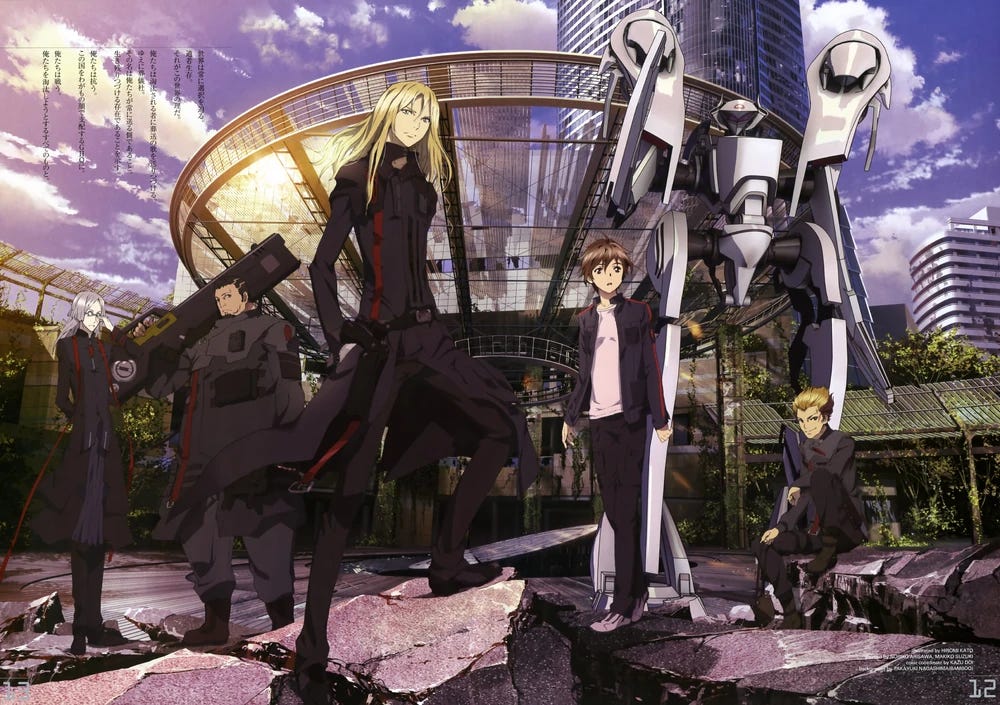
Underneath the virus, resistance movement, Voids, mecha, romance, and political conspiracies, Guilty Crown keeps returning to one question.
Who gets to decide who you become?
Shu struggles with it. Inori struggles with it. Gai struggles with it. Almost every major character carries some version of that question.
Other people tell us who we’re supposed to be.
- Family.
- Friends.
- Governments.
- Teachers.
- Partners.
- Enemies.
Sometimes they see things inside us that we haven’t discovered ourselves. That’s why the Void system works so beautifully as a metaphor.
Inside every person is something uniquely theirs. Something hidden. Something powerful.
Other people may see it. Use it. Judge it. Exploit it.
But eventually? You still have to decide what kind of person you’re going to become.
That’s the crown.
Not the power.
The choice.
Style & Presentation
Even people who dislike Guilty Crown will often admit one thing.
This anime knows how to look good.
Its visual identity remains striking more than a decade later.
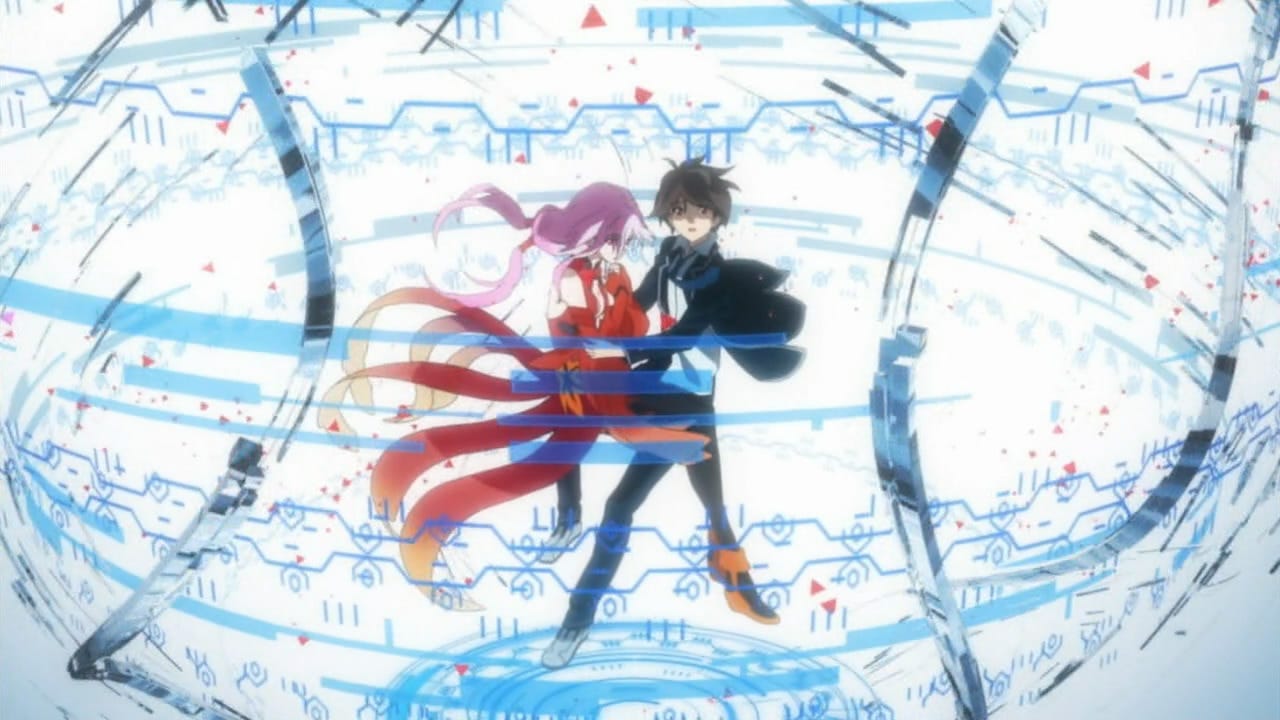
The character designs are memorable. The Void sequences are beautiful. The Endlaves give the action mechanical weight. The use of color makes the Apocalypse Virus feel strangely beautiful and horrifying at the same time.
Then the soundtrack elevates nearly everything around it.
Visually and musically, Guilty Crown frequently feels larger than its 22-episode runtime.
Sometimes it feels like you’re watching an anime. Sometimes it feels like you’re watching an elaborate music video. And sometimes it feels like both simultaneously.
That’s part of its charm.
Let’s Be Fair
Guilty Crown is not a perfect anime.
Not remotely.
The pacing can be messy. The second half escalates incredibly quickly. Characters occasionally make decisions that feel driven more by where the plot needs to go than where their development naturally leads.
There are fascinating ideas introduced without enough time to explore them properly. The tone can swing dramatically. And sometimes the series reaches so aggressively for profundity that it trips over itself.
Even Shu’s deliberately frustrating personality won’t work for everyone.
Understanding why a character behaves badly doesn’t automatically make watching them behave badly enjoyable.
Those criticisms are legitimate. But there’s another side to that conversation.
Guilty Crown has 22 episodes and absolutely no interest in playing things safe.
Pandemic dystopia? Sure.
Political rebellion? Yep.
Supernatural soul weapons? Absolutely.
Remote-controlled mecha? Throw them in.
Romance? Obviously.
Rock music? Turn it up.
This anime swings for the fences.
Sometimes it misses.
But when it connects?
Good lord.
Who Should Watch Guilty Crown?
Give Guilty Crown a chance if you love:
- Dystopian science fiction
- Incredible anime soundtracks
- Gorgeous visual design
- Creative supernatural powers
- Mecha
- Political resistance stories
- Complicated protagonists
- Romance
- Anime willing to take enormous swings
You may struggle with it if you need:
- Perfect plotting
- Consistent pacing
- An immediately likable protagonist
- Every mystery neatly explained
- A story that sticks to one genre
And if you’re new to anime? Guilty Crown is actually an interesting sampler platter.
- Sci-fi.
- Romance.
- Action.
- Mecha.
- Supernatural powers.
- Political drama.
- Music.
You get a little bit of everything.
Sometimes that’s the problem.
Sometimes that’s exactly why it’s so much fun.
The Anime That Accidentally Became Timely Again
And then, there’s another strange chapter in Guilty Crown’s legacy that nobody involved could possibly have planned.
This anime premiered in 2011.
Its story takes place in a society transformed by a devastating viral outbreak.
Characters live with infection. Quarantine. Isolation. Emergency powers. The loss of normal life.
Then, less than a decade later, people around the world experienced an actual global pandemic.
For viewers discovering or revisiting Guilty Crown during COVID-19, some of its science-fiction vocabulary suddenly sounded considerably less fictional.
To be clear, the Apocalypse Virus isn’t COVID-19. Guilty Crown isn’t secretly predicting anything. It’s coincidence. But sometimes coincidence changes how we experience art.
Someone watching Guilty Crown in 2011 could experience Lost Christmas entirely as dystopian science fiction.
Someone watching from home in 2020 or 2021 brought their own understanding of words like outbreak, quarantine, isolation, and emergency response with them.
And perhaps most interestingly, many people suddenly understood what it felt like when the ordinary structures defining their lives disappeared.
School changed. Work changed. Relationships changed. Routines vanished.
People were isolated from one another.
And plenty of us were quietly asking a question we may not have known how to articulate: Who am I when the things that normally define my life aren’t there anymore?
Well…
Hello, Shu Ouma.
Talk about timing.
Why Guilty Crown Still Matters
Guilty Crown isn’t remembered because it’s perfect. It’s remembered because it’s memorable.
That’s different.
The soundtrack survived. EGOIST survived beyond the boundaries of the anime itself. Inori remains recognizable.
The Void system remains one of those anime concepts you can explain to somebody in a sentence and immediately make them curious.
The visual identity still looks fantastic.
And people are still arguing about Shu.
There’s something admirable about that. In a medium filled with anime that arrive, entertain us, and quietly disappear, Guilty Crown left fingerprints.
Maybe not always for the reasons its creators intended. But it left them.
And sometimes an ambitious story that reaches too far stays with us longer than a safer story that executes everything perfectly.
Ctrl+Binge Final Take
Guilty Crown isn’t a perfect anime.
Sometimes it’s barely a tidy one.
But underneath the revolution, romance, giant robots, incredible music, supernatural powers, viral apocalypse, and occasionally baffling decisions is a surprisingly human question:
Who gets to decide who you become?
The world? The people who love you? The people who need you? Or you?
Maybe that’s why Guilty Crown still sticks with people. It’s messy because growing into yourself is messy. It’s ambitious because being human is complicated. And its greatest power may not be the Void Genome at all.
Sometimes it’s simply a song reaching someone who didn’t know how badly they needed to hear it.
Heavy is the head that wears the crown.
Especially when you never asked for one.
Join the Conversation
If your Void revealed the truest part of your heart…
Would you actually want to know what yours looked like?
And for those who’ve already watched Guilty Crown: What stayed with you the longest?
The characters?
The Voids?
The mecha?
The story?
Or, like so many of us… Was it the music?