What was the First Anime?
When people ask, “What was the first anime?”, they’re usually looking for a clean answer.
But anime history isn’t clean. It’s fragmented, rediscovered, debated, and shaped by what survived rather than what was made.
The Earliest Known Japanese Animation
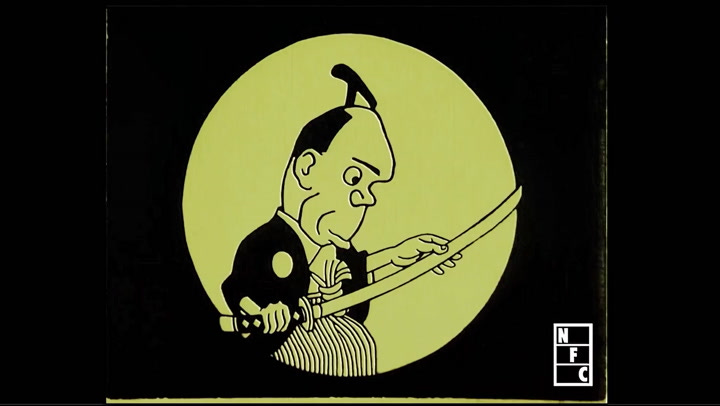
The oldest confirmed Japanese animated film we can point to is Namakura Gatana from 1917.
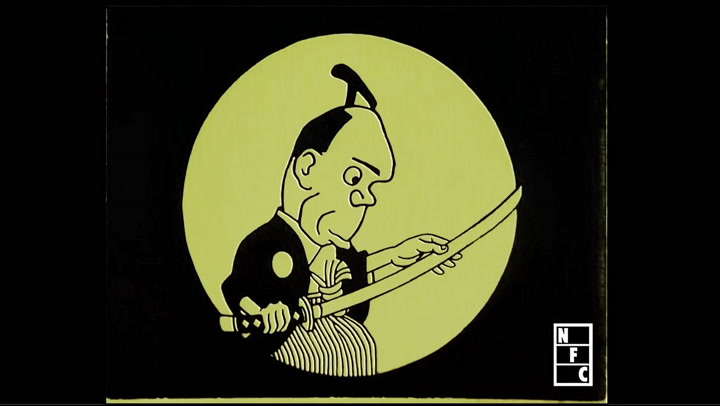
By modern standards, it’s crude: hand-drawn, silent, and only a couple of minutes long. The story is a simple visual gag about a smug samurai who buys a sword he believes is razor-sharp… and immediately humiliates himself when it isn’t.
But that simplicity is the point.
This wasn’t animation as high art. It was entertainment — slapstick comedy built on timing, motion, and visual rhythm. It shows that Japanese creators were already thinking about animation as a storytelling tool, not just a novelty. Japan wasn’t “catching up” to animation. It was experimenting alongside everyone else.
Most early animated works were lost to earthquakes, fires, war, and neglect. Namakura Gatana survives almost by accident, which is exactly why it carries so much historical weight.
The Mysterious Precursor
Then there’s Katsudō Shashin.
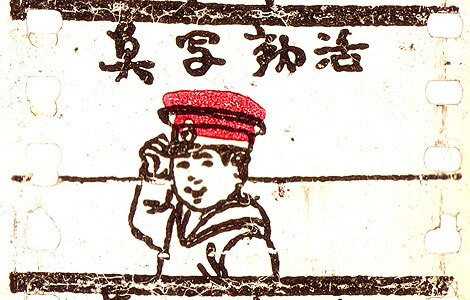
It’s only a few seconds long. A boy writes the characters for “moving pictures,” removes his hat, and bows. That’s it.
No soundtrack.
No credits.
No confirmed date.
No known creator.
Some historians believe it predates Namakura Gatana. Others argue it may have been a private novelty — a looping toy rather than something meant for public viewing.
That’s why it’s controversial.
If it was intended to be watched, it could be the earliest anime-adjacent artifact ever discovered.
If it wasn’t, then it remains a fascinating footnote.
Either way, it proves something important: animation ideas were circulating in Japan earlier than many people assume — even if the full picture has been lost to time.
When Anime Became Anime
This is where everything changes.
In 1963, Astro Boy — already a wildly successful manga — aired on Japanese television, created by Osamu Tezuka.
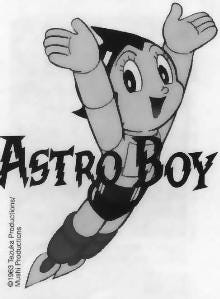
This wasn’t just another cartoon.
Astro Boy established:
- Weekly televised animation in Japan
- Limited animation techniques that made anime economically possible
- Character designs and visual language still used today
- Anime as a cultural force, not just novelty entertainment
Tezuka didn’t invent animation.
He invented a system.
What Astro Boy Was Really About
On the surface, Astro Boy is simple: a robot child with super strength, rocket boots, and an unshakable sense of justice.
Underneath? It’s devastating.
Astro is created by a grieving scientist who lost his son. When the robot fails to grow, age, or fully replace that loss, he’s abandoned. Sold. Rejected. Treated as disposable.
From the very beginning, anime was asking uncomfortable questions:
- What does it mean to be human?
- Can something artificial have a soul?
- What responsibility do creators have toward what they create?
- How do we treat those who are useful, but different?
Astro fights for humans who fear him.
He protects a world that never fully accepts him.
He’s powerful — but never in control of how he’s used.
This is post-war Japan talking to itself.
Astro Boy is shaped by:
- Nuclear anxiety
- Rapid technological advancement
- Guilt, grief, and rebuilding
- Fear of science without ethics
The irony is brutal: a childlike robot becomes the moral compass of a broken world.
And that theme never leaves anime.
You can draw a straight line from Astro Boy to:
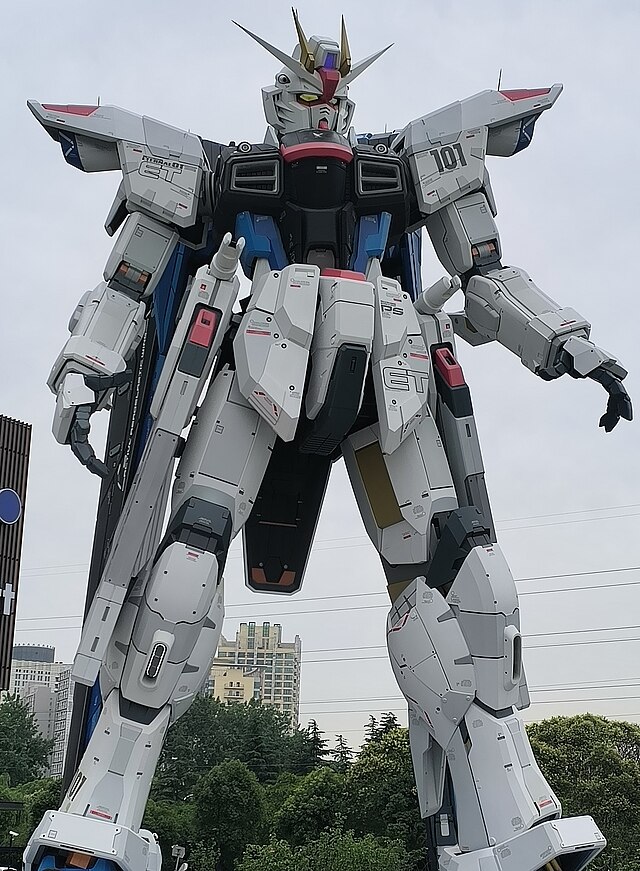
- Mobile Suit Gundam questioning war
- Neon Genesis Evangelion questioning existence
- Ghost in the Shell questioning identity
- Digimon Adventure questioning bonds between humans and digital life
Anime didn’t start as spectacle.
It started as a warning wrapped in hope.
But Wait… Why Manga?
By the late 1950s and early 1960s, manga had already won. Weekly and monthly manga magazines were cheap, massively popular, and everywhere — especially among children who now had more free time and access to entertainment than any generation before them. At the same time, television ownership was exploding in post-war Japan, and broadcasters needed constant, reliable programming to fill airtime.
Adapting manga solved everything at once. The stories were proven. The characters were recognizable. The audience already existed. When Astro Boy moved from page to screen, it wasn’t a gamble — it was a calculated evolution.
The how mattered just as much as the why. Studios couldn’t afford full animation on a weekly schedule, so they leaned into manga’s visual language. Static poses replaced fluid motion. Close-ups carried emotion. Panels became storyboards. Dialogue and narration did the heavy lifting where movement couldn’t.
What could have been a limitation became a defining style.
Anime didn’t try to out-animate Western cartoons.
It chose to out-story them.
Manga as the Feeder System
By the time anime became a global industry, manga had quietly turned into its development league.
Today, the majority of anime don’t start as anime at all.
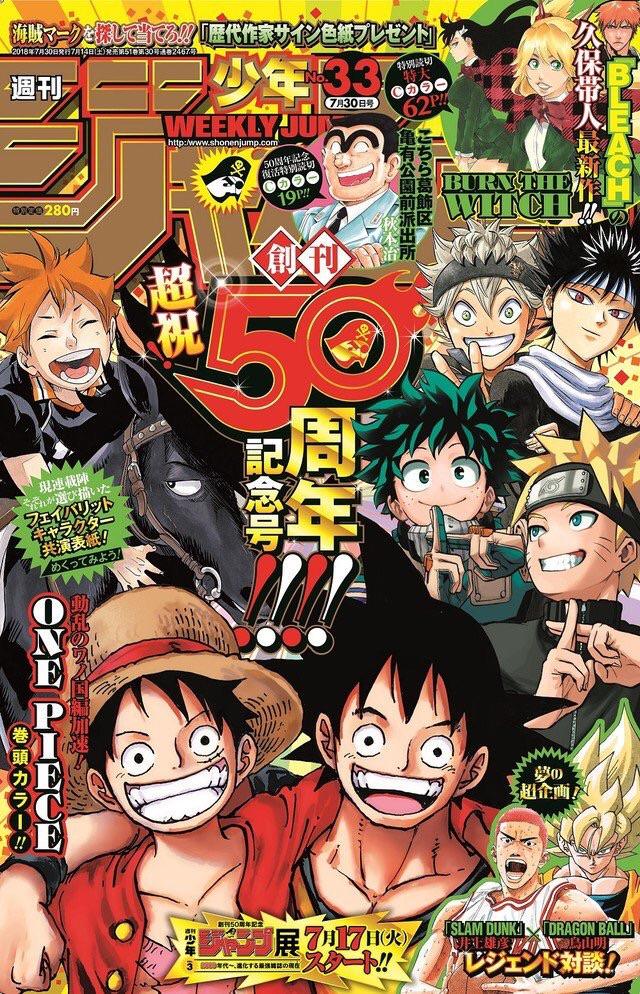
Roughly 60–70% of televised anime series trace their roots back to manga, light novels, or visual novels — with manga adaptations making up the largest share. Weekly and monthly magazines like Weekly Shōnen Jump don’t just publish stories; they test them. Series live or die by reader feedback. Popularity polls decide which stories grow, which are retooled, and which disappear.
By the time an anime adaptation is greenlit, the risk is already reduced.
The audience exists.
The characters are proven.
The emotional beats have already landed on the page.
Original anime still exist — and some are legendary — but they’re the minority. Titles like Cowboy Bebop, Evangelion, and FLCL stand out precisely because they’re exceptions. Creating an anime from scratch requires higher upfront risk, tighter long-term planning, and total confidence in an untested idea. Manga adaptations let studios build on foundations that have already survived years of audience scrutiny.
If manga is the feeder system, these are the all-stars it produced — series that proved a story could dominate the page and explode once it started moving.
The Blueprint Builders
These series didn’t just succeed — they defined eras.
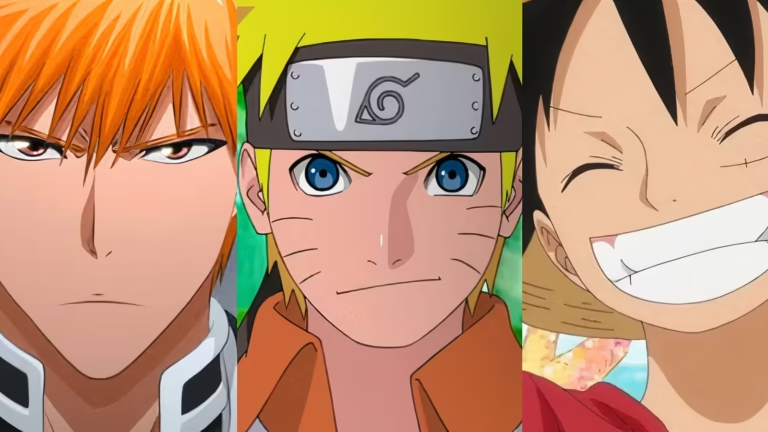
- Dragon Ball Z
Took Akira Toriyama’s manga and turned it into the global language of power-ups, transformations, and long-form battles. Modern shōnen power scaling starts here. - Naruto Shippuden
A ninja story that evolved into a meditation on cycles of hatred, legacy, and chosen family. Its manga roots gave it patience — and emotional payoff. - One Piece
Still running. Still adapting. Still proof that long-form manga storytelling can create the deepest worldbuilding in the medium.
The Modern Explosion Era
These adaptations pushed anime fully into the global mainstream.
- Attack on Titan
A bleak manga that became a worldwide phenomenon. The anime amplified its political themes, moral ambiguity, and existential dread. - Demon Slayer
A solid manga transformed into a visual juggernaut. Ufotable’s animation turned good source material into a record-breaking event. - Jujutsu Kaisen
Darker, faster, more cynical — the manga’s tone carried straight through, helping define the post-2010s shōnen voice.
Psychological & Seinen Standouts
Proof that manga-to-anime isn’t just about fights.
- Death Note
A tightly written adaptation that leaned into inner monologue, moral chess, and tension. Anime as psychological thriller. - Berserk
A legendary manga whose adaptations are endlessly debated — but whose influence on dark fantasy anime is unquestionable. - Monster
A near one-to-one adaptation that proved slow, methodical manga storytelling could thrive in anime form.
The Gold Standard
- Fullmetal Alchemist: Brotherhood
Often cited as the example of how to adapt manga correctly; faithful, emotionally devastating, and philosophically rich.
Manga didn’t just inspire anime.
It became its feeder system — the place where stories learn whether they deserve to move.
So here’s the question for you:
When you watch anime, do you see it as animation inspired by manga…
or as manga that found a new way to breathe?