The Pied Piper: Did he Actually Steal an Entire Town’s Worth of Children?
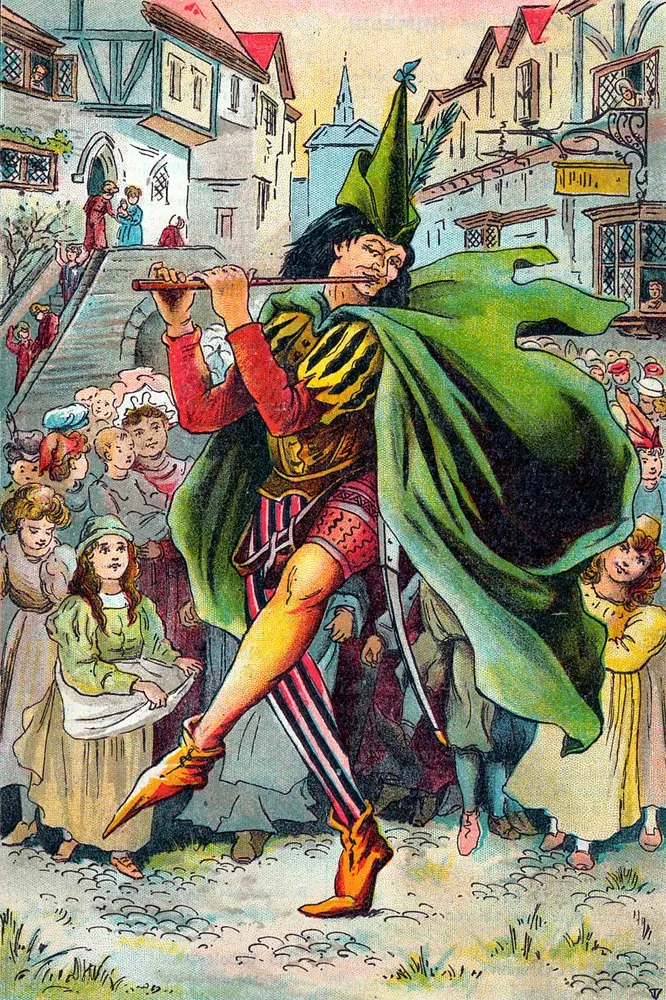
If you’ve ever heard the story of the Pied Piper, you probably remember the clean version:
A town overrun with rats.
A mysterious musician.
A broken promise.
And children who never come home.
It feels like a fairy tale.
But it doesn’t start like one.
The Story as It’s Told
The traditional version goes like this:
In the town of Hamelin, Germany, sometime in the 1200s, the town is infested with rats. A strange man appears wearing colorful (“pied”) clothing and offers to remove them for payment.
The town agrees.
He plays his pipe, and the rats follow him out of town and into a river, where they drown.
But once the problem is solved, the townspeople refuse to pay him.
So, the Piper returns.
This time, he plays again, and instead of rats, the children of Hamelin follow him.
He leads them away from the town.
And they are never seen again.
Some versions say they disappear into a mountain.
Some say they are led to another land.
Some say only one or two children remain behind — lame, deaf, or blind — unable to follow.
That’s the myth most people know.
But here’s where it gets unsettling.
Where the Story Comes From
The earliest reference to this event isn’t from the Brothers Grimm.
It’s from the town itself.
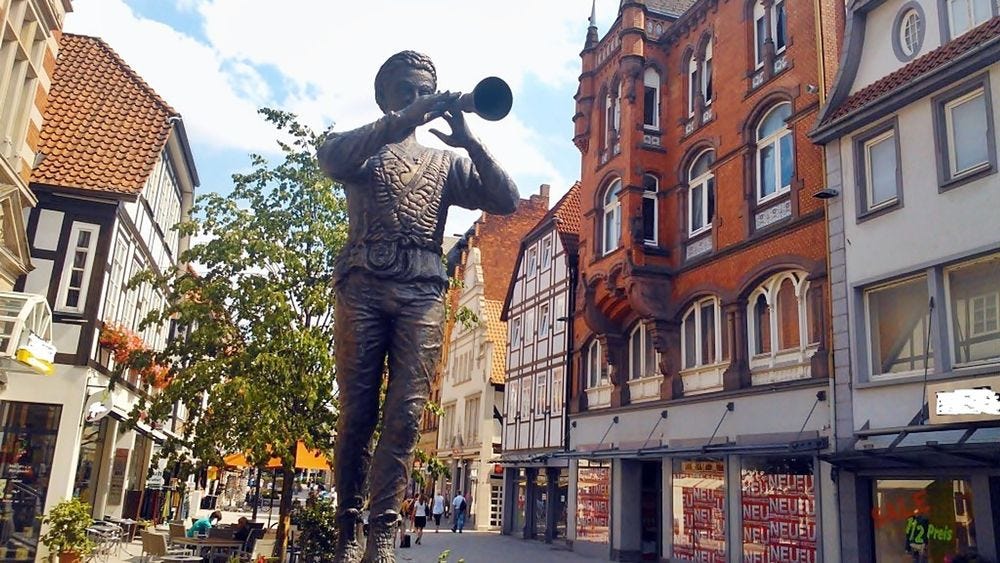
(Pictured: A statue of the Pied Piper in Hamelin, Germany)
Hamelin has a historical record dating to around 1384, roughly 100 years after the alleged event, that mentions a mysterious loss of children in 1284.
The inscription reportedly stated:
“It is 100 years since our children left.”
Not “were taken.”
Not “were kidnapped.”
Not “were murdered.”
Left.
That wording matters.
Later church records and stained-glass windows in Hamelin also referenced the event, long before the rat story was added.
That’s the twist.
The earliest versions of the story don’t mention rats at all.
The rat infestation appears to be a later embellishment, possibly added in the 1500s.
Originally, this was simply a story about children disappearing.
And the town remembered it as history.
So… What Might Have Actually Happened?
There are several major theories.
The Children Were Recruited for Migration
One leading theory suggests the “children” weren’t literal kids.
In medieval language, “children” could mean “young people” or “citizens.”
During the 1200s, German regions experienced waves of eastward migration. Young adults were recruited to settle in newly developing lands in Eastern Europe.
The Piper may have been a recruitment agent.
He could have persuaded a large group of young townspeople to leave Hamelin for better opportunity.
From the town’s perspective?
They lost a generation.
Over time, that painful departure became legend.
A Plague or Disease
Another theory suggests disease.
The Black Death wouldn’t hit Europe until the mid-1300s, but localized outbreaks of illness happened before that.
If many children died in a short period of time, the town might have mythologized it.
But this theory has weaknesses — mainly because the timeline doesn’t match the major plague outbreaks we know about.
The Children’s Crusade Connection
In 1212, thousands of young people reportedly joined what became known as the Children’s Crusade — a tragic and chaotic movement toward the Holy Land. (More on this at a later date…)
Some historians have speculated that Hamelin’s “lost children” may have been swept up in religious fervor.
It’s not proven.
But the timing is close enough to raise eyebrows.
A Local Tragedy
Some scholars suggest a landslide, cave collapse, or natural disaster could have killed a group of children outside town.
Others think a charismatic cult-like figure may have led them away.
There’s no conclusive evidence.
Just gaps.
Why Add the Rats?
The rat story likely came later — possibly to moralize the legend.
It transforms the Piper from mysterious figure into avenging force.
Now the story has a lesson:
Break your promises.
Refuse to pay what you owe.
Face consequences.
It shifts from unexplained tragedy to cautionary tale.
Fairy tales often grow moral spines over time.
So… Did It Happen?
Here’s what makes this different from many myths:
There is documented evidence that something occurred in Hamelin around 1284.
The town itself commemorated it.
But what happened?
We don’t know.
No mass graves.
No definitive records.
No confirmed explanation.
Just a date.
A memory.
And a legend that refuses to fade.
Why It Still Feels Unsettling
Unlike dragons or Robin Hood, this story doesn’t end with triumph.
There’s no hero.
No redemption.
Just absence.
The Pied Piper legend lingers because it taps into something universal:
The fear of losing children.
The fear of broken trust.
The fear of following the wrong voice.
It’s not about rats.
It’s about consequence.
Question for readers:
Do you think the Pied Piper was:
- A real recruiter mythologized over time?
- A cover story for tragedy?
- A warning tale added later?
Or something else entirely?
Because the town of Hamelin still marks the date.
And that might be the most mysterious part of all.