Pokémon Gen III: A Fresh Start
New region.
New tech.
No looking back.
For the first time, your old team couldn’t come with you.
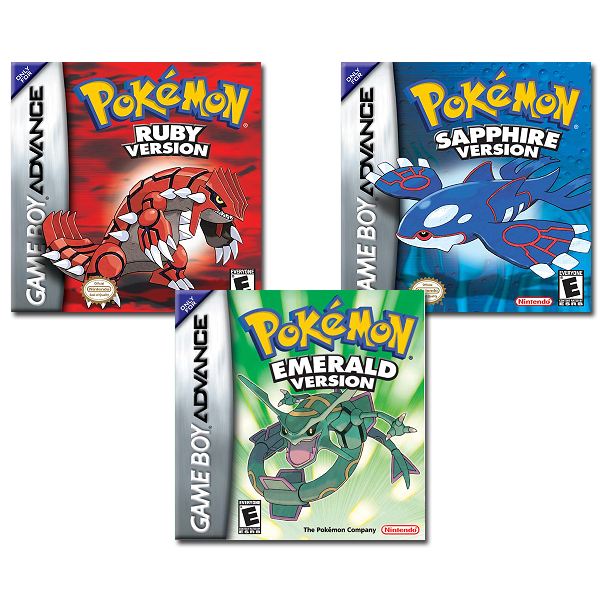
This week, we’re diving into Pokémon Ruby and Sapphire and the definitive version Pokémon Emerald — the generation that didn’t just expand Pokémon…
It reinvented it.
Ask most people about Gen III and you’ll hear:
“Oh yeah… the one where you couldn’t transfer your old Pokémon.”
For a lot of players at the time, that was the headline.
After building teams in Gen I and II, suddenly everything was cut off. Ruby and Sapphire felt like a fresh start — and not everyone loved that.
People remember:
- Tropical vibes
- Water. Lots of water. (too much water, if you’ve seen the memes)
- New Pokémon designs that felt very different from Kanto and Johto
- A more colorful, modern look thanks to the Game Boy Advance
To some, Gen III was a bold evolution.
To others, it felt like losing a part of what made Pokémon Pokémon.
But that reset?
It was intentional.
Mechanics — A Cleaner, Deeper System
At its core, the loop is still Pokémon:
Explore the Hoenn region, catch Pokémon, build a team, defeat Gym Leaders, and challenge the Pokémon League.
But under the hood, Gen III quietly rebuilds the entire system.
This is where Pokémon becomes more mechanically defined.
- Abilities are introduced — passive traits that change how Pokémon behave in battle
- Natures affect stat growth, adding personality and strategy
- Double Battles force you to think about synergy, not just individual strength
Suddenly, team-building isn’t just about type advantage.
It’s about how your Pokémon work together.
This is the foundation competitive Pokémon would build on for years.
Story & Characters — Nature vs Ambition
Gen III shifts the story from personal rivalry to something bigger.
You’re still a young trainer starting your journey, but this time the conflict revolves around two opposing forces:
- Team Magma — trying to expand land
- Team Aqua — trying to expand the sea
Both believe they’re helping the world.
Both are completely willing to break it to do so.
And caught in the middle?
You.
It introduces legendary Pokémon like Groudon and Kyogre, embodiments of land and sea, turning the conflict into something almost mythological.
It’s still simple on the surface.
But underneath, it’s asking:
What happens when people try to control nature itself?
World, Visuals & Atmosphere — A Whole New Vibe
Hoenn feels completely different from what came before.
Instead of urban regions or traditional landscapes, this world is:
- Tropical
- Coastal
- Wild
You’re moving through:
- Beaches and oceans
- Rainforests and volcanoes
- Underwater routes and hidden caverns
And yes — there’s a lot of water.
But that’s part of the identity.
This is a region shaped by nature, not civilization.
Visually, the jump to Game Boy Advance brought:
- Full color sprites
- More expressive Pokémon designs
- A brighter, more vibrant world
It felt like Pokémon had stepped into a new era.
Sound & Music — A Bigger, Bolder Sound
Once again, Junichi Masuda delivers — but now with more power behind the hardware.
The music feels richer, more layered.
- Trumpet-heavy battle themes that feel energetic and heroic
- Calm ocean routes that feel expansive and open
- Intense legendary encounters that carry real weight
Hoenn sounds alive.
It’s adventurous, slightly chaotic, and always moving forward.
WHY IT MATTERS
Gen III did something risky.
It let go of the past.
No old Pokémon transfers at launch.
New systems.
New region.
New identity.
It forced players to start over.
And in doing so, it proved Pokémon could survive without leaning entirely on nostalgia.
This generation laid the groundwork for:
- Competitive battling
- Deeper team-building
- A more global sense of scale
It showed that Pokémon wasn’t just a one-time phenomenon.
It was a system that could evolve.
MODERN CONNECTION
You can still see Gen III’s fingerprints everywhere.
Modern Pokémon games rely heavily on:
- Abilities
- Natures
- Double battles
Even today’s competitive scene is built on foundations introduced here.
And that “fresh start” philosophy?
You see it across gaming now:
Reboots.
Soft resets.
New generations of players being welcomed in.
Gen III walked so modern Pokémon — and honestly, modern RPG design — could run.
QUESTION
Gen III forced players to leave their old teams behind and start fresh.
So here’s the question:
When a game resets everything…
Do you see it as a new beginning — or something lost?