Planets and Names: Why the Romans Won
If you’ve ever learned the planets in school, you probably did it without a second thought: Mercury, Venus, Earth, Mars, Jupiter, Saturn, Uranus, Neptune and Pluto (Poor Pluto)
Clean. Familiar. Almost… inevitable.
But that inevitability is an illusion.
Those names are the result of cultural inheritance, translation choices, and the quiet dominance of Roman scholarship over Western science. The Romans didn’t discover the planets — they standardized them.
And history tends to remember the people who write things down in the language everyone else is forced to learn.
The Planets Were Known Long Before Rome
By the time Rome was a rising power, the planets were already old news.
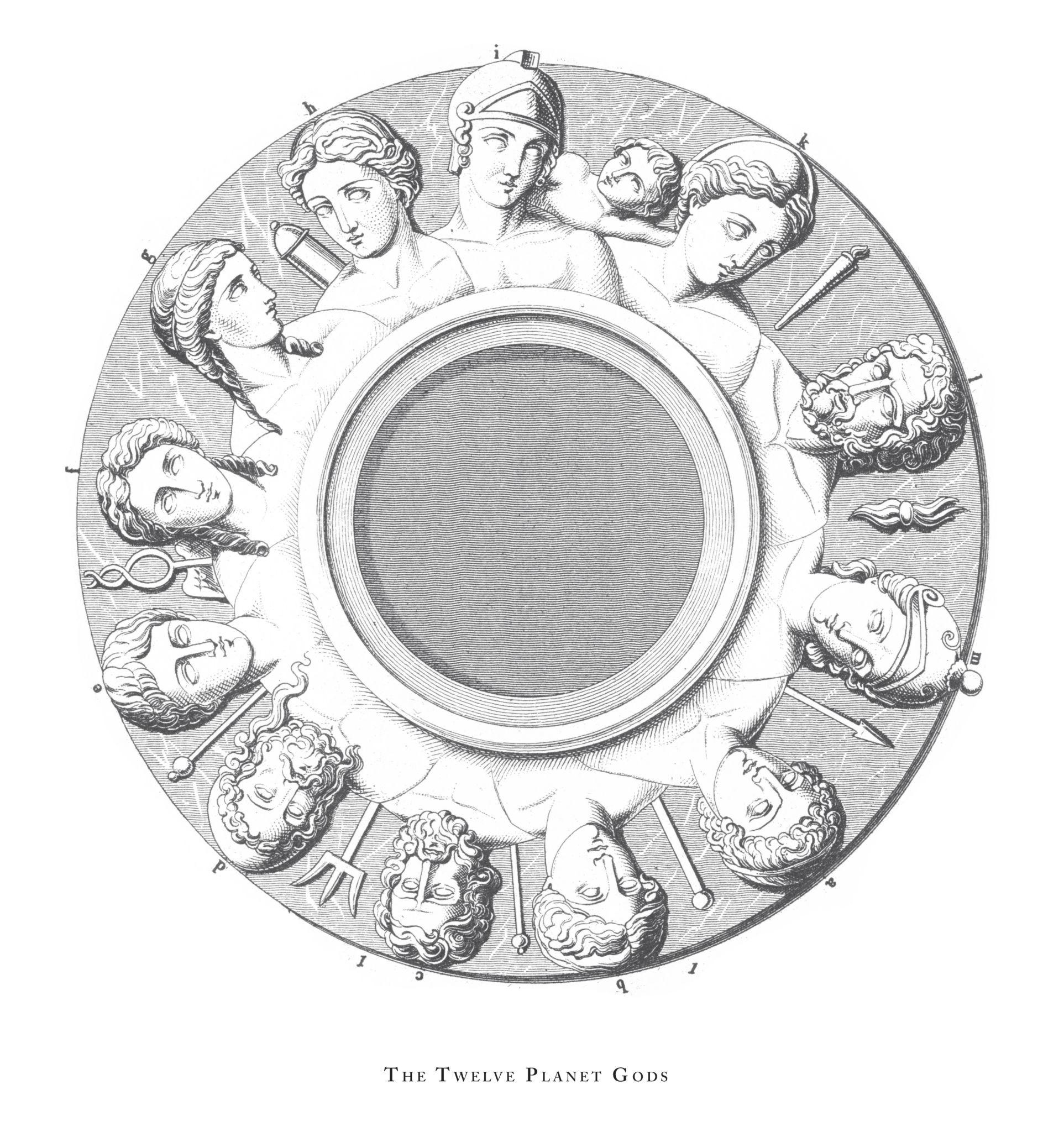
Ancient Babylonian astronomers had been tracking planetary movements as early as the 2nd millennium BC. The Greeks refined those observations, developing early models of planetary motion and tying each wandering star to a god.
To ancient observers, these lights were different from stars. They moved. They wandered. They broke the rules of the night sky.
That’s why the Greeks called them planētēs meaning wanderers.
But the Greeks didn’t control the future of scientific language.
Rome did.
Rome’s Real Advantage: Translation + Authority
When Rome absorbed Greek culture, it didn’t erase Greek knowledge — it translated it.
Greek gods became Roman gods. Greek astronomy became Roman astronomy. And crucially, Roman scholars wrote in Latin, the language that would later dominate law, religion, and education across Europe.
So, when medieval scholars studied the heavens, they weren’t reading Greek texts, they were reading Romanized versions of Greek ideas.
That’s how the names stuck.
Why These Names Made Sense
The Roman planet names weren’t random. They were chosen because the planets’ visible behavior matched cultural expectations.
- Mercury — Named after Mercury because it moves faster across the sky than any other planet. Speed mattered.
- Venus — The brightest planet in the night sky, associated with beauty and allure, so it took the name of Venus.
- Mars — Red, aggressive, and ominous, linked to blood and war. Perfect for Mars.
- Jupiter — The largest and most imposing planet, named for Jupiter.
- Saturn — Slow-moving and distant, associated with age, time, and cycles. A natural fit for Saturn and time.
Each name reinforced a worldview where the cosmos reflected human hierarchy and divine order.
Why the Greek Names Lost
The Greek equivalents — Hermes, Aphrodite, Ares, Zeus, Cronus — never disappeared. But they lost the institutional battle.
As Christianity spread, Latin became the language of the Church. As universities formed, Latin became the language of science. As Europe expanded globally, Latin-rooted terminology went with it.
By the time astronomy became a formal scientific discipline, Roman names weren’t mythology anymore.
They were vocabulary.
The Long-Term Impact
Even when new planets were discovered centuries later, astronomers stayed remarkably consistent. Uranus, Neptune, and Pluto followed the same mythological framework — not because Rome demanded it, but because tradition already had momentum.
That’s the real Roman victory.
Not conquest.
Not invention.
Continuation.
The Romans didn’t discover the planets.
They just made sure the sky spoke their language long enough that everyone else accepted it as normal.
The One Weird Exception: Uranus
Here’s the wrinkle.
Uranus is actually the Greek name. The Roman equivalent is Caelus.
So why the switch?
When Uranus was discovered in 1781, Latin no longer controlled science, and Greek mythology was back in fashion. Scholars felt freer to bend tradition — and it still worked mythologically:
- Zeus (Jupiter)
- son of Cronus (Saturn)
- son of Uranus
A clean cosmic family tree.
The result is a mixed mythology that only makes sense because history layered traditions instead of replacing them. And right after that brief detour, astronomers snapped back to Roman names with Neptune and Pluto.
(Poor Pluto.)
But Wait — What About Earth, the Sun, and the Moon?
If the planets follow Roman mythology (with one Greek exception), why do we call them Earth, Sun, and Moon?
Because we’re not using their scientific names.
In astronomy, they’re actually:
- Terra
- Sol
- Luna
Fully Roman. No exceptions.
And, just to keep the mythology layered (as always):
- Sol is Helios
- Luna is Selene
- Terra is Gaia
Why the Names Feel Different Anyway
Earth, the Sun, and the Moon were named in everyday language long before astronomy existed — and in Latin-based languages, those everyday names never changed.
In Spanish, French, Italian, and Portuguese, people still say:
- Tierra / Terre / Terra → Terra
- Sol → Sol
- Luna / Lune → Luna
No split. No workaround.
The Roman names are the common words.
English is the outlier. It inherited Earth, Sun, and Moon from Germanic roots, then later borrowed planet names through Latin scholarship. That’s why English feels inconsistent — not because the system is messy, but because the language is layered.
The Quiet Takeaway
So, the Roman theme never stopped.
In most of Europe, people have been casually saying Terra, Sol, and Luna this whole time — just in different accents.
That’s history hiding in plain sight.
Planet Names Across Cultures: What We Could Have Been Saying
Rome didn’t win because it was right.
Rome won because it became the reference point for Western education.
Other civilizations were naming the same planets at the same time — often with completely different priorities.
Babylonian Astronomy: Gods as Cosmic Administrators
The Babylonians were some of the earliest serious astronomers, and their planet names were tied to their religious bureaucracy.
- Jupiter → Marduk, chief god and divine ruler
- Venus → Ishtar, goddess of love and war
- Mars → Nergal, god of destruction and plague
- Mercury → Nabu, god of wisdom and writing
- Saturn → Ninurta, associated with agriculture and order
Notice the pattern: planets weren’t just personalities — they were functions. Each wandering star governed a domain of life.
Rome later absorbed this structure indirectly through Greek translations of Near Eastern ideas.
Greek Names: The Ones That Almost Won
The Greeks tied planets to gods much like the Romans did — and in many ways, more poetically.
- Hermes (Mercury)
- Aphrodite (Venus)
- Ares (Mars)
- Zeus (Jupiter)
- Cronus (Saturn)
If Greek had remained the dominant scholarly language in Europe, these would likely be the names we use today.
But Greek lost institutional ground to Latin — and once universities standardized Latin texts, the Roman versions hardened into permanence.
Norse Mythology: Gods of War and Fate
In Northern Europe, planets were linked to Norse gods — traces of which survive in weekday names.
- Tuesday → Tyr (Mars-like war god)
- Wednesday → Odin (Mercury-like wisdom and travel)
- Thursday → Thor (Jupiter-like thunder king)
- Friday → Frey/Freyja (Venus-like love and fertility)
If Norse cosmology had shaped astronomy instead of calendars, the sky might look very different linguistically.
Chinese Astronomy: Elements, Not Gods
Ancient China took a radically different approach.
Planets were tied to the Five Elements, not personalities:
- Mercury → Water Star
- Venus → Metal Star
- Mars → Fire Star
- Jupiter → Wood Star
- Saturn → Earth Star
This system framed the heavens as part of a cosmic balance — cycles, harmony, and change — rather than divine drama.
It’s still reflected today in East Asian planetary names.
So Why Did Rome Stick?
Because modern science emerged from European institutions, and European institutions were built on:
- Roman law
- Latin education
- Church-backed scholarship
Once telescopes entered the picture, the names were already locked in. Nobody felt the need to rename what already “worked.”
By the time astronomy became global, Roman names felt neutral — even though they weren’t.
The Big Takeaway
Every civilization looked at the same sky.
They saw:
- gods
- elements
- omens
- systems
- stories
The Romans didn’t discover the planets.
They just happened to be the ones whose words survived long enough to feel inevitable.
Question for readers:
If science had grown out of China instead of Europe, would we talk about Fire and Water instead of Mars and Mercury?