Isekai: A Whole New World
One minute you’re living a normal life.
Next minute?
Truck-kun sends you flying into another world.
New rules. New powers. New destiny.
Welcome to isekai.
If you’ve watched anime in the last decade, you’ve almost certainly run into isekai.
The premise is simple: someone from our world gets transported, or sometimes reincarnated, into another one. Usually a fantasy setting. Often with magic, monsters, or RPG-style rules.
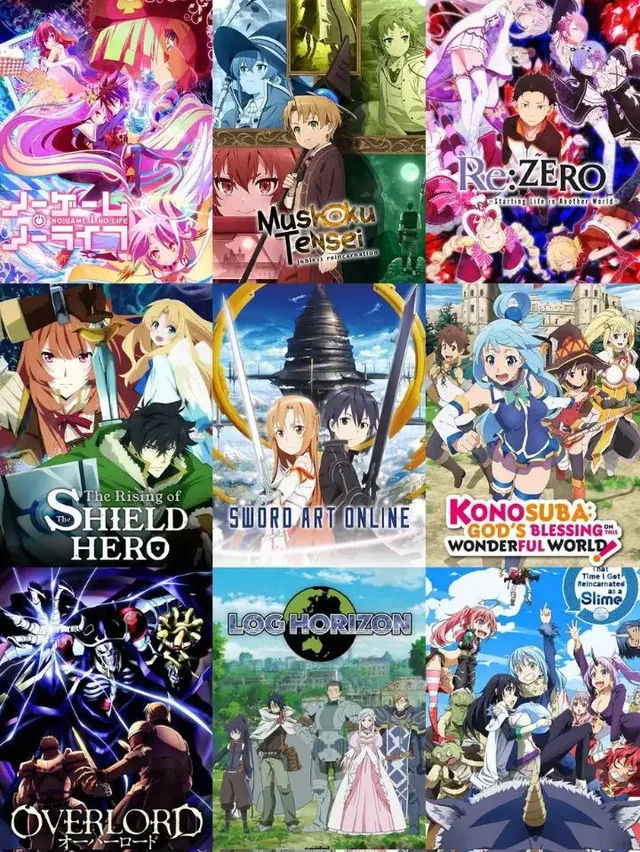
Some of the most recognizable examples include:
- Re:Zero − Starting Life in Another World
- The Rising of the Shield Hero
- Sword Art Online
- That Time I Got Reincarnated as a Slime
The formula usually goes something like this:
A regular person gets dropped into a strange world…
discovers some kind of special ability…
and slowly climbs their way toward hero status.
Sometimes it’s an adventure story.
Sometimes it’s a power fantasy.
Sometimes it’s both.
But isekai didn’t start with truck accidents and RPG stat screens.
The idea of someone crossing into another world is much older than anime.
In fact, the roots of isekai stretch back to classic fantasy literature.
Stories like Alice’s Adventures in Wonderland and The Chronicles of Narnia revolve around characters stepping through a doorway into another reality.
Even early anime explored the concept long before the modern boom. Shows like Inuyasha and Fushigi Yuugi sent characters across time or into magical worlds decades ago.
So what changed?
Around the 2010s, a new wave of isekai exploded — largely driven by Japanese web novel sites where amateur writers could publish stories online. Many of these stories followed similar setups:
- The protagonist dies or is summoned
- They retain knowledge from modern life
- They gain a skill or advantage others don’t have
Series like Sword Art Online helped ignite the trend globally, and suddenly isekai became one of the most dominant genres in anime.
But what makes stories like Re:Zero − Starting Life in Another World stand out is how they twist the formula. Instead of pure wish fulfillment, they explore trauma, failure, and the psychological cost of being trapped in another world.
Others, like The Rising of the Shield Hero, lean into themes of distrust, betrayal, and rebuilding identity after being cast aside.
At its best, isekai isn’t just escapism.
It’s transformation.
Isekai taps into one of humanity’s oldest fantasies:
Starting over.
A new world means new rules.
You’re not the person people expect you to be.
You’re not limited by the same past mistakes.
You get another chance to define yourself.
That idea resonates deeply.
Because everyone has imagined what life might look like if the board reset and the game began again.
Isekai turns that thought experiment into a story.
Look at the broader culture right now.
Video games dominate entertainment.
Role-playing mechanics show up everywhere.
Online identities often feel as real as physical ones.
Isekai stories mirror that mindset.
They’re worlds where knowledge from our reality becomes a superpower — like a gamer suddenly realizing they understand the rules of the universe better than anyone else.
Even memes reflect it.
“Truck-kun” has become an internet joke — shorthand for the moment someone gets launched into their anime destiny.
It’s absurd.
But it also shows just how deeply the genre has embedded itself in modern anime culture.
So, here’s the real question.
If you woke up tomorrow in an isekai world…
Would you want to be the overpowered hero?
Or the quiet traveler just trying to survive the adventure?