I Choose You, Gen II
Just when you thought the journey was over…
the game quietly says: “There’s more.”
Not a DLC.
Not just a sequel.
Another entire region waiting for you.
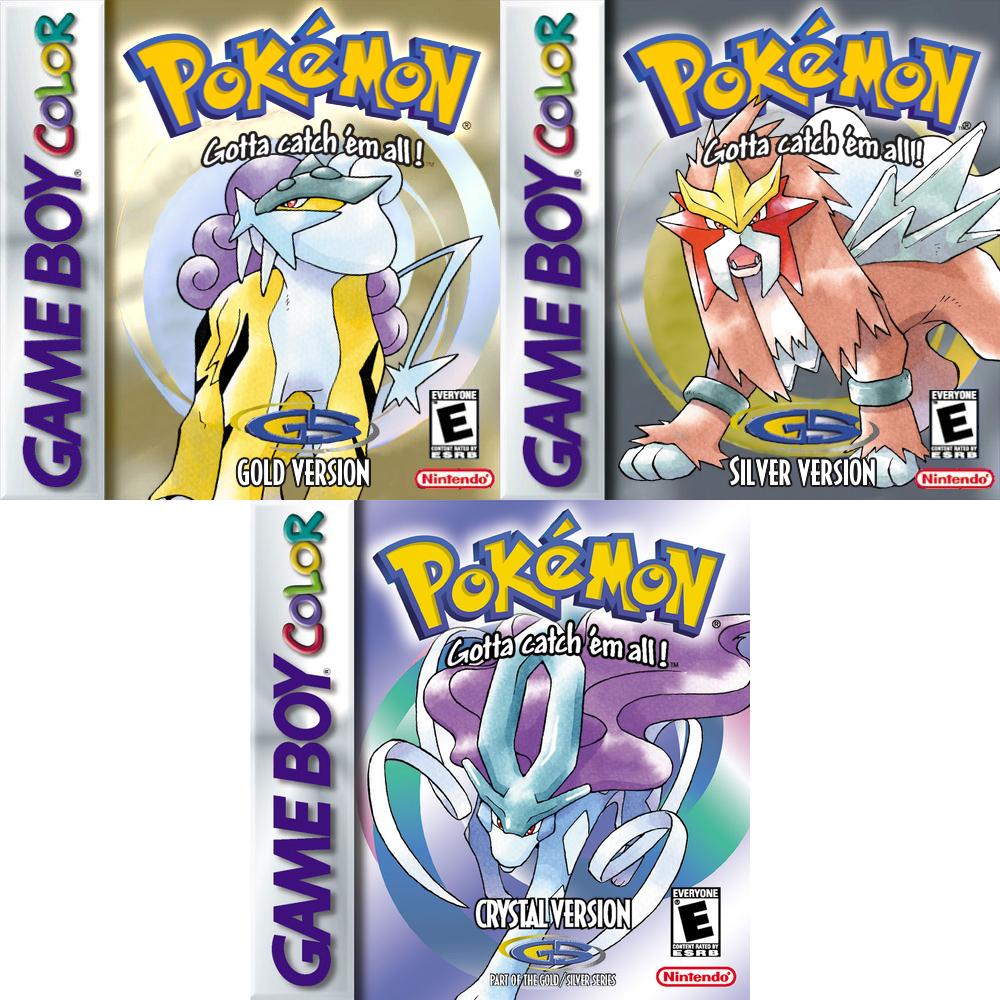
This week, we’re talking Pokémon Gold, Silver and Pokémon Crystal — the moment Pokémon didn’t just continue…
It expanded.
Ask most people about Gen II, and you’ll hear:
“Those were the ones with day and night, breeding, and… you could go back to Kanto, right?”
That’s the reputation.
Gold, Silver, and Crystal are often remembered as the “more polished sequel” to Red and Blue. Same formula, just bigger. More Pokémon, more features, more color thanks to the Game Boy Color.
People remember:
- New starters like Chikorita, Cyndaquil, Totodile
- The introduction of 100 new Pokémon
- And that one moment when the game reveals it’s not over
For some, it’s peak nostalgia.
For others, it’s just “Gen I but upgraded.”
But that undersells what Gen II actually did.
Because this wasn’t just more Pokémon.
This was Pokémon realizing it could evolve (get it?)
Mechanics — Systems That Defined the Future
At its core, the gameplay loop is still familiar.
You travel across the Johto region, catching Pokémon, battling trainers, and challenging eight Gym Leaders on your way to the Pokémon League.
But Gen II quietly layers in systems that would define the series going forward.
The most noticeable change?
Time exists now.
There’s a real day/night cycle tied to your actual clock:
- Different Pokémon appear depending on the time
- Events change based on the day of the week
- The world feels like it’s moving, even when you’re not
Then there’s breeding.
Leave two compatible Pokémon at the Day Care, and suddenly you’re hatching eggs, introducing baby Pokémon and adding a whole new layer to collecting and team building.
Add in:
- Held items
- New types like Dark and Steel
- Expanded moves and stats
And suddenly, Pokémon isn’t just a collecting game anymore.
It’s a system-driven RPG.
World, Visuals & Atmosphere — A Living World
Johto feels different from Kanto.
Where Kanto was structured and urban, Johto feels:
- Traditional
- Rural
- Rooted in history and folklore
You’ve got:
- Shrines and towers
- Ancient ruins
- Quiet villages surrounded by nature
It feels older. More spiritual.
And then there’s the moment.
The one everyone remembers.
You beat the Elite Four… and instead of credits rolling, the game opens back up and says:
“You’re not done.”
Kanto — the entire region from Gen I — is waiting.
It’s smaller than before, a little changed, but still there.
That moment didn’t just surprise players.
It redefined what people thought a game could contain.
Sound & Music — Subtle, But Powerful
The soundtrack builds on what Gen I started, but with more depth and atmosphere.
Once again, Junichi Masuda delivers themes that stick with you:
- The calm, almost nostalgic routes
- The more refined battle music
- The haunting tones of places like the Ruins of Alph
And then there’s the detail that hits hardest:
When you return to Kanto, the music feels… older.
Familiar, but slightly changed.
Like revisiting a place from your childhood.
It’s subtle. But it works.
.Gen II proved something rare in gaming:
A sequel doesn’t have to replace what came before.
It can build on it.
Instead of abandoning Kanto, it brought it back.
Instead of resetting the world, it showed what happens after the story ends.
It respected the player’s time and memory.
And in doing so, it created one of the most powerful feelings in gaming:
Continuity.
This wasn’t just a new adventure.
It was the same world, moving forward without you — until you returned.
That idea still feels ahead of its time.
You can see Gen II’s influence everywhere.
Modern games chase living worlds with day/night cycles and evolving systems.
RPGs try to create continuity between entries — worlds that remember what came before.
Even modern Pokémon titles still rely on mechanics introduced here:
- Breeding
- Held items
- Expanded battle strategy
But more than anything?
Gen II predicted something we see everywhere today:
Players don’t just want new worlds.
They want worlds that remember them.
From massive open-world games to long-running anime arcs, that idea is everywhere now.
And Pokémon was doing it on a Game Boy Color.
QUESTION
Gen II gave us something almost no game had done before:
It let us go back.
So here’s the question:
When a game brings back a familiar world…
do you want it to feel exactly the same, or show how time has changed it?