Here Comes the Cavalry!
Before tanks.
Before fighter jets.
Before engines at all.
War moved on four legs.
For thousands of years, the most powerful weapon on a battlefield…
was a horse.
Most of us picture horses in war the same way.
Knights charging with lances.
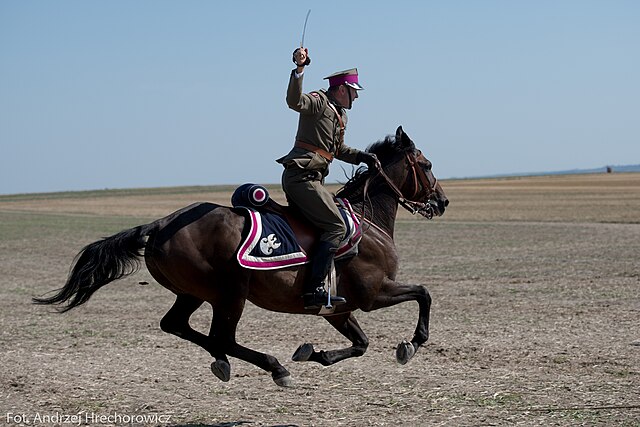
Cavalry sweeping across battlefields.
Generals riding high above the chaos.
From ancient armies to the American West, horses made warfare faster, more mobile, and more dramatic. A soldier on horseback could move farther, strike faster, and command more presence than someone fighting on foot.
For centuries, cavalry was one of the most feared forces in combat.
If you controlled the horses, you controlled the battlefield.
But that’s only the version we usually picture.
Horses entered warfare surprisingly early.
They were first domesticated around 4,000–3,500 BCE on the Eurasian steppe, likely by cultures related to the Yamnaya culture, a nomadic, Bronze Age pastoral society based in what now is the Russia/Ukraine area. At first, they probably weren’t ridden much. Early war horses were used to pull chariots, which became the dominant military technology of the ancient world.
Empires like Ancient Egypt and the Hittite Empire built elite chariot corps that could move quickly across open terrain, firing arrows or throwing spears before enemy infantry could react.
Eventually, riders replaced chariots. Nomadic cultures across the Eurasian steppe mastered horseback combat, especially the Scythians and later the Genghis Khan’s Mongol armies.
Mounted archers could travel enormous distances, strike quickly, and vanish before slower armies could respond.
The Mongols conquered one of the largest empires in human history largely because they turned horses into an unmatched strategic advantage.
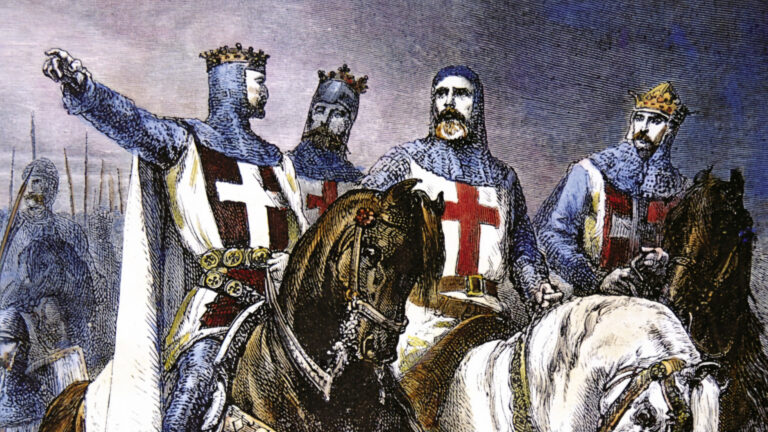
Later, in medieval Europe, horses transformed again. Heavy cavalry — armored knights on powerful warhorses — became symbols of military dominance and social status. A knight wasn’t just a soldier. He was a walking (well… riding) investment.
But the battlefield kept evolving.
Gunpowder weapons made cavalry charges more dangerous. Muskets, rifles, and eventually machine guns changed the math. By the 1800s and early 1900s, horses were still essential in war — but often not for combat.
They pulled artillery.
They hauled supplies.
They carried messengers.
During World War I, millions of horses served on all sides of the conflict. Despite tanks and machine guns entering the picture, armies still depended heavily on horsepower for transportation and logistics.
Even World War II used huge numbers of horses — especially in armies that lacked motorized supply lines.
The age of the war horse didn’t disappear overnight.
It faded slowly as engines finally took over.
For thousands of years, horses weren’t just transportation.
They were technology.
They allowed empires to expand, armies to maneuver, and messages to travel faster than human legs ever could. Entire military strategies were built around them.
But there’s also something deeper here.
War horses remind us that history isn’t only shaped by humans.
Animals carried kings into battle.
They pulled cannons.
They died in wars that weren’t theirs.
The horse wasn’t just part of war.
It helped define how war worked.
Today, the war horse mostly lives on through stories.
Movies like the aptly named War Horse.
Fantasy armies charging across fields in shows like Game of Thrones.
Anime and games where mounted warriors still symbolize power and heroism.
Even the phrase “cavalry arriving” still means reinforcements showing up just in time.
“Here comes the Cavalry.”
The engines replaced the horses.
But the imagery stuck.
When you picture a battlefield from history…
Do you imagine the soldiers first?
Or the thunder of thousands of horses coming over the hill?
Because for most of human history, those two things were impossible to separate.