Giant Robots Fighting? Count Me In!
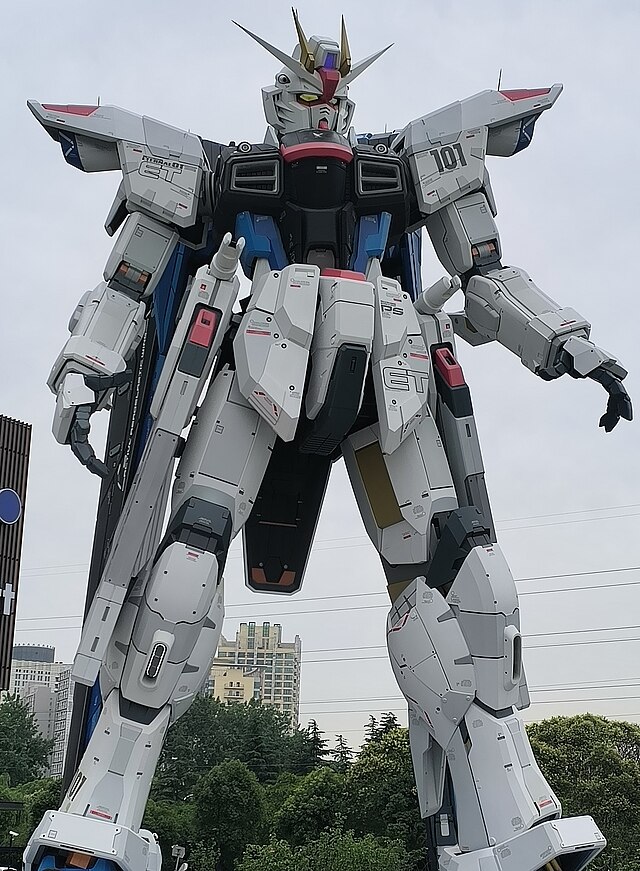
A pilot climbs into the cockpit.
Alarms flash. Steel moves. The ground shakes.
Two towering machines step onto the battlefield.
And suddenly, war isn’t fought by soldiers anymore — it’s fought by giants.
Welcome to mecha.
When most people think of mecha anime or manga, they picture one thing: giant robots fighting each other.
Huge machines trading missile volleys. Laser swords clashing in space. A young pilot screaming the name of their attack while the camera shakes.
Series like:
- Mobile Suit Gundam
- Neon Genesis Evangelion
- Tengen Toppa Gurren Lagann
- Code Geass
help define that image.
Honestly?
That reputation is well earned. Mecha anime has delivered some of the most iconic battles and visual spectacle in the entire medium.
Massive robots have a universal appeal. They combine technology, fantasy, and pure scale in a way few genres can match.
It’s the ultimate “rule of cool.”
But the robots were never the real story.
Mecha has always been about people, not just machines.
And from the beginning, the genre actually split into two very different storytelling styles.
One side is what fans now call Super Robot.
Series like Mazinger Z or Getter Robo treated robots almost like superheroes. The machines were often one-of-a-kind, built by brilliant scientists or ancient civilizations, and piloted by courageous heroes. These robots weren’t just vehicles — they were symbols of justice. They fired named attacks, saved cities, and defeated villains threatening the world.
This influence extends across the genre, touching series like Beast King GoLion — known in the West as Voltron: Defender of the Universe — and even parts of the Super Sentai franchise, whose combining robots carried over into the American adaptation Power Rangers.
The focus was spectacle and heroism.
Then in 1979, something changed.
Mobile Suit Gundam arrived, created by Yoshiyuki Tomino, and it quietly rewrote the rules of the genre.
Instead of invincible superhero machines, Gundam presented what fans now call the Real Robot approach.
Mobile suits were military equipment.
Mass-produced machines used by armies.
Pilots weren’t fearless champions — they were often teenagers caught in wars they barely understood.
Suddenly the focus shifted from heroic battles to the human cost of conflict. War in Gundam wasn’t glorious. It was political, complicated, and tragic. The robots became tools inside a much larger story about ideology, power, and survival.
And the franchise exploded.
Today, Gundam stands as one of the most successful anime properties ever created, generating tens of billions of dollars in merchandise over decades. Its plastic model kits — known as Gunpla — have become a global hobby all their own.
Other series pushed both sides of the genre even further.
Neon Genesis Evangelion leaned into the psychological weight of the Real Robot tradition, using giant machines as metaphors for trauma, identity, and emotional isolation.
Meanwhile, Tengen Toppa Gurren Lagann proudly embraced the Super Robot spirit — escalating its machines to absurd, universe-shattering scale in a celebration of human willpower and defiance.
Between those two poles — grounded realism and operatic spectacle — the entire mecha genre lives.
Because in the end, the robots were never the real story.
They’re just the stage where human ambition, fear, courage, and conflict play out at enormous scale.
Mecha stories endure because they explore a tension that never really goes away:
The relationship between humans and their technology.
Every generation builds tools that are more powerful than the last. Weapons become smarter. Machines become more autonomous.
Mecha externalizes that anxiety.
A giant robot is both empowerment and danger.
It represents the dream that technology can save us and the fear that it might destroy us.
And maybe that’s why so many mecha stories revolve around young pilots.
They’re inheriting a world they didn’t build… but now they have to control the machines that define it.
Look around modern culture and the themes of mecha are everywhere.
Drones are reshaping warfare.
Artificial intelligence is changing industries.
Autonomous machines are entering daily life.
We’re asking the same questions mecha anime has explored for decades:
Who controls the technology?
What happens when power grows faster than wisdom?
And what does it mean to put human lives inside machines built for war?
Even outside anime, the influence shows up everywhere — from Hollywood’s love of giant robot battles to the global success of Gundam model kits and mech-inspired video games.
The genre might look like spectacle on the surface.
But underneath it’s always been about the future we’re building.
QUESTION
So, here’s the real debate.
When you think of mecha…
Do you prefer the grounded war stories like Gundam?
Or the limit-breaking spectacle of shows like Gurren Lagann?
Which style of giant robot story hits harder for you?