Biathlon: Calming your Own Chaos in the Winter Olympics
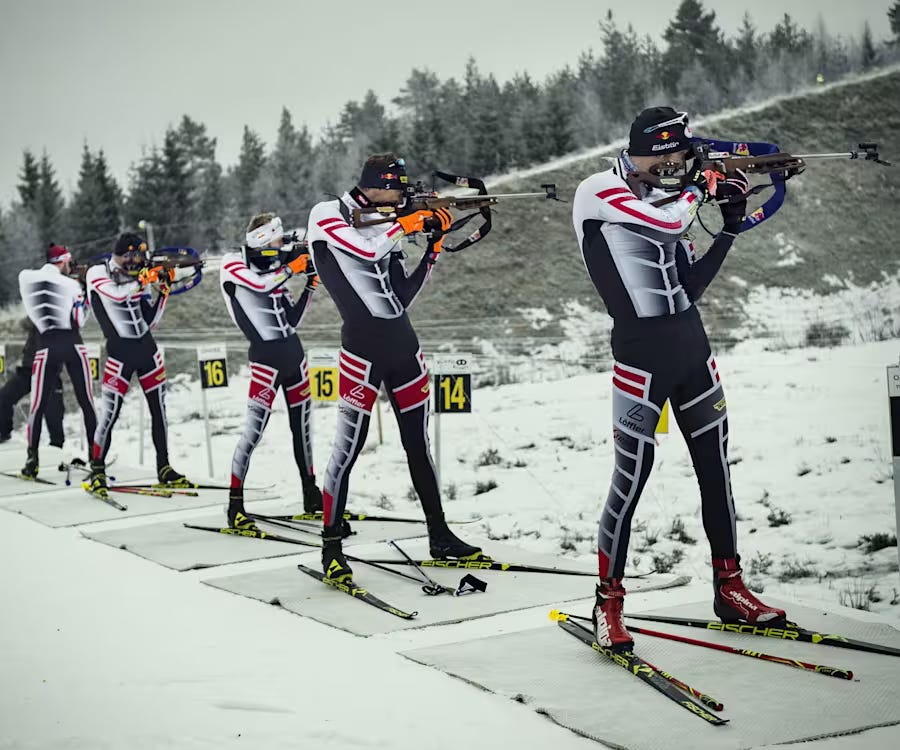
If you’ve never seen biathlon before, it can look confusing for about thirty seconds.
People skiing hard.
Suddenly stopping.
Lying down.
Shooting rifles.
Then skiing again like nothing happened.
But once you understand it, it becomes one of the most psychologically brutal events in the Winter Olympics.
Because biathlon doesn’t reward speed alone.
It rewards composure.
The Structure (In Plain English)
Most Olympic biathlon races follow this rhythm:
- Ski a loop.
- Stop at the range.
- Shoot five targets.
- Repeat.
There are two shooting positions:
- Prone (lying down)
- Standing (harder, more unstable)
Miss a target and you either:
- Ski a short penalty loop (about 150 meters), or
- Receive added time.
Five shots doesn’t sound like much.
But those five shots can undo twenty minutes of perfect racing.
That’s the tension.
What It Feels Like (Physically)
Picture sprinting uphill in freezing air.
Your lungs burn.
Your legs are shaking.
Your pulse is pounding in your ears.
Now drop to the ground and try to hold a rifle steady.
Every heartbeat slightly moves the barrel.
Biathletes literally train to fire between heartbeats.
They practice lowering their pulse in seconds.
They learn to control micro-movements most of us don’t even notice.
It’s not just endurance.
It’s emotional regulation under exhaustion.
The History: From Survival to Spectacle
Biathlon’s roots trace back to Scandinavia, where skiing and shooting were survival skills. Norwegian military patrol competitions in the 18th and 19th centuries combined long-distance skiing with rifle marksmanship.
The sport entered the Winter Olympics in 1960.
And unlike many modern Olympic sports, it still feels close to its origins.
There’s something ancient about it.
You can imagine it existing in a saga.
A lone skier crossing frozen terrain.
Stopping.
Taking aim.
Moving again.
It feels like a test, not a game.
The Greats — The MJ of Biathlon
If you’re asking, “Who is the Michael Jordan of this sport?” the answer most historians give is Ole Einar Bjørndalen (Norway).
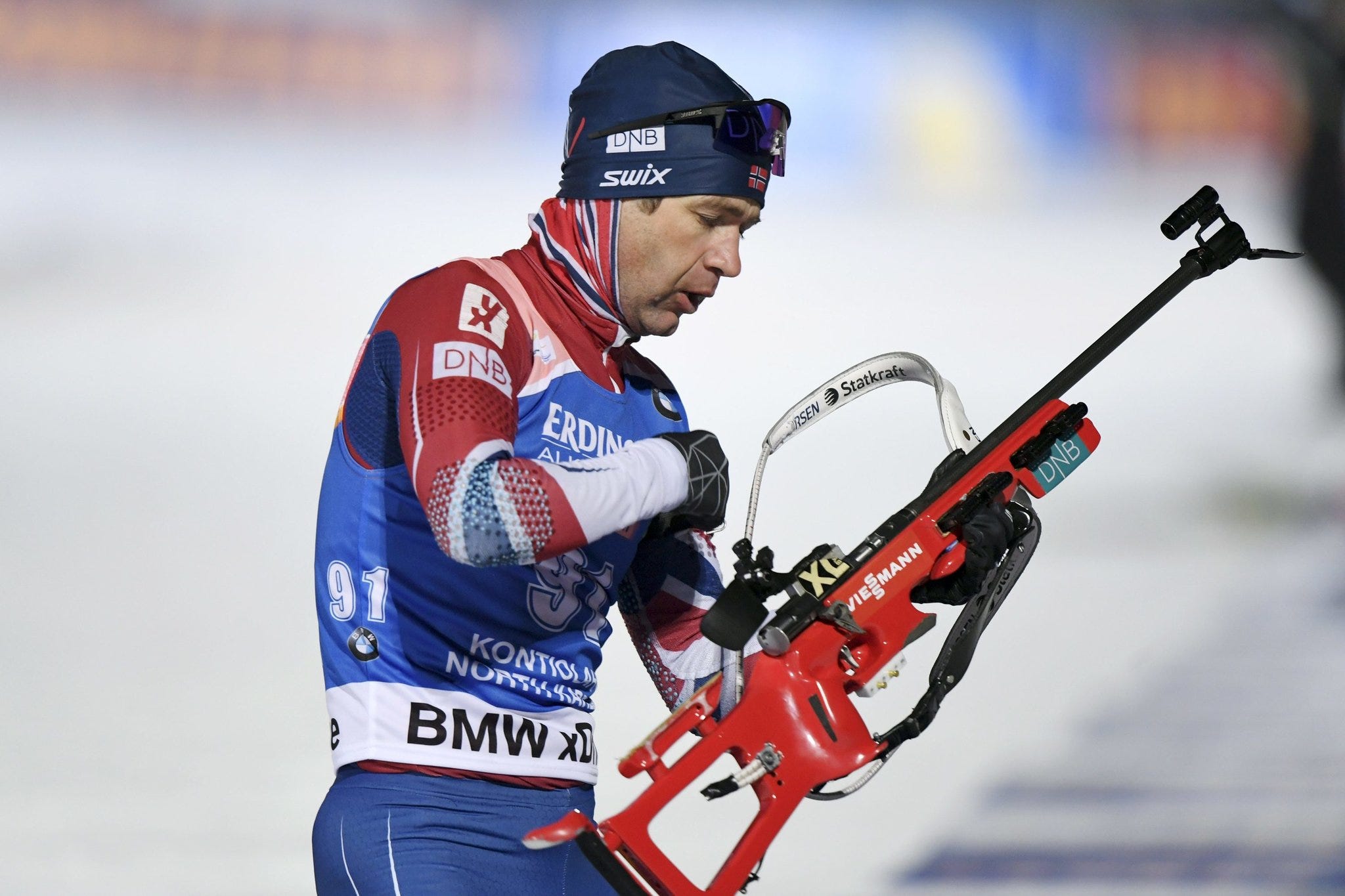
He won 8 Olympic gold medals and 13 Olympic medals overall.
He dominated World Championships for over a decade.
He was so consistent that “off day” didn’t really apply to him.
He wasn’t always the fastest skier.
He wasn’t always the most accurate shooter.
But he combined both better than anyone else for longer than anyone else.
In that sense, he wasn’t just dominant — he was durable.
More recently, Martin Fourcade (France) brought a similar aura. Precision. Composure. Relentless consistency.
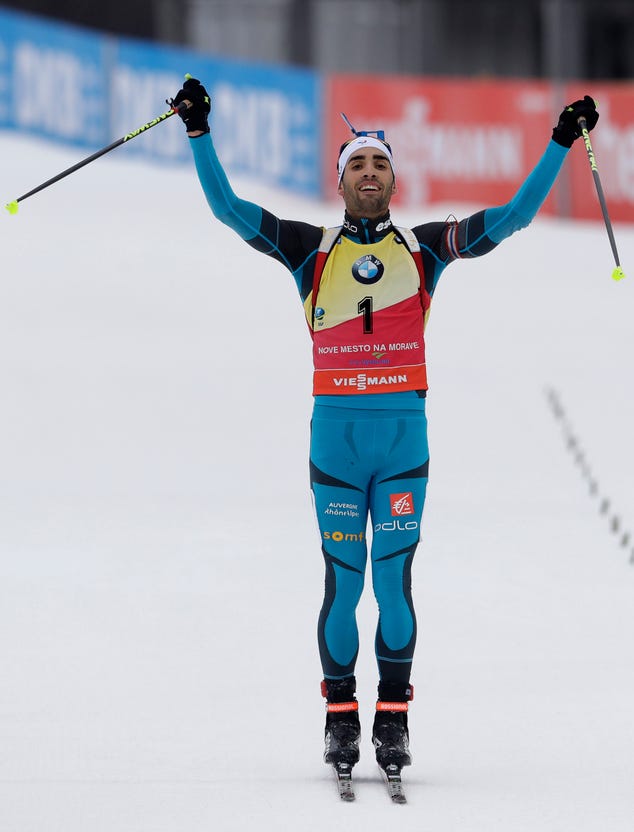
They didn’t just win.
They rarely cracked.
Why Nordic Countries Dominate
Norway, Sweden, Denmark, Finland — they tend to own this sport.
That’s not accidental.
They grow up skiing.
They grow up in snow.
They treat winter as a season to train in, not endure.
Biathlon isn’t exotic there.
It’s cultural.
And that matters.
Why It’s So Compelling (Even If You Don’t Ski)
Here’s what makes biathlon different from most Olympic events:
In sprinting, the fastest wins.
In skiing, the strongest wins.
In shooting, the steadiest wins.
In biathlon, the winner is whoever balances chaos and calm the best.
You can lead the entire race…
and lose everything at the range.
Or trail by thirty seconds…
and win because you never panicked.
It’s not about being perfect.
It’s about recovering from imperfection faster than anyone else.
The Drama Lives in the Silence
The loudest part of a biathlon race is the quiet.
Crowds go silent at the range.
All you hear is wind, breathing, and the click of the rifle.
Five shots.
Each one a tiny verdict.
Targets flip from black to white when hit — a simple visual confirmation that feels enormous in the moment.
It’s subtle drama.
But it’s real.
Why It Fits the Olympics So Well
The Olympics are about more than speed.
They’re about pressure.
Biathlon is pressure made visible.
It asks one question over and over:
Can you calm yourself down when everything inside you is racing?
Question for readers:
If you were competing, what would fail you first — your lungs, or your nerves?