Assassin’s Creed Odyssey: Mythology You Can Play
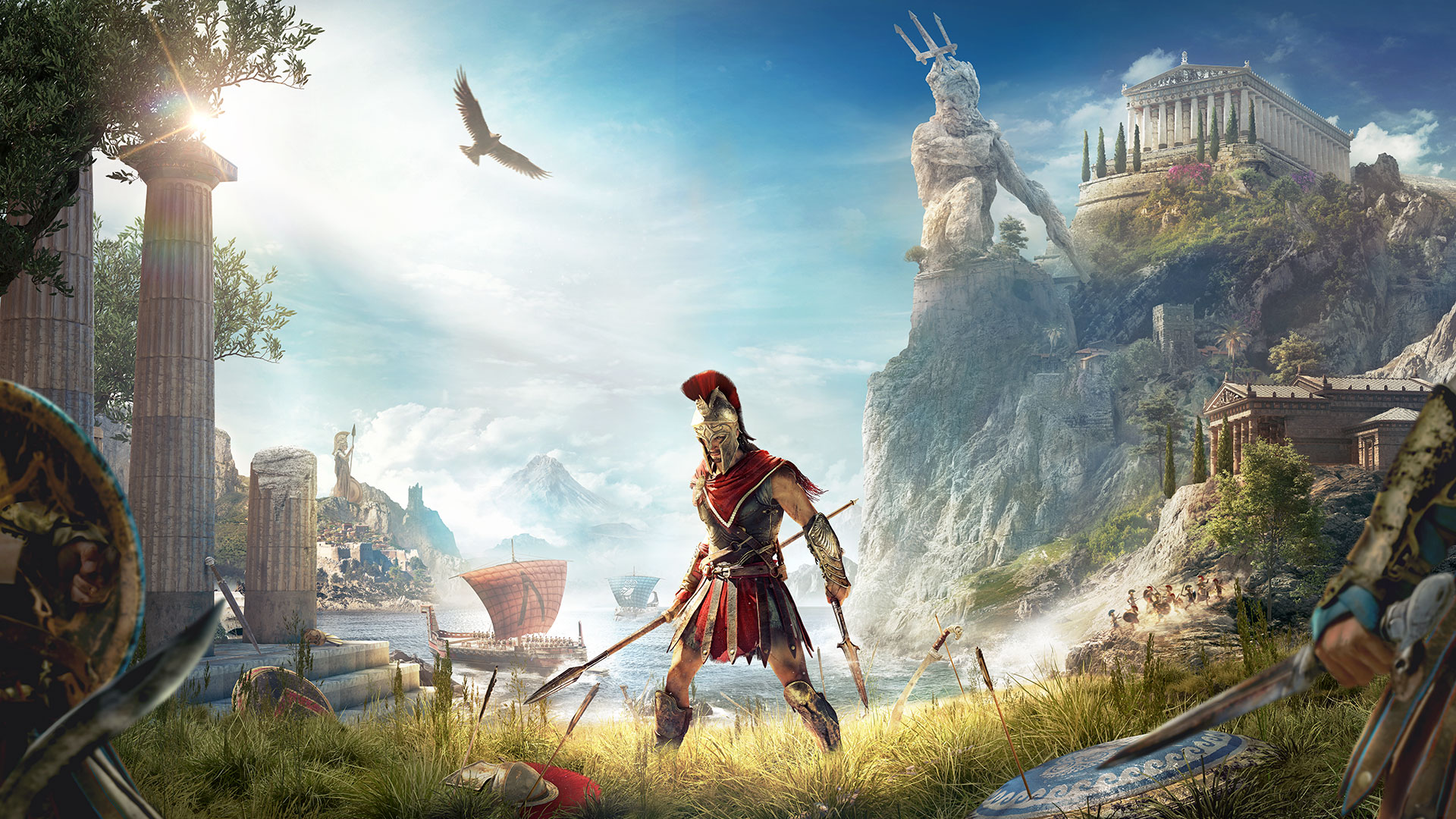
Assassin’s Creed Odyssey is a historical action-adventure game set in Ancient Greece, during a time when people didn’t separate history from myth the way we do now.
To us, Greek mythology is stories.
To them, it was how the world worked.
Storms were caused by gods.
Monsters guarded sacred places.
Heroes were real people who lived, fought, loved, and died — and then became legends.
Odyssey is built around that mindset.
The Setting: Greece at War
The game takes place during the Peloponnesian War, a massive conflict between Athens and Sparta in the 5th century BCE.
You don’t need to know the history going in. The game teaches it naturally.
- Athens represents democracy, philosophy, and naval power
- Sparta represents military strength, discipline, and tradition
Cities change hands. Leaders rise and fall. Ordinary people suffer the consequences of political decisions made far above them.
Instead of reading about the war, you live inside it.
You’ll meet real historical figures like:
- Pericles, the leader of Athens
- Socrates, a philosopher who questions everything
- Leonidas, the Spartan king made famous by the Battle of Thermopylae
They’re not treated like legends yet — because in this moment, they’re just people.
Who You Play As (And Why It Matters)
You don’t play as a god.
You don’t play as a king.
You play as a mercenary, someone who fights for coin and survival.
You can choose between two protagonists, Kassandra or Alexios, siblings with a mysterious past tied to powerful bloodlines and ancient secrets.
This choice is important because it mirrors Greek myth:
- heroes weren’t pure or perfect
- they made mistakes
- they helped some people and hurt others
Your character isn’t trying to save the world.
They’re trying to survive it — and figure out where they belong.
How Mythology Works in This World
If you know Greek mythology, you know the big names:
- Medusa
- the Minotaur
- Cyclopes
- legendary beasts and monsters
In Odyssey, these myths exist, but with a twist.
The game treats them as ancient truths misunderstood over time. Monsters aren’t fairy tales, but the result of forgotten technology, cursed bloodlines, and lost civilizations.
The key thing is this:
Even when the game explains the myths, it never strips them of their power.
When you encounter a monster, it feels exactly like stepping into a legend, fear, awe, and the sense that you’re somewhere humans were never meant to be.
A World Meant to Be Explored
The map is enormous! Greece, its islands, and the surrounding seas.
You:
- sail between islands like an ancient mariner
- climb ruins older than recorded history
- stumble into side stories that feel like mini myths of their own
Many of the most powerful moments aren’t part of the main story. They’re small, human tales:
- families broken by war
- soldiers questioning why they fight
- people clinging to hope in collapsing worlds
It captures something essential about ancient epics:
the journey matters just as much as the destination.
Why This Game Works So Well
Assassin’s Creed Odyssey succeeds because it understands one key idea:
In Ancient Greece, myth, history, and daily life were intertwined.
The game doesn’t ask you to memorize names or dates.
It asks you to experience what it felt like to live in a world where:
- gods might be watching
- monsters might be real
- and your choices could echo longer than your lifetime
Ctrl+Binge Take
This is a game about standing at the crossroads of fact and legend.
It’s perfect for anyone interested in:
- Greek mythology
- ancient history
- or stories where heroes aren’t clean or simple
Assassin’s Creed Odyssey shows that myths don’t come from nowhere —
they come from people, war, fear, and memory.
And sometimes, the difference between a mercenary and a legend…
is just who survives to tell the story.
Fun Facts That Make Assassin’s Creed Odyssey Easy to Recommend
Odyssey quietly does a lot of things that make people bounce off other open-world games… and then fixes them.
The version of Ancient Greece in the game is huge. Islands, cities, ruins, coastlines, and it isn’t padded with empty space. You’re constantly stumbling into something unexpected, whether it’s a side quest that turns tragic, a mercenary hunting you for a bounty you forgot about, or a ruin tied to an old myth.
NPCs actually live in the world. Farmers work their land, soldiers patrol and rotate shifts, towns react to wars and leadership changes, and if you cause chaos somewhere, people don’t just forget it happened. Greece feels inhabited, not staged.
Combat leans into pure power fantasy. The iconic Spartan kick is a real ability, and yes, you can absolutely send enemies flying off cliffs, ships, or temples. Gravity becomes a strategy, not a suggestion.
The mercenary system keeps things unpredictable. Rack up a bounty and skilled hunters will track you across the map, sometimes showing up at the worst possible moment. They aren’t generic enemies either, each one has strengths, weaknesses, gear, and personality quirks that force you to adapt.
You command your own warship, the Adrestia, sailing between islands and engaging in full naval battles. It adds an entirely different rhythm to the game, part action RPG, part ancient seafaring adventure.
Greek mythology isn’t just referenced; it’s playable. Legendary monsters like Medusa or the Minotaur exist as optional encounters, and when you find them, it feels less like a boss fight and more like walking into a story people were never meant to survive.
Choices matter in ways you don’t expect. Relationships, family outcomes, and even who lives to see the end of the story can change depending on how you play. There isn’t a single “correct” ending — just the one you earned.
And somewhere along the way, without trying, you’ll realize you’ve learned a surprising amount about Ancient Greece. Politics, philosophy, warfare, daily life, it all sinks in naturally, because you experienced it instead of being told about it.
That’s the real trick Odyssey pulls off.
It doesn’t feel like homework.
It feels like an adventure that just happens to be set in one of the most myth-soaked eras in human history.
Question for readers: If you could step into one myth and live it instead of just reading it, would you want it explained… or left mysterious?